By
By 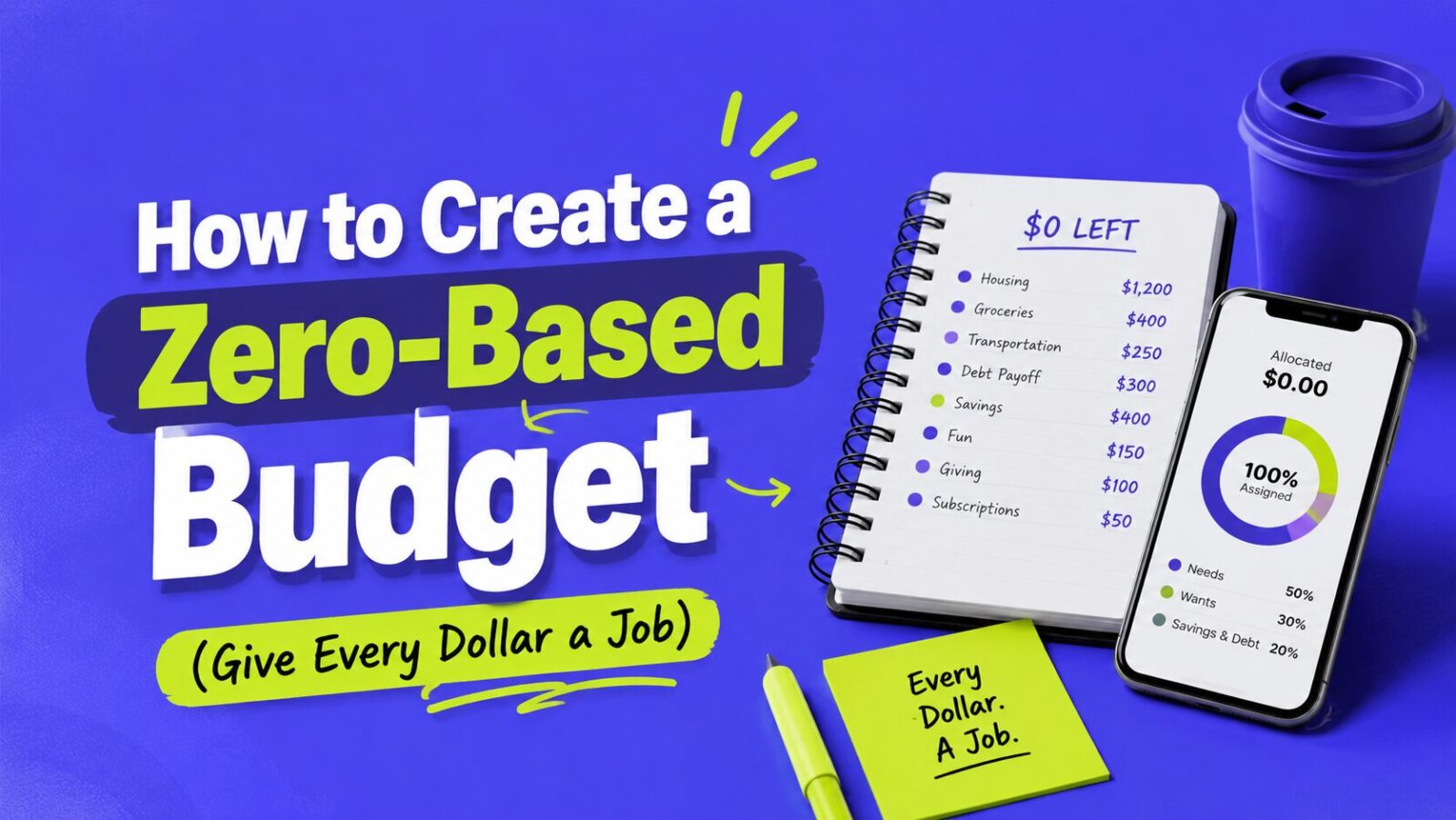
A zero-based budget assigns every dollar of income to a specific purpose. Nothing is “leftover.” Here is how to set one up, the best apps to use, and why it works better than tracking expenses after the fact.
Zero-based budgeting is one method among several; compare them all in our how to budget guide.
In our 50/30/20 budget guide, we covered the simplest budgeting framework: 50% needs, 30% wants, 20% savings. It works well for people who want a loose structure. But if you have tried the 50/30/20 rule and still cannot figure out where your money goes, or if you are living paycheck to paycheck and need tighter control, the zero-based budget is the next level.
The concept is simple: income minus expenses equals zero. Every dollar of your take-home pay is assigned to a specific category before the month begins. Rent, groceries, gas, fun money, Roth IRA contribution, emergency fund savings, student loan payment. Nothing is “leftover.” Nothing is “extra.” Every dollar has a job. For free budgeting worksheets to get started, the Consumer Financial Protection Bureau has official tools.
This is not about restricting your spending. It is about deciding in advance where your money goes instead of wondering where it went.
How a zero-based budget works
Step 1: Write down your total take-home pay for the month.
Step 2: List every expense category and assign a dollar amount to each one.
Step 3: The total of all categories must equal your take-home pay. Income minus all assigned amounts equals $0.
Example for $4,500/month take-home:
| Category | Amount |
|---|---|
| Rent | $1,350 |
| Utilities (electric, water, internet) | $180 |
| Groceries | $450 |
| Car payment | $320 |
| Car insurance | $130 |
| Gas | $120 |
| Phone | $65 |
| Health insurance (employee portion) | $85 |
| Student loan payment | $280 |
| Subscriptions (streaming, Spotify) | $35 |
| Dining out | $200 |
| Personal spending (clothes, hobbies) | $150 |
| 401(k) contribution (after match) | $200 |
| Roth IRA contribution | $300 |
| Emergency fund savings | $250 |
| Haircut/grooming | $40 |
| Pet expenses | $60 |
| Gifts/holidays | $50 |
| Miscellaneous/buffer | $135 |
| Total | $4,500 |
Income ($4,500) minus total expenses ($4,500) = $0. Every dollar is assigned.
Notice that savings and investments (401(k), Roth IRA, emergency fund) are line items, not afterthoughts. Saving is an expense, just like rent. You pay yourself first by building it into the plan.
Build your own zero-based budget below:Zero-Based Budget Builder
Enter your income and assign every dollar. The goal: reach exactly $0 remaining.