By
By 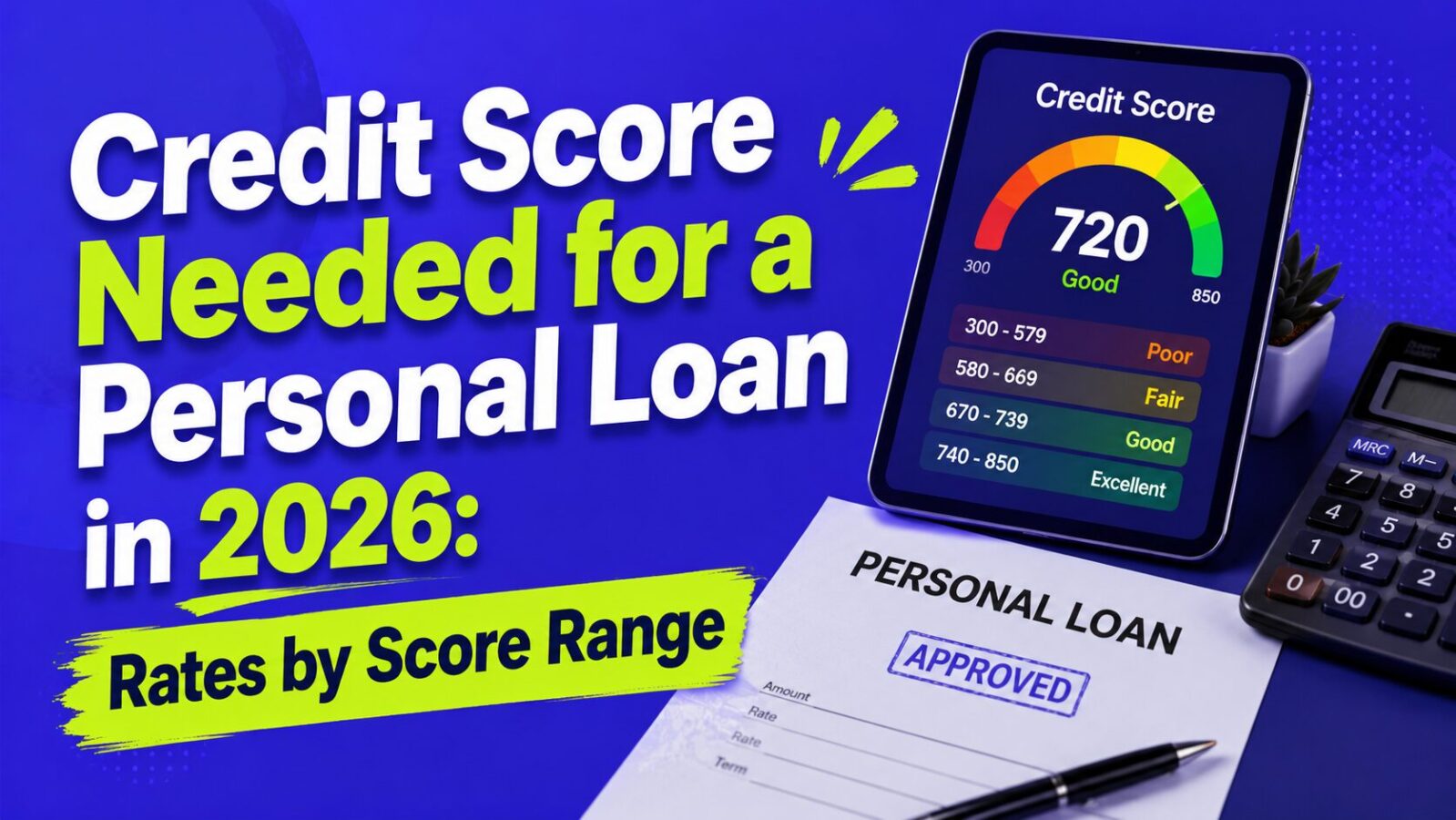
You can qualify for a personal loan with a credit score as low as 580 to 600 at some lenders, but your credit score is the single biggest factor in what interest rate you pay. As of mid-2026, borrowers with scores of 760 and up are seeing rates around 7% to 10%, while those under 600 are often quoted 28% to 36%, if they qualify at all.
KEY TAKEAWAYS
- The national average personal loan rate was about 11.65% APR in Q1 2026, per the Federal Reserve’s G.19 consumer credit report, but your actual rate depends heavily on your score.
- A jump from the 600s to 760+ can cut your rate by 15-20 percentage points, which adds up to thousands of dollars on a multi-year loan.
- Most online lenders set a minimum score somewhere between 580 and 640. Below that, options narrow to secured loans, credit unions, or a co-signer.
- Rate ranges shift with the Federal Reserve’s benchmark rate and lender competition, so always get a current quote rather than relying on last year’s numbers.
- Prequalifying with a soft credit pull lets you compare real rates from multiple lenders without hurting your score.
Personal Loan Rates by Credit Score in 2026
The table below reflects typical APR ranges reported by lenders as of mid-2026. Your actual offer will also depend on loan term, income, and existing debt.
| Credit score range | Typical APR |
|---|---|
| 760+ | 7%-10% |
| 720-759 | 10%-14% |
| 680-719 | 14%-20% |
| 640-679 | 20%-28% |
| 600-639 | 26%-35% |
| Below 600 | 28%-36% (limited lenders) |
Rates change often as lenders adjust to the broader interest rate environment, so treat this table as a general guide rather than a locked-in quote. Check the Federal Reserve’s G.19 consumer credit release for the latest national averages before you shop.
Why Does Your Score Move the Rate So Much?
Personal loans are unsecured, meaning there is no car or house backing the loan for the lender to repossess if you stop paying. Your credit score is the lender’s main proxy for how likely you are to repay on time, so it carries outsized weight compared to secured loans like an auto loan or a mortgage, where collateral lowers the lender’s risk.
On a $15,000 loan over 5 years, the difference between an 8% APR and a 28% APR is not small: the lower rate costs roughly $3,300 in total interest, while the higher rate costs closer to $12,000. That gap is why improving your score before applying, even by 20-30 points, is often worth delaying a loan application for a few months.
What Credit Score Do You Need to Get Approved At All?
Approval and pricing are two different questions. Many online lenders will approve applicants down to a 580-600 score, but at the highest end of the rate range, and often with lower loan amounts or shorter terms. Below 580, most mainstream lenders decline, and your realistic options shrink to:
- Credit unions, which sometimes underwrite more flexibly for existing members.
- A secured personal loan, backed by savings or a certificate of deposit, which trades a lower rate for putting up collateral.
- A co-signer with stronger credit, which can unlock approval and a meaningfully lower rate, though the co-signer is equally on the hook if you miss a payment.
- Building credit first. If the loan is not urgent, our guide on improving your credit score fast covers moves that can help within 30-90 days.
Personal Loan or Credit Card for a Large Purchase?
If you are weighing a personal loan against financing a purchase on a credit card, the right call depends on the rate you can get and how fast you can pay it off. See our full personal loan vs credit card comparison for the tradeoffs. If the real goal is consolidating existing debt rather than funding a new purchase, our debt consolidation loans guide walks through when a personal loan makes sense for that specific job.
Loan Payoff Calculator
FAQ
What credit score do I need for a personal loan?
Many lenders approve applicants with scores as low as 580-600, though you will pay the highest rates in that range. Scores of 680 and above unlock meaningfully better pricing.
Can I get a personal loan with a 550 credit score?
It is difficult with most mainstream lenders. Options at that level usually mean a secured loan, a co-signer, or a credit union that considers your full relationship, not just your score.
Does shopping for personal loan rates hurt my credit score?
Prequalification typically uses a soft inquiry, which does not affect your score. Only formally applying triggers a hard inquiry, and multiple loan inquiries within a short window are often treated as one for scoring purposes.
Will a personal loan hurt my credit score?
Opening one adds a hard inquiry and a new account, which can cause a small, temporary dip. Paying on time afterward tends to help your score over the life of the loan by adding to your positive payment history and credit mix.
Bottom Line
Your credit score can swing your personal loan APR by 20 points or more, so it is worth checking your score and shopping multiple lenders with a soft pull before you commit. A little prep work before applying is often the cheapest thing you can do to lower the total cost of the loan.
A quick note: this guide is meant to help you understand how personal loan pricing works, not to recommend a specific lender or loan amount for your situation. Rates shift with the market, so always confirm your actual offer directly with a lender before signing anything.