By
By 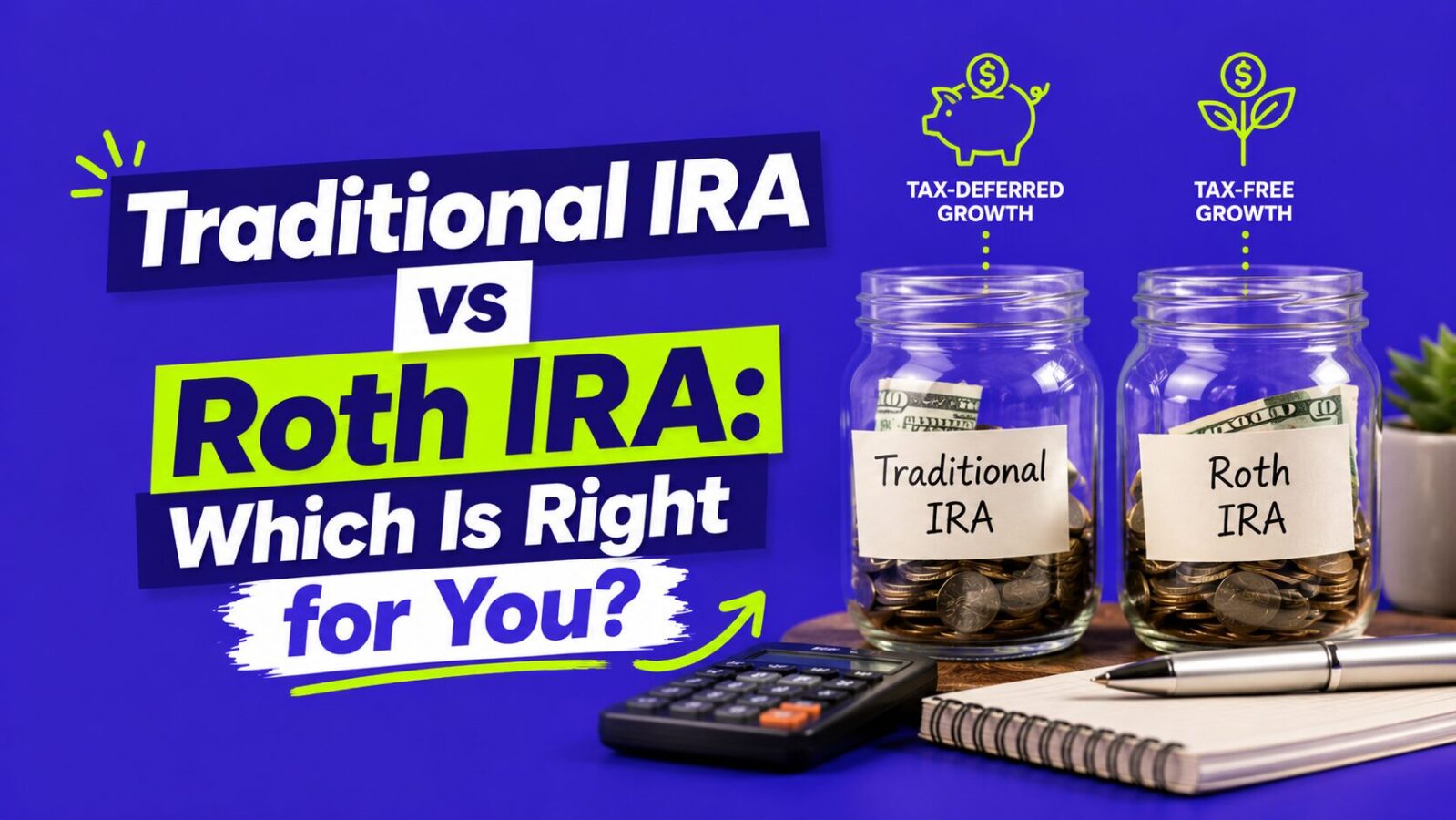
Disclosure: Some links on this page are affiliate links. We may earn a commission at no cost to you if you open an account through them. Our editorial content is not influenced by compensation. See our full disclosure.
Your employer is offering you free money through the 401(k) match. If you are not contributing enough to get the full match, you are leaving thousands of dollars on the table every year.
Here is the best deal in personal finance: your employer will give you free money if you put money into your 401(k). Not a loan. Not a perk you have to earn. Free cash deposited into your retirement account, just for participating. It is the first stop on the retirement account roadmap, before you fund anything else.
This is called the employer match, and according to the Bureau of Labor Statistics, about 86% of 401(k) plans offer one. The most common match formula is 50% of your contributions up to 6% of your salary. In plain English: if you earn $60,000 and contribute 6% ($3,600/year), your employer adds another $1,800. That is an instant 50% return on your money before it even touches the stock market.
Yet a Vanguard study found that roughly 25% of employees with access to a match do not contribute enough to get the full amount. On a $60,000 salary with a 50%-of-6% match, that is $1,800/year left unclaimed. Over a 30-year career with 7% growth, that unclaimed match alone would have grown to roughly $170,000. Do not be one of those people.
- About 86% of 401(k) plans offer an employer match (BLS). Not contributing enough to capture it is leaving free money behind.
- The most common formula is 50% of your contributions up to 6% of pay. Find your plan’s formula and contribute at least enough to get all of it.
- 2026 limits (IRS): $24,500 if you are under 50, $32,500 at 50+, and a combined cap (you plus employer) of $72,000.
- The employer match always lands in the pre-tax (Traditional) bucket, even if your own contributions are Roth. That is an IRS rule.
- For most beginners: pick the target-date fund closest to your retirement year and automate your contributions.
What is a 401(k)?
A 401(k) is a retirement savings account offered by your employer. The name comes from Section 401(k) of the US tax code. It works like this: you choose a percentage of your paycheck to contribute, that money is deducted before you receive it, it goes into your 401(k) account where you invest it in funds offered by your plan, your employer may add extra money on top (the match), and the account grows tax-advantaged until you withdraw in retirement.
There are two flavors:
Traditional 401(k): Contributions are pre-tax. If you earn $60,000 and contribute $6,000, your taxable income drops to $54,000. You pay less income tax today. The trade-off: you pay income tax on every dollar you withdraw in retirement.
Roth 401(k): Contributions are after-tax (no tax break today), but all withdrawals in retirement are tax-free, including the growth. Same concept as a Roth IRA, but through your employer with higher contribution limits.
Many employers now offer both. We will cover which to choose later.
How the employer match works
The match is your employer’s contribution to your 401(k) on top of your own. Common formulas:
Dollar-for-dollar up to X%. 100% match up to a certain percentage. Example: 100% match up to 3% means if you contribute 3%, they add 3%.
50 cents on the dollar up to X%. 50% match up to a certain percentage. Example: 50% match up to 6% means if you contribute 6%, they add 3%.
Tiered match. Different rates at different levels. Example: 100% of the first 3%, plus 50% of the next 2%.
The minimum contribution to get the full match is the most important number in your financial life right now. Log into your 401(k) plan (or ask HR) and find your match formula. Set your contribution percentage to at least that level.
| Salary | Match formula | You contribute | Employer adds | Free money/year |
|---|---|---|---|---|
| $45,000 | 50% of 6% | 6% ($2,700) | 3% ($1,350) | $1,350 |
| $60,000 | 50% of 6% | 6% ($3,600) | 3% ($1,800) | $1,800 |
| $75,000 | 100% of 4% | 4% ($3,000) | 4% ($3,000) | $3,000 |
| $90,000 | 100% of 3% + 50% of next 2% | 5% ($4,500) | 4% ($3,600) | $3,600 |
See how much your 401(k) can grow:
401(k) Retirement Calculator
Try this: set salary to $60,000, contribution to 6%, match to 3%, current balance to $0, years to 30, rate to 7%. Then change the contribution from 6% to 3% (below the match threshold) and see how much you lose.
What about vesting?
Your employer’s match may not be fully yours immediately. Many companies use a vesting schedule, meaning you gradually earn ownership of the match over time.
Immediate vesting: The match is 100% yours from day one.
Cliff vesting: You own 0% until a specific date (usually 3 years), then 100%. If you leave at 2 years and 11 months, you lose the entire match.
Graded vesting: Ownership builds gradually. Typical schedule: 20% after year 1, 40% after year 2, 60% after year 3, 80% after year 4, 100% after year 5.
Your own contributions are always 100% vested immediately. Vesting only applies to the employer match.
This matters for job decisions. If you have $10,000 in unvested match, factor that into your decision. Sometimes waiting 3 extra months to vest is worth thousands of dollars. Check your plan documents or ask HR. And if your employer pauses the match, know what to do next.
What to invest in inside your 401(k)
Your 401(k) does not pick investments for you. You need to choose from the menu your plan offers.
Target-date funds (a simple default for beginners). Named by retirement year: “Target 2055,” “Target 2060,” etc. Pick the one closest to the year you plan to retire. The fund automatically holds a mix of stocks and bonds and gradually shifts toward bonds as you age. One fund, low maintenance. A solid starting point for most people.
Index funds. If your plan offers an S&P 500 index fund or total stock market index fund with an expense ratio under 0.10%, this is excellent. See our index fund guide for how to build a simple portfolio.
Actively managed funds. Funds where a manager picks stocks trying to beat the market. These charge higher fees (often 0.50% to 1.50%) and have historically struggled to beat index funds over the long run. Weigh the fees carefully if your plan pushes these.
Company stock. Many advisors suggest keeping this a small slice of your 401(k). You already depend on your employer for your paycheck, so concentrating your retirement savings in the same company adds risk.
For many beginners, picking the target-date fund closest to your retirement year and directing contributions there keeps things simple while you learn.
Traditional 401(k) or Roth 401(k)?
It comes down to whether you want the tax break now or in retirement, which depends on your tax rate today versus later. Here is a general framework, not a recommendation. For the deeper comparison, see Roth IRA vs 401(k): which first in 2026.
Roth 401(k) may fit if:
- You are in the 12% or 22% bracket now (most people earning under $95,000 single)
- You expect your income and tax rate to increase over your career
- You already have a Roth IRA and want to maximize tax-free retirement money
Traditional 401(k) may fit if:
- You are in the 32%+ bracket and want the tax deduction now
- You expect to be in a lower tax bracket in retirement
Not sure? Splitting contributions gives you tax diversification without having to predict the future.
Important: regardless of whether you choose Traditional or Roth for your contributions, the employer match always goes into the Traditional (pre-tax) bucket. This is an IRS rule.
2026 contribution limits
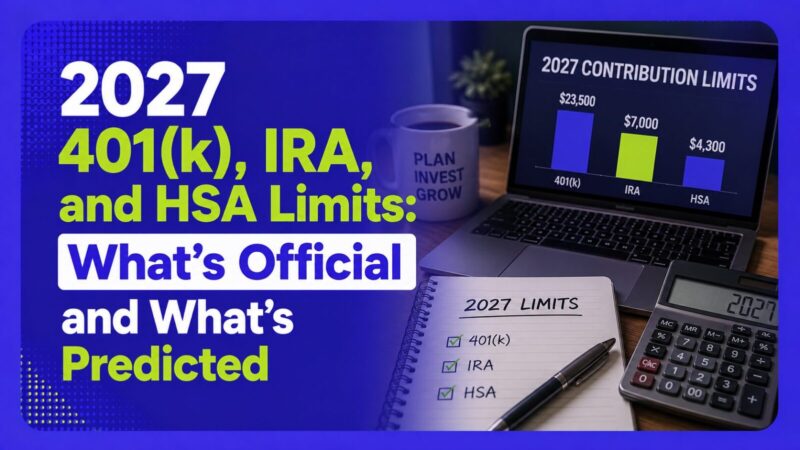
- Under age 50: $24,500 per year for 2026 (your contributions only; the employer match does not count toward this limit)
- Age 50 and over: $32,500 per year (includes the $8,000 catch-up contribution)
- Ages 60 to 63: $35,750 per year, thanks to a larger “super catch-up” of $11,250 under SECURE 2.0. See our super catch-up guide.
- Total combined limit (your contributions + employer match + any after-tax contributions): $72,000
These limits are set by the IRS and typically increase with inflation each year. See the full 2026 contribution limits guide, and verify current figures at IRS.gov. One more change for 2026: if you are 50+ and earned more than $150,000 in FICA wages from your employer last year, your catch-up contributions must be made as Roth. See the new Roth catch-up rule.
What happens to your 401(k) when you change jobs?
You have four options when you leave an employer. Full details in our 401(k) rollover guide, but the short version:
- Roll into a Traditional IRA (a common choice for the investment options and lower fees)
- Roll into your new employer’s 401(k), which keeps everything consolidated
- Leave it in the old plan, which is okay temporarily but easy to lose track of long-term
- Cash it out, which triggers taxes and a 10% early withdrawal penalty. This is the option to avoid.
Common 401(k) mistakes
Not enrolling at all. Some employers auto-enroll you at a low default contribution (often 3%). Others require you to actively enroll. If you are not sure whether you are enrolled, check with HR today.
Contributing exactly the match amount and stopping. The match is a floor, not a ceiling. After securing the match, the next step is funding your Roth IRA, then increasing your 401(k) contributions as your income grows.
Leaving the default investment selection. Many plans default new employees into a money market fund or a conservative option. If you did not actively select a target-date fund or index funds, log in and check what your money is actually invested in.
Cashing out when switching jobs. The 20% federal tax withholding plus 10% early withdrawal penalty means you lose roughly 30% or more of the balance immediately. A $30,000 account becomes roughly $21,000 in your pocket. And you lose all future compound growth on that money.
Ignoring fees. Some 401(k) plans have high-cost actively managed funds. Compare the expense ratios of the funds in your plan. If the cheapest fund is a target-date fund with a 0.15% expense ratio and the alternatives all charge 0.80% to 1.50%, the low-cost option keeps more of your money working for you.
Frequently Asked Questions
You can withdraw without the 10% early withdrawal penalty starting at age 59.5. Required minimum distributions (RMDs) start at age 73 for Traditional 401(k)s under SECURE 2.0. SECURE 2.0 also eliminated RMDs for Roth 401(k)s beginning in 2024.
Most plans allow loans up to 50% of your vested balance or $50,000, whichever is less, repaid with interest (often Prime + 1%). If you leave your job with an outstanding loan, you typically must repay it within a set window or it becomes a taxable distribution. Treat 401(k) loans as a last resort.
Both grow tax-free with tax-free withdrawals. A Roth 401(k) has much higher contribution limits ($24,500 vs $7,500 for 2026), no income limits, and comes through your employer. A Roth IRA has lower limits, income limits for direct contributions, no RMDs, and lets you withdraw contributions anytime. Many people use both.
No. The $24,500 limit (2026) applies only to your own contributions. The employer match is separate and falls under the higher combined cap of $72,000, which includes your contributions, the match, and any after-tax contributions.
The bottom line
Getting your full employer match is the highest-return move available to most workers. After that, the 401(k) is a powerful tax-advantaged tool that, combined with a Roth IRA, gives you both tax reduction today and tax-free income in retirement.
Enroll, contribute at least the match percentage, select a target-date fund, and automate it. The whole setup takes about 20 minutes and pays off for decades.
Next steps:
- New to retirement accounts? Start with our hub, Retirement Accounts Explained, for the full priority order.
- Want to open a Roth IRA alongside your 401(k)? Read our Roth IRA guide, that is Step 2 after the employer match.
- Changing jobs and need to move your 401(k)? Read our 401(k) rollover guide to avoid the taxes and penalties that catch most people.
- Trying to figure out how much you need for retirement? Read our FIRE movement guide, where the math for your retirement number lives even if you do not plan to retire early.
A quick note: this article is for educational purposes only and is not financial, investment, or tax advice. Contribution limits come from the IRS and apply to tax year 2026; verify current figures at IRS.gov before you act. Everyone’s situation is different, so it is worth talking with a qualified financial advisor or tax professional about yours.