By
By 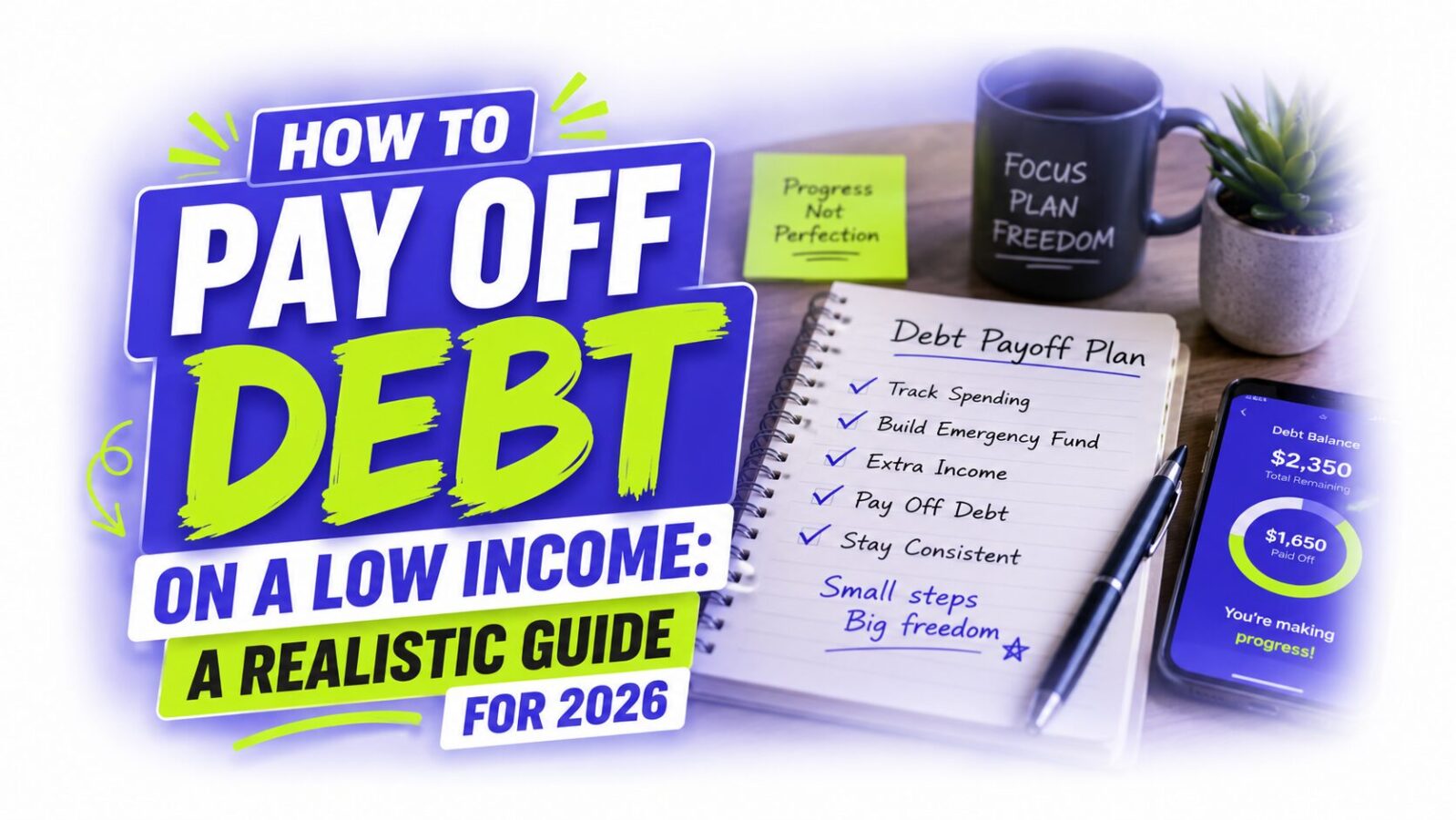
Paying off debt on a low income starts with one honest question: is your situation a math problem (income genuinely does not cover needs plus debt) or a psychology problem (you earn enough but spend it first)? The fix is completely different. If it is a math problem, you reduce fixed costs and claim every benefit you qualify for; if it is psychology, you automate payments before the money disappears. Most debt advice assumes spare cash you may not have. This guide is for the real situation.
Key Takeaways
- Diagnose first: a math problem needs lower expenses or more income, not a budgeting app.
- Claim every benefit: SNAP, Medicaid, EITC, and the Child Tax Credit are chronically underclaimed.
- If it’s psychology, automate the debt payment for the day after payday.
- Prioritize housing and high-rate debt; medical and student loans can often wait.
Is It a Math Problem or a Psychology Problem?
Some situations are psychology problems: you earn enough to pay your debts but spend the money first. The fix is behavioral, like automatic transfers and spending freezes. Other situations are math problems: your income genuinely does not cover basic needs plus debt. No budgeting app solves a math problem, and telling someone earning $1,800 a month with $900 rent to “cut a latte” is useless. The real work there is raising income or cutting fixed expenses. Be honest about which one you are in before choosing a strategy.
How Do You Cut Fixed Expenses (the Math Problem)?
Housing. Rent is usually the biggest and hardest expense to change. Adding a roommate can cut per-person housing cost by 30% to 40% in most markets; moving to a cheaper unit at lease end saves $1,200 a year for every $100 a month; and HUD-funded, state, and local emergency rental assistance programs are widely underused. Search “[your state] rental assistance program” and apply even if you are skeptical about eligibility.
Food. SNAP is available to many low-income individuals (the gross income limit for a one-person household is roughly $1,600 a month, and benefits adjust each October). If you qualify and are not enrolled, that is money you are leaving on the table; apply at benefits.gov. Food banks, community fridges, and pantries are also available with no income verification.
Phone and internet. Note that the Affordable Connectivity Program ended in 2024, so its $30 monthly discount is no longer available. The Lifeline program still offers about $9.25 a month off phone or internet for qualifying households, and pairing it with a low-cost carrier (Mint Mobile, Visible, or similar) can cut combined phone and internet costs to roughly $25 to $40 a month.
How Do You Automate (the Psychology Problem)?
If your income covers needs plus some debt capacity, the problem is execution: getting money to the debt before it gets spent. The fix is simple and unglamorous: schedule the debt payment to transfer the day after each paycheck lands. If you are paid on the 1st and 15th, set automatic payments for the 2nd and 16th, so the money leaves before it enters your mental “available to spend” balance.
How Do You Find Extra Money on a Low Income?
Tax credits you may be missing. The Earned Income Tax Credit is the largest anti-poverty program in the country and chronically underclaimed. For 2026 it is worth up to $664 with no children and up to $8,231 with three or more children, with income limits that rise with family size (check eligibility at irs.gov). If you never claimed it, you can file amended returns up to three years back to collect. The Child Tax Credit ($2,200 per child for 2026 under the OBBBA) and the Child and Dependent Care Credit are also frequently left unclaimed.
Benefits you may be leaving behind. Benefits.gov and your state’s social services site show what you qualify for, including Medicaid, LIHEAP (utility assistance), WIC, and childcare subsidies. These are funded by taxes and designed for exactly your situation; using them is rational.
Side income at any scale. Even $100 to $200 a month put entirely toward debt matters at low balances. On a $3,000 card at 21.5%, an extra $100 a month cuts about 14 months off the payoff. Low-startup options include selling unused items, dog walking, yard work, delivery driving, or babysitting.
Which Debts Should You Prioritize?
- Housing payments first. Eviction or foreclosure causes cascading problems that are harder to recover from than any other debt.
- Utilities needed for work. Losing phone service can mean losing your job, so pay it.
- Transportation for work. The car payment or transit pass if your job depends on it.
- High-interest unsecured debt. Credit cards at 21.5%+ make your situation worse monthly; pay minimums elsewhere and put extra here.
- Medical debt. Paid medical collections and those under $500 are already off credit reports, and newer scoring models weigh medical debt less (note a 2025 court ruling struck down the broader CFPB ban, so larger unpaid medical collections can still appear). Keep any payment arrangement but deprioritize versus credit card debt.
- Student loans. Federal loans have income-driven options that can drop payments to as little as $10 (or $0 under some plans) at very low incomes. Enrolling in an income-driven plan like RAP or IBR stops the delinquency clock without money you do not have.
Estimate Your Budget
Use this calculator to split your take-home pay into needs, wants, and savings:
50/30/20 Budget Calculator
What If You Cannot Make Any Debt Payments?
If nothing is left after basic necessities, you are in a hardship situation, and you have options. Call creditors and ask about hardship programs, which most major issuers offer (temporarily cutting rates to 0% to 5% and lowering or waiving minimums for 3 to 6 months) even though they are not advertised. Contact a nonprofit credit counselor through the NFCC (nfcc.org) for free or low-cost help and a Debt Management Plan. And consider bankruptcy: Chapter 7 wipes out most unsecured debt, attorney fees typically run $1,000 to $2,000, and legal aid organizations help very low-income filers for free. See our guide on your credit score after bankruptcy.
FAQ
How do I pay off debt when I barely make enough to live?
Diagnose whether it is a math or psychology problem. If math, cut fixed costs (roommate, rental assistance, SNAP) and claim every credit like the EITC. If psychology, automate the payment for the day after payday.
What benefits help with debt on a low income?
SNAP, Medicaid, LIHEAP, WIC, and the EITC and Child Tax Credit. Many are underclaimed, and the EITC alone can be worth up to $8,231 for 2026 with three or more children.
Should I pay medical debt or credit card debt first?
Credit card debt, almost always. It carries far higher interest, while medical debt is often interest-free, and paid or under-$500 medical collections no longer appear on credit reports.
Can I lower my student loan payment if my income is very low?
Yes. Income-driven plans like RAP or IBR can cut federal student loan payments to as little as $10, or $0 under some plans, which stops delinquency without requiring money you do not have.
Bottom Line
Struggling with debt on a low income is usually a math problem, not a character failure, so cut fixed costs, claim every benefit you qualify for, and attack the highest-rate debt first. Automate payments if the issue is execution, and use hardship programs, credit counseling, or bankruptcy if you truly cannot pay. To go deeper, see our guides on your credit score after bankruptcy, talking to debt collectors, and the debt validation letter.
This article is for educational and informational purposes only and is not financial or legal advice. Benefit thresholds and program availability change, so confirm current eligibility at benefits.gov and irs.gov.