 By
By 
The SAVE Plan has ended, but your federal student loans do not suddenly become due in full, and missing a repayment-plan notice does not immediately put you into default.
If your loans are still in SAVE forbearance, your federal loan servicer should send you a notice telling you to choose another repayment plan. You generally have 90 days from the date of your own servicer notice, not 90 days from July 1.
If you do nothing during that period, your loans can eventually be placed into the Standard Repayment Plan or the new Tiered Standard Plan, depending on your loans.
The important thing now is to compare your options before your servicer makes that choice for you.
Key takeaways
- SAVE ended on March 10, 2026.
- Federal loan servicers began sending SAVE transition notices starting July 1, 2026.
- You generally have 90 days from your own servicer notice to choose another repayment plan.
- July 1 is not automatically your personal deadline.
- RAP is now available and bases payments on AGI and dependents.
- RAP has a $10 minimum monthly payment.
- IBR may still be available for qualifying loans disbursed before July 1, 2026.
- Some borrowers with older eligible loans may also have access to PAYE or ICR during the transition period.
- PAYE and ICR are scheduled to end no later than July 1, 2028.
- If you make no choice, your loans can be moved into Standard or Tiered Standard.
- Tiered Standard does not qualify for PSLF.
When did the SAVE Plan actually end?
SAVE ended on:
March 10, 2026
A federal court order ended the plan on that date.
July 1, 2026 is important for a different reason.
That was when the new:
- Repayment Assistance Plan, or RAP
- Tiered Standard Repayment Plan
became available.
It was also when federal loan servicers began sending affected SAVE borrowers notices instructing them to choose another repayment plan.
The Department of Education says more than 7.5 million borrowers were affected by the transition.
You generally receive 90 days from the date of the notice sent by your servicer.
That means two SAVE borrowers can have different deadlines.
Do not assume your deadline is September 29, October 1, or any other date calculated from July 1.
Find the actual notice in:
- your email,
- your servicer inbox,
- your mail,
- or your online servicer account.
For the federal announcement, see the Department of Education’s SAVE transition guidance.
When will my student loan payments restart?
If your loans are still in SAVE forbearance, your payment does not automatically restart just because July 1 passed.
You generally begin making required payments again after your loans transition out of SAVE forbearance and into another repayment plan.
If you choose a new plan before your 90-day period ends, your servicer can process that transition earlier.
Once the new plan becomes active, you start making the payment required under that plan.
If you make no selection, your servicer can eventually move your loans into Standard or Tiered Standard after your selection period expires.
SAVE forbearance is not interest-free
This is easy to miss.
SAVE forbearance originally had a 0% interest treatment during part of the litigation.
That ended.
Interest began accruing again on affected SAVE loans on:
August 1, 2025
So even if your current required payment is $0 because the loan remains in forbearance, interest may still be accumulating.
That is one reason not to ignore the transition indefinitely.
I had a $0 SAVE payment. What will I pay now?
There is no single replacement payment.
Your new bill depends on:
- the repayment plan you choose,
- your income,
- your dependents or family size,
- your loan type,
- your loan disbursement dates,
- and sometimes your tax filing status.
If you choose RAP, however, there is an important difference from SAVE:
RAP generally has a $10 minimum payment.
That means someone who previously had a $0 SAVE payment will not necessarily continue paying $0 under RAP.
Example: $22,000 AGI
Suppose you are single, have no dependents and have:
$22,000 of AGI
RAP places that income in the 2% band.
Annual base payment:
$22,000 × 2% = $440
Monthly payment:
$440 ÷ 12 = about $36.67
So the estimated RAP payment would be about:
$37 per month
That is only an example.
Another repayment plan could produce a different number.
RAP Payment Estimator
How does RAP calculate payments?
RAP uses your adjusted gross income, or AGI, and the number of dependents you claim on your federal tax return.
The annual base calculation is:
| AGI | RAP annual base payment |
|---|---|
| $10,000 or less | $120 |
| More than $10,000 to $20,000 | 1% of AGI |
| More than $20,000 to $30,000 | 2% |
| More than $30,000 to $40,000 | 3% |
| More than $40,000 to $50,000 | 4% |
| More than $50,000 to $60,000 | 5% |
| More than $60,000 to $70,000 | 6% |
| More than $70,000 to $80,000 | 7% |
| More than $80,000 to $90,000 | 8% |
| More than $90,000 to $100,000 | 9% |
| More than $100,000 | 10% |
The annual amount is divided by 12.
Then RAP reduces the monthly payment by:
$50 for each dependent you claim
The final payment generally cannot be less than:
$10 per month
RAP examples
| Situation | AGI | Dependents | Estimated RAP payment |
|---|---|---|---|
| Lower income | $12,000 | 1 | $10/month |
| Early career | $22,000 | 0 | About $37/month |
| Moderate income | $45,000 | 0 | $150/month |
| One income, two dependents | $60,000 | 2 | $150/month |
| Higher income | $95,000 | 1 | About $663/month |
These examples illustrate the basic formula only.
Your actual payment can be affected by factors such as marital filing status and your specific loan situation.
Use the official StudentAid.gov Repayment Calculator before choosing a plan.
RAP also changes what happens to unpaid interest
RAP has a major balance-protection feature that SAVE borrowers should understand.
If your full, on-time RAP payment is smaller than the amount of interest that accrues for the month, the remaining eligible unpaid interest is subsidized.
For example, suppose:
- $200 of interest accrues
- your required RAP payment is $100
Your $100 payment does not cover all the monthly interest.
Under RAP’s interest benefit, the remaining eligible interest can be subsidized rather than being left to increase your balance.
This does not mean your loan stops accruing interest.
It means eligible interest left unpaid after your required monthly payment is covered under the RAP rules.
How does RAP’s principal benefit work?
RAP also includes a matching principal benefit.
If your full, on-time required payment does not reduce your total principal balance by enough, the Department can provide an additional principal reduction.
The matching benefit is up to $50, but it is not automatically $50 every month.
For example, if your required payment is $30 and none of it reaches principal, the additional principal benefit can generally be up to $30, not an automatic $50.
The point is to help borrowers who make their required payments make actual progress toward reducing principal.
RAP also provides forgiveness of a remaining eligible balance after:
360 qualifying monthly payments, or 30 years
For more detail, see our Repayment Assistance Plan guide.
What repayment plans can former SAVE borrowers choose?
There is no single list that applies to every former SAVE borrower.
Eligibility depends heavily on loan type and disbursement date.
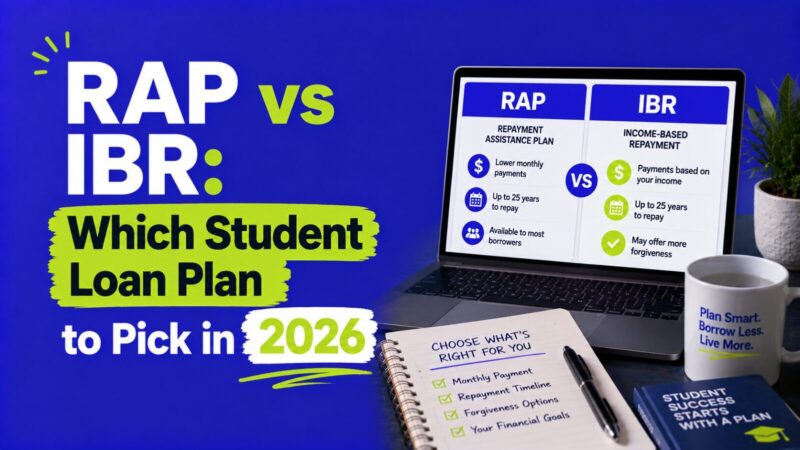
RAP
RAP is the new income-driven repayment plan.
It is available for most eligible Direct Loans and can apply to qualifying loans disbursed before or after July 1, 2026.
Payments range from 1% to 10% of AGI, subject to RAP’s dependent adjustment and $10 monthly minimum.
RAP can also produce qualifying payments toward PSLF when you satisfy the other PSLF requirements.
IBR
Income-Based Repayment remains available for many qualifying Direct and FFEL Program loans disbursed before July 1, 2026.
IBR generally uses:
- 10% of discretionary income for certain newer borrowers
- 15% for other borrowers
Unlike RAP, IBR first protects income equal to 150% of the applicable federal poverty guideline.
That means IBR can sometimes produce a lower payment than RAP, especially at low incomes.
IBR can also produce a $0 required payment.
Its normal forgiveness period is generally:
- 20 years for qualifying newer borrowers
- 25 years for other borrowers
Compare the two in our RAP vs IBR guide.
PAYE and ICR
Some borrowers with eligible loans disbursed before July 1, 2026 may still qualify for:
- PAYE
- ICR
during the transition period.
Federal Student Aid says both plans will be retired no later than:
July 1, 2028
That is why saying every former SAVE borrower now has only RAP or IBR would be too broad.
Check your actual eligibility.
Standard and Tiered Standard
These are fixed-payment plans rather than income-driven plans.
Under a fixed plan, your monthly payment is determined primarily by your loan balance, interest rate and repayment term rather than your income.
The new Tiered Standard Plan uses repayment terms of:
- 10 years
- 15 years
- 20 years
- 25 years
depending on the applicable rules and outstanding loan balance.
A fixed plan can be reasonable if you can afford the payment and want a defined payoff date.
But it can be a poor default if your goal is loan forgiveness.
See our Tiered Standard Repayment Plan guide before choosing it simply because the payment initially looks manageable.
What happens if you do nothing?
If your 90-day selection period ends and you have not chosen another plan, the Department says your loans can be automatically placed into either:
- the Standard Repayment Plan
- or the Tiered Standard Repayment Plan
depending on your loans.
Missing the selection deadline itself does not mean you immediately default.
But once the new repayment plan becomes active, you will have a required monthly payment.
If you then fail to make required payments, the loan can become delinquent and eventually default.
For a deeper explanation, see what happens if you do nothing when SAVE ends.
Be careful if you are pursuing PSLF
Automatic placement matters a lot if your goal is Public Service Loan Forgiveness.
RAP and IBR can produce qualifying PSLF payments.
PAYE and ICR can also qualify while those plans remain available.
The 10-year Standard Repayment Plan is also a qualifying PSLF plan.
But Tiered Standard is specifically excluded from PSLF.
So if your servicer automatically places you into Tiered Standard, do not assume your future payments will continue advancing you toward PSLF.
That could cost you valuable qualifying months.
Before your SAVE selection period ends, check:
- your current PSLF qualifying payment count,
- your employer eligibility,
- the repayment plans available for your loans,
- and the payment each qualifying plan would require.
Which repayment plan should you compare first?
A simple starting framework is:
| Your situation | Plans to compare first |
|---|---|
| Income is low relative to debt | RAP and other eligible IDR plans |
| You previously had a $0 SAVE payment | RAP, IBR and any other IDR plans available |
| You are pursuing PSLF | PSLF-qualifying IDR plans |
| You want a shorter IDR forgiveness timeline | Check IBR or PAYE eligibility against RAP |
| You prefer fixed payments | Standard and Tiered Standard |
| You have older or unusual loans | Use StudentAid.gov before assuming eligibility |
Do not compare plans only by today’s monthly payment.
Also look at:
- total expected repayment,
- repayment length,
- interest treatment,
- projected IDR forgiveness,
- PSLF eligibility,
- and what happens if your income changes.
A plan that saves $100 per month today can still cost more over its full repayment period.
How to switch out of SAVE
Start at StudentAid.gov.
Log in and open the Repayment Calculator.
Logging in is useful because the calculator can use your actual federal student loan information to show the repayment plans for which your loans may qualify.
Compare:
- the estimated monthly payment,
- total amount repaid,
- repayment period,
- projected forgiveness,
- and PSLF results if applicable.
If you choose an income-driven plan, you can apply through the federal IDR application.
Allowing the Department of Education to access your federal tax information directly from the IRS can simplify income verification and future annual recertification.
Our step-by-step guide to switching out of SAVE walks through the process.
Frequently asked questions
Did SAVE end on July 1, 2026?
No.
SAVE ended on March 10, 2026 after a federal court order.
July 1 was the launch date for RAP and Tiered Standard and the beginning of the servicer notice process.
When is my 90-day SAVE deadline?
Your 90 days generally run from the date of the transition notice sent by your loan servicer.
Do not calculate your deadline automatically from July 1.
Check your actual notice.
When do my payments restart?
If your loans remain in SAVE forbearance, payments generally restart when your loans transition into another repayment plan.
If you select another plan early, your forbearance can end once that transition is processed.
Is SAVE forbearance still interest-free?
No.
Interest began accruing again on affected SAVE loans on August 1, 2025.
Can I still have a $0 student loan payment?
Potentially, depending on the plan.
RAP itself generally has a $10 monthly minimum.
IBR and certain other older IDR plans can produce a $0 calculated payment for eligible low-income borrowers.
Does RAP prevent unpaid interest from increasing my balance?
If you make your full required RAP payment on time and it does not cover all eligible monthly interest, the remaining unpaid interest can be subsidized under the RAP rules.
Does RAP count toward PSLF?
Yes.
RAP payments can count toward PSLF when you satisfy the other program requirements.
Does Tiered Standard count toward PSLF?
No.
Current PSLF rules specifically exclude the Tiered Standard Repayment Plan.
What happens if I miss the SAVE plan-selection deadline?
You can be automatically moved into Standard or Tiered Standard.
That does not immediately put you in default.
But you will need to make the required payments once the replacement plan becomes active.
Bottom line
SAVE is already over. What matters now is the deadline in your own servicer notice and which repayment plan you choose next.
Do not treat July 1, 2026 as your personal deadline.
Find the notice from your servicer and calculate the 90-day period from the date listed there.
Then compare your actual repayment options on StudentAid.gov.
If you previously had a $0 SAVE payment, RAP may create a required payment because RAP has a $10 minimum. But RAP is not automatically the cheapest or best replacement.
Depending on your loans, IBR and possibly PAYE or ICR may give you a different payment or forgiveness timeline.
And if you are pursuing PSLF, pay particular attention to automatic placement. Tiered Standard does not qualify for PSLF.
The best move is to compare your payment, long-term cost and forgiveness path before your servicer chooses a plan for you.
For the wider picture, see our federal student loan changes in 2026.
This article is for general educational purposes only and is not individualized financial, tax or legal advice. Federal student loan eligibility, repayment plans, court orders and deadlines can change. Verify your repayment options, personal deadline and current loan information through StudentAid.gov and your federal loan servicer before changing repayment plans.