By
By 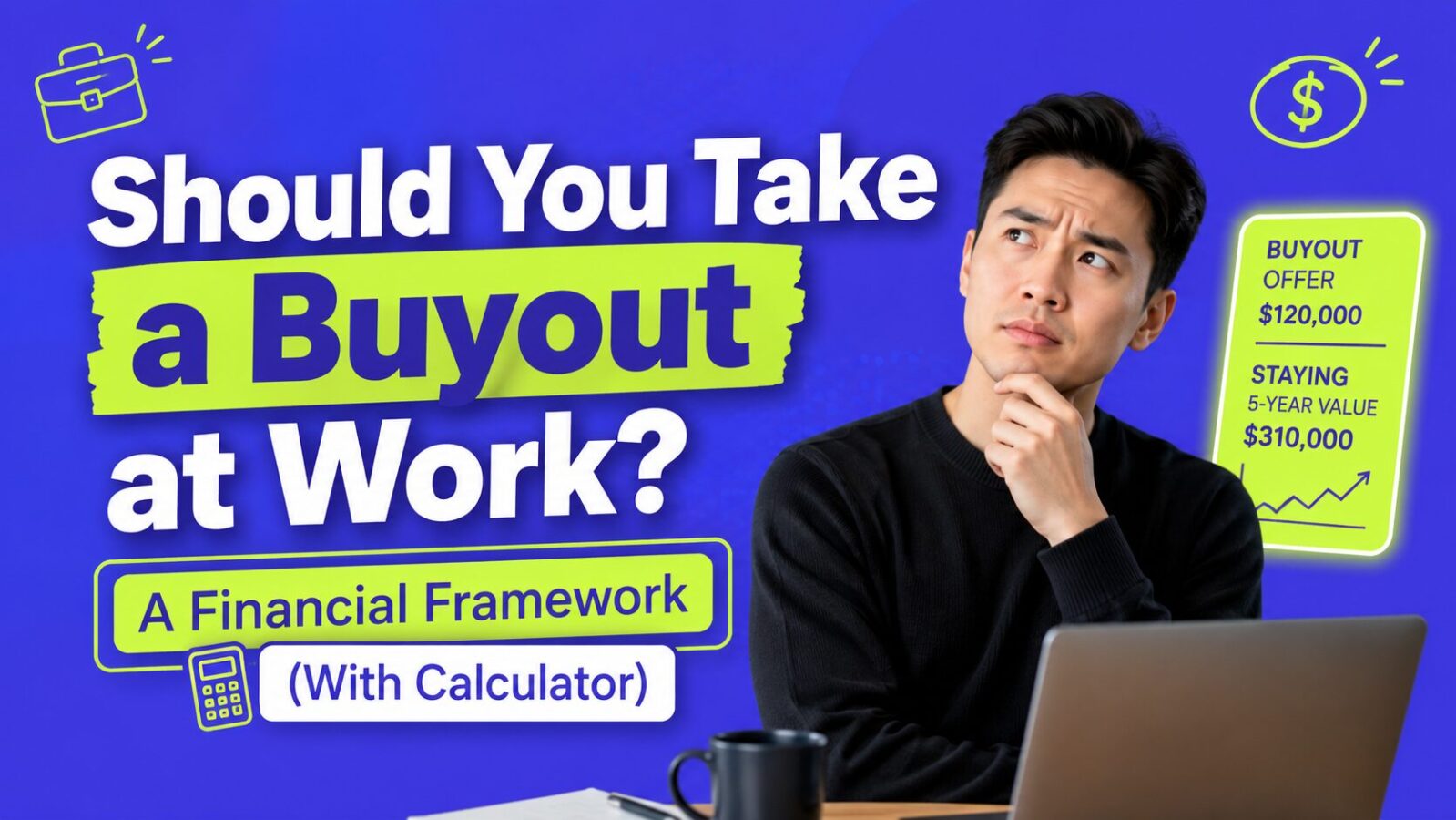
Your company just offered you a buyout: maybe six months of salary, some stock vesting, and a bit of COBRA coverage. It sounds like a lot until you run the real numbers. Taxes can take a third off the top, replacing health insurance through COBRA often costs $600 to $800 a month for one person, and finding a new job in a 4.3% unemployment market (as of May 2026) usually takes longer than people expect. Before you sign, do the math. Here is a framework to figure out how long your package would actually last.
Key Takeaways
- The offer is gross, not take-home. After income tax, state tax, and FICA, you may keep around two-thirds of it.
- Health insurance is the hidden cost. COBRA is pricey, and a marketplace plan may be cheaper.
- Calculate your runway: net severance plus savings, divided by monthly expenses, equals months of cushion.
- Factor in the job market and your own situation, not just the dollar amount.
Step 1: Calculate What You Actually Take Home
The number on the offer letter is gross. Severance is treated as ordinary income, and a lump sum gets added to your salary for the year, which can push part of it into a higher bracket. It is also generally subject to Social Security and Medicare taxes (FICA), which many people forget.
For example, say you earn $80,000 and receive a $40,000 severance, for $120,000 of taxable income. The severance sits in roughly the 22% federal bracket, plus about 5% to 6% state tax in many states, plus 7.65% FICA. That is around 35% total, so a $40,000 package nets closer to $26,000 after tax, not the full $40,000. Ask whether the company can spread the severance across pay periods or into the next tax year, which can lower the bracket impact.
Step 2: Account for Health Insurance
Losing employer coverage is a major cost most people underestimate. COBRA lets you keep your existing plan, but you pay the full premium plus an admin fee, often $600 to $800 a month for an individual and far more for a family. Compare that with an ACA marketplace plan, which can be cheaper, especially if your income drops after leaving. Note that the enhanced ACA subsidies expired at the end of 2025, so check your actual cost. See our guide on health insurance costs in 2026 before assuming COBRA is your only option.
Step 3: Calculate Your Runway
This is the heart of the decision. Your runway is how many months you could cover your life with the package plus your savings:
Runway (months) = (net severance + emergency fund) divided by monthly expenses (including health insurance)
For example, if your severance nets $26,000, you have $15,000 in savings, and your monthly expenses including a $700 health plan are $4,500, your runway is ($26,000 + $15,000) / $4,500, or about 9 months. Then compare that to how long a job search realistically takes in your field. In a 4.3% unemployment market, many professional searches run three to six months or longer, so a 9-month runway is workable, while a 3-month runway is tight.
Other Factors That Change the Math
- Unemployment benefits. Severance can delay or reduce unemployment benefits in some states, so check your state’s rules before counting on them.
- Unused PTO and stock. Ask whether you will be paid out for unused vacation and what happens to unvested equity, which can add real value.
- Non-compete or non-solicit clauses. These can limit your next job, so read the agreement carefully and consider legal review.
- The job market in your field. A hot specialty is very different from a shrinking one. Be honest about how fast you could realistically land a comparable role.
- Your own situation. A dual-income household with low expenses has far more flexibility than a sole earner with a mortgage.
When Taking the Buyout Makes Sense
A buyout can be a good move if your runway comfortably exceeds a realistic job search, you were already planning to leave, you have a strong network or in-demand skills, or the package is unusually generous. It can also be right if your role looks likely to be cut anyway, since taking a voluntary package may beat waiting for a layoff with less notice.
When to Think Twice
Be cautious if your runway is short, your field is slow, you rely on the employer’s health coverage for ongoing needs, or you have no other income in the household. The lump sum can feel large, but if it only covers a few months and the search takes longer, the math turns against you. Park any severance you do take in a safe, accessible place while you decide, such as a high-yield savings account.
FAQ
How much of a severance do I actually keep?
Often around two-thirds. A lump sum is taxed as ordinary income, plus state tax and FICA, which can total roughly a third of the amount.
Is COBRA my only health insurance option after a buyout?
No. COBRA keeps your current plan but is expensive. An ACA marketplace plan may be cheaper, especially if your income drops, so compare both.
How do I know if my package is enough?
Calculate your runway: net severance plus savings divided by monthly expenses. Compare it to how long a realistic job search takes in your field.
Will a buyout affect my unemployment benefits?
It can, depending on your state. Severance may delay or reduce benefits, so check your state’s rules before relying on them.
Bottom Line
A buyout is a math problem, not just a windfall. Figure out your real take-home after taxes and FICA, add the cost of replacing health insurance, calculate your runway, and compare it honestly to your job-search timeline and the market. If the cushion comfortably outlasts a realistic search, it can be a smart move; if it is tight, think twice. Budgeting carefully through the transition helps, as in our guide to the 50/30/20 rule.
This article is for educational and informational purposes only and is not financial, tax, or legal advice. Tax treatment, benefits, and severance terms vary by situation and state. Consider a qualified tax professional or attorney before making a decision.