By
By 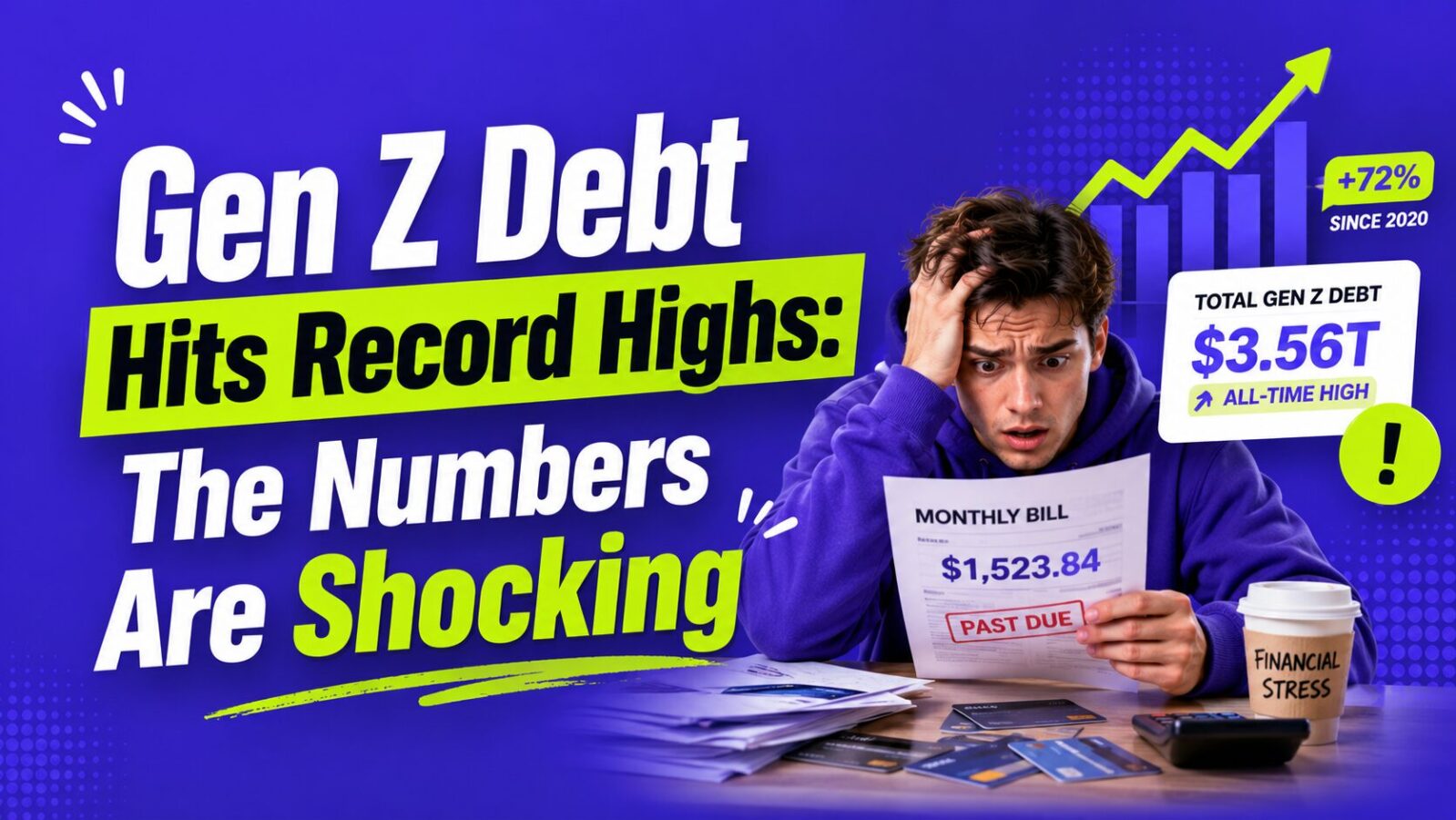
Getting out of debt in your 20s is harder than previous generations faced because the math is harder. Rent takes a larger share of income. Entry-level salaries have not kept pace with cost of living increases. Student loans are larger. BNPL made it easier to accumulate debt without noticing it happening. None of this changes the path out. It just means the path requires more intentionality than it used to.
First: Understand What You Are Actually Dealing With
Most people in their 20s have several types of debt with very different urgency levels. Not all debt is equal and treating it equally wastes energy on low-priority balances while high-cost debt compounds.
| Debt Type | Typical Rate | Priority |
|---|---|---|
| Credit cards | 22.3% average APR | Highest urgency after employer match |
| BNPL balances with fees | Varies (0% if paid, 25-35% if not) | High, especially with late fees accumulating |
| Private student loans | 7-14% | Medium, after credit cards |
| Federal student loans | 6.5-8.05% | Medium, income-driven options available |
| Auto loan | 7-14% depending on credit | Medium, do not default (repossession risk) |
| Medical debt (payment plan) | Often 0% | Lower, maintain plan payments but not top priority |
The Order of Operations That Works in Your 20s
Step 1: Get the 401k match no matter what
If your employer matches 401k contributions, contribute enough to get the full match before paying extra on any debt. A 100% match is a guaranteed 100% return that no debt payoff strategy can beat. Missing the match to pay down 22% debt is giving up 100% to eliminate 22%.
Step 2: Build $1,000 emergency fund
Without a buffer, every unexpected expense goes back on the credit card, undoing debt payoff progress. $1,000 is enough to cover most common emergencies without derailing your plan. Build this before paying extra on debt.
Step 3: List every BNPL obligation and eliminate them first
BNPL balances with approaching due dates should be cleared immediately because of their fee structure. A $200 BNPL balance incurring a $10 late fee every two weeks is effectively an astronomical interest rate. List every active BNPL plan, pay the ones with the closest due dates first, and stop opening new plans until existing ones are cleared.
Step 4: Avalanche or snowball your credit cards
Pick one method and apply every extra dollar to credit card debt. See our full comparison: Debt Avalanche vs Debt Snowball. At 22.3% average APR, eliminating credit card debt is one of the highest-return actions available to most people in their 20s.
Step 5: Evaluate student loans strategically
Federal student loans have income-driven repayment options, including the RAP plan launched July 2026, that can set payments at 0-10% of your income. If your income is low, enrolling in IDR and letting the payment be small while you attack higher-rate debt is often the right call. Private student loans do not have these protections and should be treated more like other consumer debt.
The Income Problem: When There Is Not Enough
If your income genuinely does not cover basic necessities plus minimum debt payments, this is a math problem, not a willpower problem. No budgeting technique solves a math problem. The solutions are increasing income (side hustle, career development, job change) or reducing fixed costs (housing, transportation). See our guide: How to Pay Off Debt on a Low Income.
The Mindset Shift That Makes the Biggest Difference
The single behavioral change that most reliably produces debt payoff progress in your 20s is treating future payments as already spent. Every purchase you make on a credit card you are not paying in full is borrowing from your future self at 22% interest. Visualizing the real cost of debt, the additional months of payments, the interest compounding daily, makes the trade-off visible in a way that abstract numbers do not.
Being in debt in your 20s is extremely common and not a permanent condition. The average Gen Z debt of $25,062 can be eliminated in 3-5 years with a focused plan on a median income. The compounding that would have gone to interest compounds for you instead once the debt is gone.
Debt Snowball vs Avalanche Calculator
Sources: Federal Reserve credit card APR data 2026; LendingTree Gen Z debt survey; Credit Karma debt statistics Q4 2025. This article is for informational purposes only.