By
By 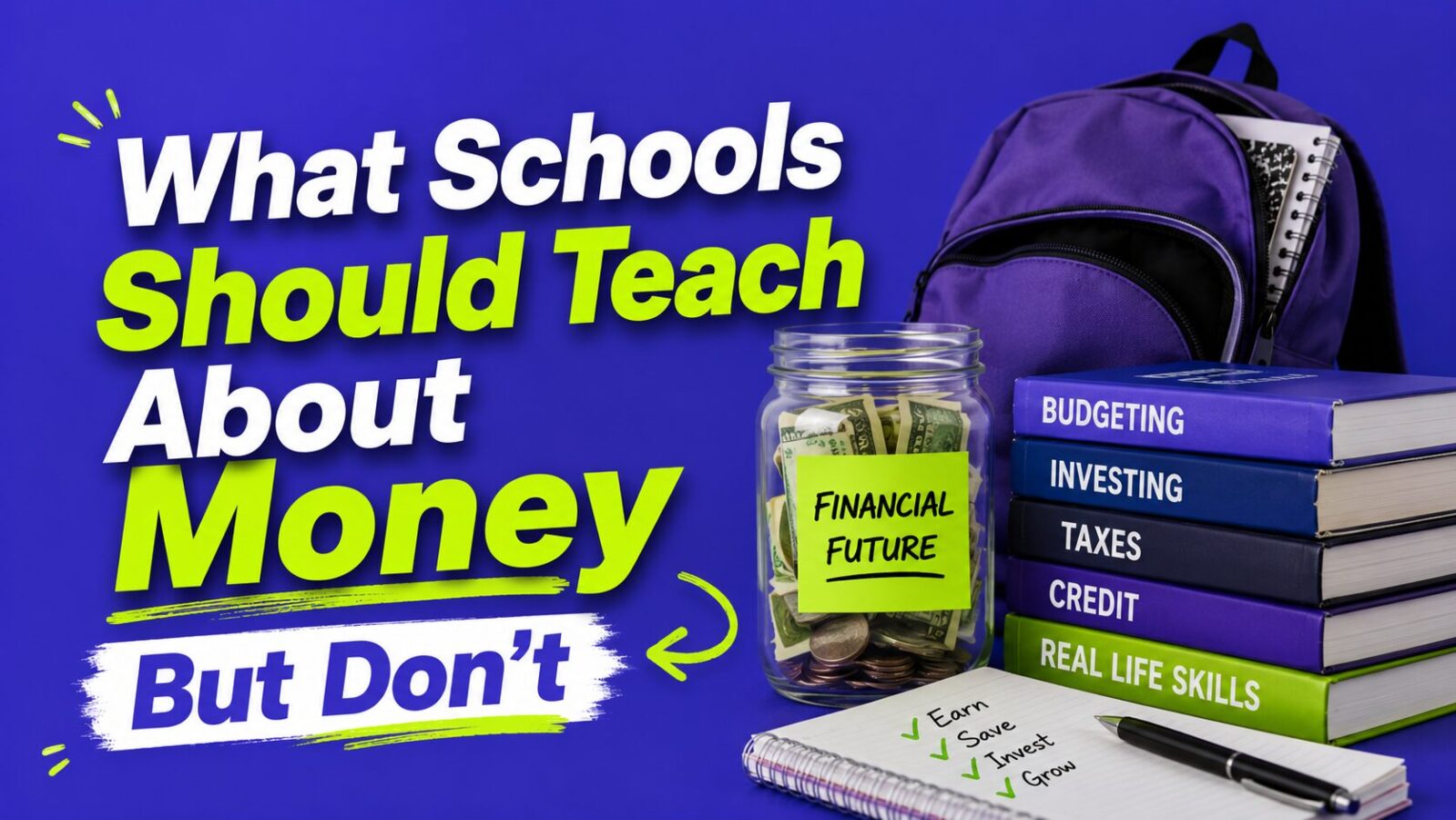
Most Americans spend over 12 years in school without ever learning to build a budget, manage debt, or start a retirement account. A 2022 Auburn University study put a number on the gap: after a short personal finance course, students changed real financial behavior two months later, with no requirement to. Five skills cover most of what is missing: budgeting, emergency funds, a debt payoff strategy, early investing, and credit mechanics. The content is free and learnable in a few focused hours. Here is what schools skip and how to teach it to yourself.
Key Takeaways
- The demand is real: when one med school offered a finance elective, it became the most-chosen course.
- Short courses change behavior: Auburn students revised real habits two months later, unprompted.
- Five skills cover most of it: budgeting, emergency funds, debt payoff, early investing, and credit.
- No degree needed; a few focused hours with your real numbers does most of the work.
What Did the Study Find?
Researchers at Auburn’s Harrison School of Pharmacy built a six-week personal finance elective and measured students before, during, and two months after. Pharmacy students are not low earners, yet they entered with near-zero knowledge of budgeting and debt strategy while carrying some of the heaviest student debt in the country (about 85% carry loans, averaging roughly $143,000 at public programs). After six weeks, knowledge rose significantly across five of ten topics, with budgeting jumping the most. Two months later, most respondents had already changed habits or made concrete plans, from opening retirement accounts to revising debt plans, without being asked to.
Why Is This a “You” Problem, Not Just a Pharmacy Problem?
The pattern is not specific to one profession. Medical residents, lawyers, MBAs, engineers, and teachers all tend to enter the workforce with the same gaps. When Florida State created a four-week finance elective for medical students, it instantly became the most-chosen elective, and self-rated competence jumped from about 2.25 to 4.45 out of 5. The demand was always there; no one offered it. The reason the gap persists is structural: financial literacy is rarely part of any core curriculum, so most people learn by making expensive mistakes with real money.
What Are the Five Pillars?
Budgeting
Budgeting showed the biggest gain in the study (a near-perfect post-course score from a low start). It is not complicated, just knowing where your money goes, but without exposure many never build the habit. The 50/30/20 framework (50% needs, 30% wants, 20% savings and debt) is a practical starting point. Use this calculator to see where your money lands:
50/30/20 Budget Calculator
The Emergency Fund
Two months after the course, only 22% had started an emergency fund, but 67% planned to and 0% had no plan, exactly the shift from vague awareness to an active goal that education should produce. The target is three to six months of essential expenses in a separate, liquid account. For anyone with student debt it can feel like a luxury, but it is the safety net that stops one surprise from deepening debt. Use this calculator to set a specific dollar target:
Emergency Fund Calculator
A Debt Repayment Strategy
The course improved knowledge of debt payoff, which matters because debt does not manage itself; without a strategy, most people just pay minimums while interest compounds. The snowball method (smallest balance first for momentum) and the avalanche (highest rate first for least interest) both work, so use whichever you will stick with. Use this calculator to compare them:
Debt Snowball vs Avalanche Calculator
Saving and Investing Early
A key “epiphany” for students was realizing they could start investing earlier than they assumed, not waiting until after training. Two months later, about 89% had started or planned to start investing and a retirement account. The reason is compound growth: time in the market beats timing it, and a dollar invested at 25 beats the same dollar at 35. See our guide on Roth IRA vs 401(k).
Credit and Loan Mechanics
Two more topics improved: how CDs compare to savings accounts, and loan amortization. Amortization is how payments split between principal and interest, and because early payments are mostly interest, extra principal early has an outsized effect, which is why the first years of a mortgage feel like little progress. Understanding CDs versus high-yield savings helps you decide where to park cash: liquid savings for emergencies, a CD’s higher locked rate for medium-term goals.
How Should You Start Today?
Work the same order the course used: build a budget (run the 50/30/20 numbers and see the gap between where you think your money goes and where it does), size a specific emergency fund (a dollar target, not just “three to six months”), write a debt payoff plan (list every balance and rate, pick a method), and open a retirement account (even a small monthly contribution now beats a larger one later). None of this needs a six-week elective, just about two hours and an honest look at your real numbers. The Auburn research suggests that once people do that, most do not stop. See our guide on how much to save for retirement.
FAQ
Why isn’t personal finance taught in most schools?
Competition for class hours, no standardized test attached, inconsistent delivery across departments, and limited teacher training. It tends to be treated as something people should pick up on their own.
What money skills should schools teach?
Budgeting, building an emergency fund, a debt repayment strategy, starting to invest early, and the mechanics of credit and loan amortization. Research found budgeting was the single biggest gap.
Can I learn personal finance as an adult?
Yes. Every concept a good course would cover can be learned in a few focused hours, and it sticks best when you learn it at the moment of a real decision, like a first credit card or a new 401(k).
Where should I start if I missed all of this?
Build a budget, then set a specific emergency-fund target, then write a debt-payoff plan, then open a retirement account. Even small contributions started now beat larger ones started later.
Bottom Line
Schools rarely teach the five skills that matter most, budgeting, emergency funds, debt payoff, early investing, and credit mechanics, but the research shows a few focused hours can change real behavior. Start with a budget, size an emergency fund, write a debt plan, and open a retirement account, using your own numbers. To go deeper, see our guides on how much to save, Roth IRA vs 401(k), and getting out of debt.
This article summarizes peer-reviewed research for general educational purposes and is not financial advice. The Auburn study used a small sample within one program and may not generalize to all populations.