Most Americans spent over 12 years in school and came out the other side without ever learning how to build a budget, manage student debt, or start a retirement account. A 2022 peer-reviewed study from Auburn University put a precise number on what that gap actually costs, and the findings are hard to ignore.
The research, published in the American Journal of Pharmacy Education, followed pharmacy students through a six-week personal finance elective course. On the surface, it sounds like a niche academic study. But what it documented is something that applies to almost every working American who graduated without a single class on money management: the difference between knowing about personal finance and having never thought about it systematically is enormous, and it shows up in your bank account.
Here is what the study found, why it matters far beyond pharmacy school, and the five financial skills it identified as the ones most people are missing.
The Study That Said the Quiet Part Out Loud
Researchers Jeanna Sewell and Sylvia Rogers at Auburn University’s Harrison School of Pharmacy designed a personal finance elective course for third-year pharmacy students, then measured the impact before, during, and two months after completion. They used a combination of financial literacy assessments, written assignments, discussion board posts, and an anonymous follow-up questionnaire to track both knowledge gains and behavioral changes.
The context matters here. Pharmacy students are not low earners. Starting salaries for pharmacists typically land well above the national median household income. Yet the research found that these same students, who had survived years of rigorous science education, were entering the workforce with almost no structured knowledge of personal finance, despite carrying some of the heaviest student debt loads in the country.
The numbers from the study drive this home. According to the researchers, 85.1% of pharmacy graduates carry student loan debt. Among those from public institutions, the average debt load was roughly $143,000. Graduates of private programs carried an average closer to $204,000. These are not small numbers to figure out on the fly, and yet no formal training was built into the curriculum until this elective was introduced.
The pre-course assessment results confirmed the problem. Students entered the course with near-zero scores on fundamental topics like budgeting and debt repayment strategy. By the end of six weeks, statistically significant improvements showed up across five of the ten matched assessment categories, with budgeting showing the largest jump of all.
Two months after the course ended, most students who responded to the follow-up questionnaire had either already made changes to their financial habits or had concrete plans to do so, from creating retirement accounts to revising their student debt plans, without being required or asked to do any of it as part of the course.
Why This Is a You Problem, Not Just a Pharmacy School Problem
The Auburn study focused on pharmacy students because that was the researchers’ context. But the pattern it documents is not specific to that profession at all.
Medical residents, law school graduates, MBAs, engineers, teachers, and everyone in between consistently enter the workforce with similar gaps. A 2018 study the Auburn researchers cited found medical students were uncomfortable with topics including disability insurance, home buying, investing, and retirement planning. These are not obscure financial instruments. They are the basic building blocks of a stable adult financial life.
The reason the gap persists is structural. Financial literacy is almost never part of a core curriculum, at any level. It gets treated as something people should pick up on their own, through trial and error, or through the luck of having financially literate parents. For most people, that means learning by making expensive mistakes with real money.
What the Auburn study demonstrated is that a structured, focused approach to personal finance education produces measurable knowledge gains and, more importantly, behavioral change. You do not need a six-week elective in a pharmacy curriculum to get those benefits. You need the same content, applied to your own situation.
The Five Pillars the Course Covered (And What You Should Know About Each)
The elective was built around ten assignments covering a range of personal finance topics. Five areas stood out as producing statistically significant improvements in student knowledge. These are the same areas where most graduates, across all fields, tend to be least prepared.
1. Budgeting: The Skill With the Biggest Knowledge Gap
Of all ten topics assessed, budgeting showed the most dramatic improvement from the pre-course to post-course assessments. The average pre-course score was 0.7 out of 2.0. By the end, it had reached a perfect 2.0, a jump that was statistically significant at p less than 0.001, the strongest result in the entire study.
This is worth sitting with for a moment. Students who had spent years in college, who were weeks away from entering a professional career, were essentially starting from zero on one of the most foundational personal finance skills. Budgeting is not complicated. It is knowing where your money goes. But without any formal exposure to it, many people simply never build the habit.
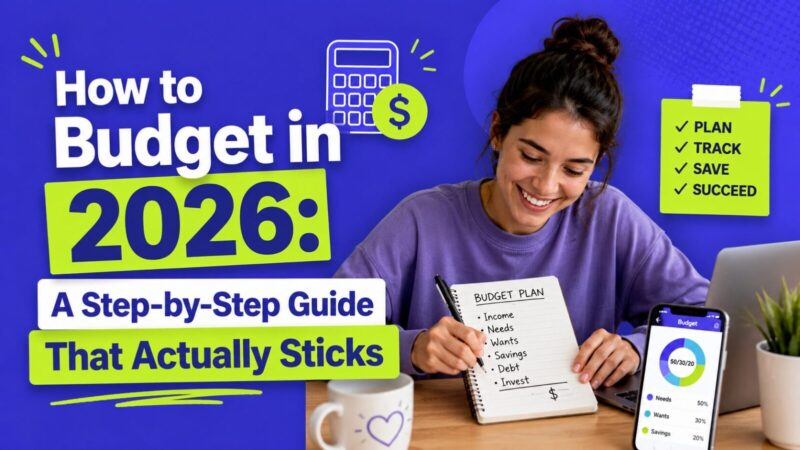
The course used a framework that categorized expenses and helped students understand the relationship between income, fixed costs, variable spending, and savings targets. The 50/30/20 framework, where 50% of take-home pay goes to needs, 30% to wants, and 20% to savings and debt repayment, is one of the most practical starting points for anyone building their first real budget.
50/30/20 Budget Calculator
2. The Emergency Fund: Everyone Knows They Need One, Most Have Not Started
The follow-up questionnaire results on emergency funds were telling. Two months after the course ended, only 22% of respondents had actually started an emergency fund. But 67% said they planned to, and zero percent said they had no plan at all.
Before the course, many students had not yet thought seriously about emergency savings as a concrete financial goal. After it, the concept had moved from vague awareness to an item on an active to-do list. That shift in intention is exactly what financial education is supposed to produce.
The standard recommendation is three to six months of essential living expenses held in a liquid, accessible account, separate from your checking account. For anyone carrying student debt, an emergency fund feels like a luxury. The research suggests the opposite framing: it is the safety net that prevents a single unexpected expense from sending you deeper into debt.
Emergency Fund Calculator
3. Debt Repayment Strategy: The Snowball Effect Is Learnable
The debt snowball strategy showed a statistically significant improvement in student knowledge after the course. This is one of the most practically important findings in the study, because student debt does not manage itself. Without a specific repayment strategy, most borrowers default to making minimum payments and watching interest compound for decades.
The snowball method works by directing any extra payment capacity toward the smallest debt balance first, regardless of interest rate, while making minimum payments on everything else. When the smallest balance is eliminated, that freed-up payment capacity rolls to the next smallest, and so on. The psychological momentum of eliminating accounts completely tends to sustain motivation in a way that purely math-optimized approaches sometimes do not.
For anyone weighing the snowball approach against the debt avalanche (attacking the highest-interest balance first), both work. The research on financial behavior tends to favor whichever method you will actually stick with consistently over years.
Debt Snowball vs Avalanche Calculator
4. Saving and Investing: The Earlier the Better, Even During Residency
One of the qualitative themes the Auburn researchers identified was what they described as an “epiphany” moment: students realizing they could start saving and investing earlier than they had previously assumed. Specifically, many had believed they would need to wait until after completing residency training before they could meaningfully contribute to retirement or investment accounts. The course challenged that assumption.
The numbers from the follow-up questionnaire reflect this shift. Before the course, retirement planning and investing had not been on most students’ near-term radar. Two months after completion, 89% of respondents had either started investing or planned to, and 89% had created or planned to create a retirement account. None of this was required by the course.
The underlying concept here is compound growth. Time in the market matters more than timing the market. A small contribution started at 25 produces meaningfully more long-term wealth than the same dollar amount started at 35, even if nothing else changes. The course made this concrete by using retirement planning calculators that showed projected outcomes at different starting ages.
5. Understanding Credit and Debt Mechanics: Amortization and CD Rates
Two additional topics showed statistically significant improvement: understanding how certificates of deposit compare to standard savings accounts, and understanding loan amortization. Both are practical knowledge that most people lack until they are standing at a bank counter or reviewing a loan document they are about to sign.
Amortization is the schedule by which loan payments are split between principal and interest over time. In the early years of a standard loan, the vast majority of each payment goes to interest rather than reducing the principal balance. Understanding this explains why extra principal payments early in a loan term have an outsized long-term effect, and why the first few years of a mortgage can feel like you are making almost no progress on the actual balance.
The CD versus savings account comparison matters for anyone holding cash reserves. High-yield savings accounts and certificates of deposit both earn more than a standard checking account, but they work differently. CDs lock your money for a fixed term in exchange for a higher rate. Understanding which is appropriate for emergency funds (where liquidity matters) versus medium-term savings goals (where a CD’s rate premium may be worth the lock-in) is a decision that directly affects your return on idle cash.
The Persona Technique: A Practical Way to Learn Without Real Risk
One of the more interesting instructional choices the Auburn researchers made was the use of “personas,” fictional profiles of pharmacy graduates with specific debt loads, salaries, credit scores, and family situations. Students worked through financial planning exercises using their assigned persona rather than their own personal financial details.
The researchers identified two unexpected benefits. First, students who were not yet aware of their own complete financial picture, including exact loan balances or projected expenses, could still engage meaningfully with the material using the persona’s details. Second, the personas exposed students to financial scenarios they had not yet encountered personally, such as calculating loan repayment during a lower-income residency period or planning for a home purchase within five years of graduation.
You can use a version of this approach on your own. Create a detailed financial profile for a hypothetical version of yourself at a specific future point, say, three years from now. Assign it your projected salary, your estimated debt balance based on current repayment, and your savings rate. Then work through the decisions that version of you will need to make. The distance the fictional framing creates can make it easier to think clearly about choices that feel too personal or anxiety-inducing to confront directly.
The Real Takeaway: Financial Education Produces Behavioral Change
The most important result of the Auburn study was not the improvement in test scores. It was what happened two months after the course ended. Without any requirement or encouragement from the course, the majority of respondents had revised their budgets, changed their spending habits, started conversations with partners about finances, and created or revised plans for debt, investment, and retirement.
That is the actual definition of financial literacy working: not knowing the definition of amortization, but using that knowledge to make a different decision with your money.
The researchers concluded that the gap in financial knowledge among high-earning graduates represents a significant and preventable problem. Their recommendation was that professional schools should build personal finance content into the curriculum before students accumulate the debt they will need to manage.
For the rest of us who already graduated without that course, the same content is accessible now. The tools exist. The calculators are free. The concepts are not complicated. The gap between where most people are and where they could be on these five pillars is, in most cases, a few deliberate hours of attention, not a professional finance degree.
Where to Start Today
If you want to work through the same core topics the Auburn course covered, here is a practical order that mirrors the course’s structure:
Start with a budget. Run your numbers through the 50/30/20 calculator above and see where your current spending actually lands. Most people are surprised by the gap between where they think their money goes and where it actually goes.
Then size your emergency fund. Use the calculator above to set a specific target in dollars, not just “three to six months.” A vague goal does not get funded. A specific number does.
Then build your debt repayment plan. List every balance you carry with its interest rate. Run the snowball calculator. Set a timeline. The most important variable is not which method you choose but whether you have any method at all.
From there, open a retirement account if you have not already. Even a small monthly contribution started now is worth significantly more than a larger one started later. The math on this is not subtle.
None of this requires a six-week elective course. It requires about two hours and a willingness to look at your actual numbers honestly. The Auburn research suggests that once people do that, most of them do not stop.
Sewell, J., & Rogers, S. (2022). Assessing the impact of a personal finance elective course on student attitudes and intentions. American Journal of Pharmacy Education. ePublished April 2022. Auburn University, Harrison School of Pharmacy.
Additional student loan statistics cited from: Hanson, M. (2022). Student loan debt statistics. Education Data Initiative; and the American Association of Colleges of Pharmacy 2021 Graduating Student Survey.
Disclosure
This article summarizes and interprets findings from peer-reviewed academic research for general educational purposes. It is not financial advice. Results from the Auburn study are based on a small sample (N=25) within a specific professional program and may not generalize to all populations.