By
By 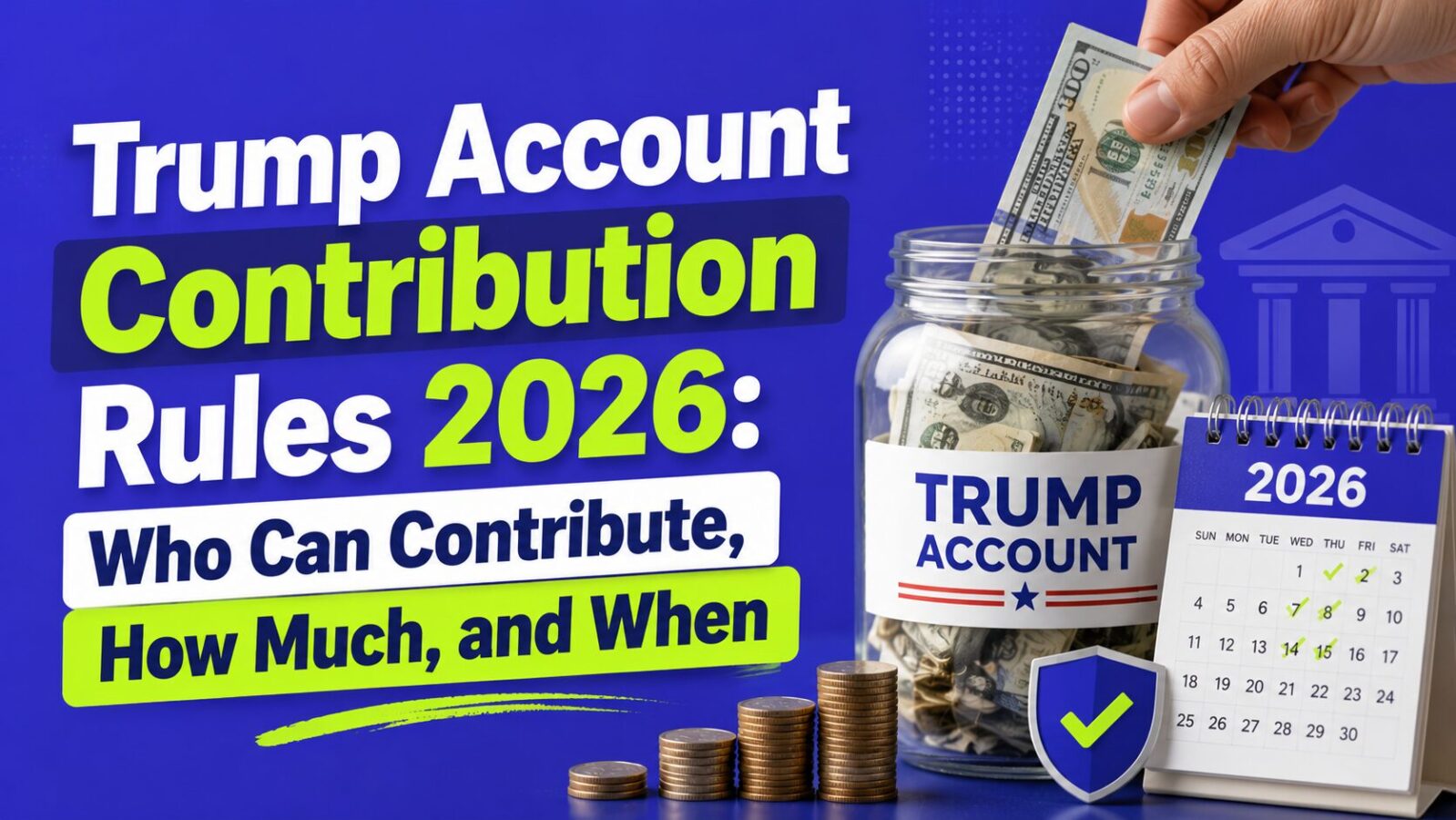
More than two dozen companies have announced they will contribute to Trump Accounts for their employees’ children, most by matching the $1,000 government seed. For eligible employees, that can mean free money added to a child’s account before you contribute a dollar yourself. Here is the list of companies that have announced contributions, how much they are offering, and how to find out if your employer participates. Because announcements and amounts change frequently, treat this as a snapshot and confirm with your own HR.
Key Takeaways
- Two dozen-plus companies have announced Trump Account contributions, most matching the $1,000 government seed.
- Employer contributions are excluded from your taxable income up to $2,500 a year.
- Employer contributions count toward the $5,000 annual cap; nonprofit and government contributions do not.
- The list changes constantly, so verify with your HR and check a live tracker.
Why Employer Matching Matters
Treasury Secretary Scott Bessent has compared Trump Account employer matching to 401(k) matching, suggesting it could become a standard part of benefits packages. The tax treatment is what makes it valuable: employer contributions up to $2,500 a year are excluded from the employee’s taxable income, so a $1,000 employer contribution costs you nothing in taxes and goes straight into your child’s account.
That money compounds. If the government adds $1,000 and an employer adds $1,000, your child’s account starts with $2,000 invested before you contribute anything. At a 7% average annual return, that $2,000 could grow to roughly $6,800 by the time the child turns 18, and keep compounding if left invested afterward. Returns are not guaranteed and past performance does not guarantee future results, but the head start is real.
Companies That Have Announced Contributions
The companies below have been reported as announcing Trump Account contributions for eligible employees’ children, most matching the government’s $1,000. Amounts and participation are as reported and subject to change, so confirm specifics with the employer.
| Company | Reported contribution |
|---|---|
| BNY Mellon | $1,000 match |
| BlackRock | $1,000 match |
| Charles Schwab | $1,000 match |
| JPMorgan Chase | $1,000 match |
| Robinhood | $1,000 match (also the app’s tech partner) |
| SoFi | $1,000 match |
| Dell Technologies | $1,000 match for employees’ children |
| Bank of America | $1,000 match (employee benefit; see our Trump Account banks comparison if you’re looking for BofA as a trustee instead) |
| Wells Fargo | $1,000 match |
| Coinbase | $1,000 match |
| Intel | $1,000 match |
| Chipotle | $1,000 match |
| Comcast | $1,000 match |
| Nvidia | $1,000 match |
| Uber | $1,000 match |
| Broadcom | $1,000 match |
| State Street | $1,000 match |
| Charter Communications | $1,000 match |
| Block | Announced support |
| Mastercard | Announced, details pending |
| Visa | Announced, details pending |
This list reflects reporting as of mid-2026 and more companies continue to announce. Americans for Tax Reform maintains a comprehensive, updated list at atr.org/trumpaccounts, which is the best place to check the latest.
The Dell Philanthropic Pledge (Separate From Employer Matching)
One headline number is often misunderstood. Michael and Susan Dell pledged $6.25 billion to fund Trump Accounts broadly, but that is a philanthropic gift, not an employer match. Through the Invest America initiative, it is set to deposit about $250 each into the accounts of roughly 25 million children age 10 and under in ZIP codes with a median income of $150,000 or less. Separately, Dell Technologies matches $1,000 for its own employees’ eligible children. Several other philanthropists and foundations have also pledged contributions to the program. See our full breakdown of who qualifies for the $250 Dell deposit for the exact eligibility rules.
How to Find Out If Your Employer Participates
- Check your company’s benefits portal or HR intranet for any Trump Account announcement.
- Ask your HR benefits team directly: “Does our company have a Trump Account matching contribution program?”
- If your company does not participate yet, HR can use the information at TrumpAccounts.gov to set one up.
Many companies have set up or are setting up programs without a public announcement, so asking HR directly is the most reliable way to find out.
The Contribution Rules for Employers
- Employer contributions count toward the $5,000 annual cap (unlike nonprofit and government contributions, which do not).
- Employers can contribute up to $2,500 per employee per year, within that $5,000 cap.
- The first $2,500 of employer contributions per year is excluded from the employee’s taxable income.
- Contributions begin July 4, 2026, the same as all other Trump Account contributions.
For the full picture, see our Trump Account FAQ, our guide for self-employed families who do not get an employer match, and our breakdown of Trump Account tax rules.
FAQ
How much can my employer contribute to my child’s Trump Account?
Up to $2,500 per year, which counts within the overall $5,000 annual cap. The first $2,500 is excluded from your taxable income.
Is the employer contribution taxable to me?
No, not up to $2,500 a year. That amount is excluded from your taxable income.
Does the employer match reduce how much I can contribute?
Yes. Employer contributions count toward the $5,000 annual cap, so a $2,500 employer contribution leaves $2,500 of room for everyone else combined.
How do I know if my company offers this?
Ask your HR or benefits team directly, since many programs are not publicly announced. You can also check the live list at atr.org/trumpaccounts.
Do state or charity contributions count against the cap?
No. Contributions from nonprofits and government entities do not count toward the $5,000 cap. Only employer and family contributions do.
Bottom Line
More than two dozen companies have announced Trump Account contributions, usually matching the $1,000 government seed, and the money is tax-advantaged up to $2,500 a year. The list changes often, so confirm with your HR and check a live tracker. If your employer participates, it is free money toward your child’s account, and it counts within the $5,000 annual cap.
This article is for informational purposes only and is not tax, legal, or financial advice. Company participation and amounts are as reported and change frequently. Verify with your employer and confirm current details on TrumpAccounts.gov.