By
By 
Everything you need to know about Trump Accounts in one place, with the most common errors corrected. Because this is a new program and IRS guidance is still evolving, confirm specifics on official sources before acting.
Basics
What is a Trump Account?
A Trump Account is a tax-advantaged investment account for children, created by the 2025 tax law (the One Big Beautiful Bill). It was originally proposed under the name “MAGA account” but is now officially called a Trump Account. The federal government deposits $1,000 into an account for each eligible child born between 2025 and 2028. The money is invested and locked until the child turns 18, after which it follows traditional IRA tax rules.
Who qualifies for a Trump Account?
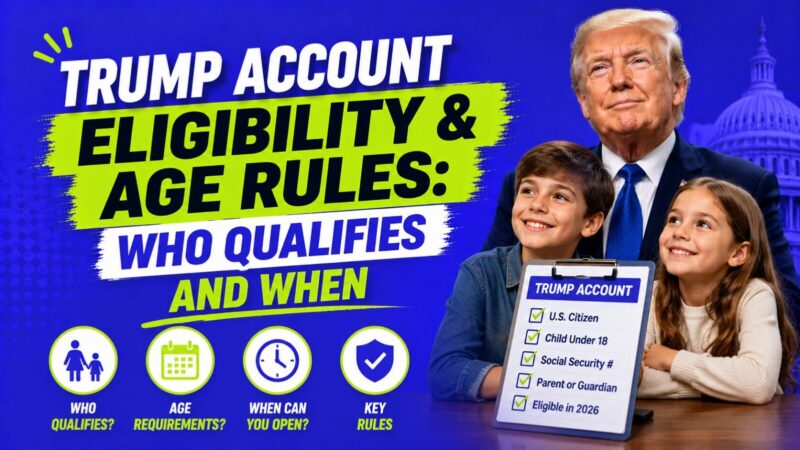
For the $1,000 government contribution, the child must be born between January 1, 2025 and December 31, 2028, be a U.S. citizen, and have a valid Social Security number, and at least one parent must also have a valid Social Security number. Green card holders (lawful permanent residents) do not qualify for the seed. Children born before 2025 can have an account opened and funded by parents, but do not receive the $1,000.
When does the $1,000 arrive?
July 4, 2026 for children enrolled before then. If you enroll later, the contribution is deposited after your enrollment is processed. There is no penalty for enrolling late.
Is a Trump Account the same as a 529 plan?
No. A 529 is a state-sponsored education savings plan with no government contribution, and qualified education withdrawals are fully tax-free. A Trump Account is a federal program with a $1,000 seed, but its withdrawals are taxed like a traditional IRA. Many families use both. See our full Trump Account vs 529 comparison.
How many families have signed up so far?
As of mid-July 2026, more than 6.5 million Trump Accounts have been opened for children under 18, with over 1.5 million of those enrolled in the $1,000 federal pilot contribution, according to Treasury and IRS figures. Enrollment has continued climbing steadily since the July 4, 2026 launch.
Eligibility and Enrollment
My child was born in 2024. Can they get a Trump Account?
They can have an account, but they do not receive the $1,000 government contribution, which is only for children born 2025 through 2028. Parents can open and fund an account themselves, and if your child is 10 or under and lives in a qualifying ZIP code, they may still get a $250 deposit from the Michael & Susan Dell Foundation. See our guide: Trump Account for Children Born Before 2025.
How do I enroll my child?
File IRS Form 4547, or enroll through TrumpAccounts.gov or the official Trump Accounts app (by the U.S. Department of the Treasury). You will need your child’s Social Security number. See our step-by-step guide: How to Open a Trump Account.
What is the enrollment deadline?
There is no hard lifetime deadline. Children enrolled before July 4, 2026 receive the $1,000 on that date, and those enrolled later receive it after processing. You can open an account any time before the child turns 18. If you’re worried you missed the April 15, 2026 tax-filing date, see our deadline FAQ, since that date was only the earliest option, not a cutoff. For every age and birth-year rule in one place, see our eligibility and age rules guide.
My child was born abroad but is a U.S. citizen. Do they qualify?
Yes. Eligibility is based on U.S. citizenship and a valid Social Security number, not birth location. A child born abroad to U.S. citizen parents who has a valid SSN can qualify.
Contributions
Can I add more than the $1,000 government contribution?
Yes. The total annual contribution cap is $5,000 per child (indexed for inflation), separate from the $1,000 government seed. This is a real limit, not the gift tax exclusion. The $5,000 includes any employer contribution.
Does my employer have to contribute to my child’s Trump Account?
No. Employer contributions are voluntary and capped at $2,500 per year (which counts within the $5,000 cap). There is no government program that automatically matches the $1,000 seed dollar-for-dollar. Ask your HR department whether your company offers it. See our list: Companies Contributing to Trump Accounts.
Can grandparents contribute?
Yes. Any individual can contribute, but all contributions from family and others combined are subject to the same $5,000 per child per year cap. Contributions are after-tax dollars with no deduction, the growth is tax-deferred, and withdrawals later are taxed like a traditional IRA.
I am self-employed. Can I still get an employer contribution?
Not in the traditional sense, but you can contribute as a parent up to the $5,000 cap. See our guide: Trump Account for Self-Employed Families.
Investments
What can Trump Account funds be invested in?
While the child is a minor, the account is limited to low-cost mutual funds or ETFs that track a broad U.S. stock index (at least 90% U.S. companies), do not use leverage, and charge an expense ratio of 0.10% or less. You cannot pick individual stocks, bonds, international funds, or cryptocurrency during this period. The most common choice is a low-cost S&P 500 or total U.S. market index fund.
What is the default investment if I do not choose?
A diversified U.S. stock index fund, in line with the program’s rules. It stays invested even if you do nothing, though you can review and adjust among eligible funds after enrolling.
Can I change the investment allocation?
Yes, among eligible funds, at any time through the account platform with no fee or penalty. See our investment guide: Best Investments for a Trump Account, and use our Trump Account calculator to project growth under different contribution levels.
Withdrawals
When can the money be accessed?
Generally when the child turns 18, at which point the account is treated as a traditional IRA. Before 18, access is allowed only in cases of the child’s death or permanent disability.
What can the money be used for at age 18?
Anything, but the tax treatment matters. Withdrawn earnings are taxed as ordinary income. A 10% early-withdrawal penalty applies before age 59½ unless a traditional-IRA exception applies, such as qualified higher education, a first-time home purchase (up to $10,000), birth or adoption costs, or disability. Those exceptions waive the penalty but not the income tax.
Can the money be rolled into a Roth IRA?
After the account becomes a traditional IRA at 18, the beneficiary can do a Roth conversion under standard IRA rules. A Roth conversion is taxable, so it is not a tax-free or penalty-free shortcut. Consult a tax professional first.
What if my child does not use the money for a qualified purpose?
The earnings are taxed as ordinary income plus a 10% penalty if no exception applies. The basis (original contributions and the government seed) comes back without additional tax.
Taxes
Is the $1,000 government contribution taxable income?
No. It is not reported as income, and you do not pay tax on it when received.
Are investment gains inside the account taxed annually?
No. Growth is tax-deferred, so you pay no tax on gains while the money stays in the account.
Are withdrawals at age 18 tax-free?
No. This is the most common misconception. Trump Accounts follow traditional IRA rules, so withdrawn earnings are taxed as ordinary income. “Qualified” uses like education or a first home only help you avoid the 10% penalty, not the income tax. See our full tax guide: Trump Account Tax Implications.
Scams and Security
How do I know if a Trump Account website or app is legitimate?
The official government site is TrumpAccounts.gov, and the Treasury also names trumpaccount.com as the official web version of the Trump Accounts app. The official app is “Trump Accounts” by the U.S. Department of the Treasury on the App Store and Google Play. Never pay a fee to access or activate a Trump Account, and Treasury will not call or text you about activation. See our scam guide: Trump Account Scams: How to Spot and Avoid Them, and our login and balance guide for the exact steps to get into your account safely.
What should I do if I think I was scammed?
Report to the FTC at ReportFraud.ftc.gov, and report phishing emails to phishing@irs.gov. If you shared personal information, contact the IRS Identity Protection Specialized Unit at 1-800-908-4490.
What Are People Saying on Reddit and Bogleheads?
The general sentiment on personal-finance forums like Bogleheads and r/personalfinance mirrors what we’d tell you directly: take the free seed money, don’t overthink the fund choice since the law already narrows it to a low-cost broad index fund, and don’t treat a Trump Account as a replacement for a Roth IRA once a teen has earned income. A recurring theme is confusion over the tax treatment, several posters initially assume it’s tax-free like a Roth, then are surprised to learn withdrawals are taxed as ordinary income. Our full benefits and drawbacks breakdown covers that exact misconception in detail. As with any forum, treat specific numbers or strategies you read there as anecdotal, not personalized advice, since posters don’t know your family’s full tax picture.
Bottom Line
A Trump Account gives eligible kids a $1,000 head start, but it is a tax-deferred traditional IRA, not a tax-free account. The annual contribution cap is $5,000, investments are limited to low-cost U.S. index funds, and withdrawals tax the earnings as ordinary income. Because the rules are new and still being clarified, confirm details with a CPA or qualified financial professional.
This article is for informational purposes only and is not tax, legal, or financial advice. Trump Accounts are governed by the 2025 tax law, and IRS guidance is still evolving, so rules and figures can change. Consult a qualified professional for your situation, and verify current details on IRS.gov and TrumpAccounts.gov.