By
By 
Open enrollment 2026 for ACA marketplace coverage runs approximately November 1, 2026 through January 15, 2027. This year matters more than most: the enhanced premium tax credits that kept marketplace plans affordable expired on December 31, 2025, and average net premiums jumped roughly 58% as a result. If you buy your own insurance as a freelancer, gig worker, or early-career professional, this guide walks you through every decision you need to make before the deadline.
Key Takeaways
- ACA marketplace OEP: ~November 1, 2026 – January 15, 2027 (verify exact end date at HealthCare.gov before enrolling).
- Medicare Annual Enrollment Period (AEP): October 15 – December 7, 2026.
- Subsidies changed: Enhanced premium tax credits expired December 31, 2025. Average net marketplace premium rose from $113 to $178/month (+58%). Enrollees above 400% FPL lost all subsidy.
- Four plan types to know: HMO, PPO, EPO, and HDHP. Choosing between them depends on whether you have regular doctors and how much you can absorb in out-of-pocket costs.
- Missed open enrollment? A qualifying life event (job loss, marriage, move) triggers a Special Enrollment Period of 60 days.
What Is Open Enrollment and When Does It Happen in 2026?
Open enrollment is the one window each year when you can sign up for or switch health insurance without needing a specific reason. Miss it and you are locked into your current plan (or no plan) until the next window, unless a qualifying life event opens a special window for you.
There are three main open enrollment windows in fall 2026:
*CMS finalized rule changes that may shorten the ACA window. Confirm the exact end date at HealthCare.gov before assuming January 15.
If you miss the ACA window entirely, the Special Enrollment Period guide covers every qualifying life event that can reopen enrollment outside of these dates.
What Changed for 2026? (The Subsidy Cliff You Need to Know About)
The biggest shift for the 2026 plan year is the expiration of the enhanced premium tax credits that Congress passed during the pandemic. Those credits held down marketplace premiums for millions of people. They expired December 31, 2025 and were not extended.
Average net marketplace premiums rose from $113 to $178 per month in 2026, a 58% jump, according to KFF analysis of CMS data.
Here is who got hit hardest:
- Households above 400% of the federal poverty level (FPL) had no subsidy under the original ACA rules and still have none now. Their gross premiums rose too.
- Households between 100% and 400% FPL still qualify for premium tax credits under the permanent ACA rules, but those credits are smaller than the enhanced version.
- Young adults just over the income threshold saw the sharpest effective cost increase because the enhanced credits disproportionately helped people with incomes near the cliff.
The full breakdown of who pays what and why is in the ACA subsidy cliff explainer. If your premium doubled and you are wondering why, start there.
Which Plan Type Is Right for You?
Every marketplace and employer plan fits into one of four structures. The differences matter most if you have existing doctors, take prescriptions, or expect significant medical use in the coming year.
Quick decision shortcut: if you are a freelancer buying on the marketplace and generally healthy, an HDHP or HMO tends to keep your premium low. If you see specialists regularly or want to keep your current doctors, a PPO gives you the most flexibility. The full framework with cost scenarios is in the HMO vs PPO vs EPO vs HDHP guide.
Should You Pick an HDHP and Open an HSA?
A high-deductible health plan (HDHP) paired with a health savings account (HSA) is one of the most tax-efficient combos available to people who buy their own insurance or work for an employer that offers it. You pay lower monthly premiums, put pre-tax dollars into the HSA, invest them, and use the money tax-free for medical costs now or in retirement.
The math works best if you are relatively healthy and can afford to cover a higher deductible if something goes wrong. It works less well if you have ongoing prescriptions or a chronic condition that means you will hit the deductible every year anyway.
For 2026, IRS HSA contribution limits (verify at irs.gov before publishing): self-only coverage $4,300; family coverage $8,550; age-55+ catch-up $1,000 additional.
The full HDHP vs PPO decision walkthrough is in the HDHP + HSA vs Traditional PPO guide, and the HSA vs FSA 2026 comparison covers limits and which account makes sense for your situation.
How Much Will You Pay? Premiums, Deductibles, and Copays Explained
These three numbers appear in every plan comparison and are easy to confuse. The short version: your premium is what you pay every month regardless of whether you use care; your deductible is what you pay out-of-pocket before insurance starts sharing costs; your copay or coinsurance is your share after the deductible.
A plan with a low premium often has a high deductible, which means you are self-insuring more of your everyday costs. A plan with a higher premium usually kicks in sooner. The premium vs deductible vs copay explainer walks through each with concrete dollar examples, and the 2026 health insurance cost guide shows what people actually pay at different ages and income levels on the marketplace this year.
If You Buy Your Own Insurance (Freelancers and the Self-Employed)
Buying your own marketplace plan hit different in 2026. Without the enhanced subsidies, a 30-year-old freelancer earning $55,000 (roughly 350% FPL) could be looking at $300-plus per month for a silver plan, depending on state and insurer. That is not a typo and it is not a glitch in the calculator.
Your main options if you are self-employed or in gig work:
- ACA marketplace plan via HealthCare.gov (or your state exchange). Still the most common choice and still subsidized for incomes between 100% and 400% FPL.
- Spouse or domestic partner’s employer plan if you have that option. A qualifying life event like marriage or losing another form of coverage triggers a Special Enrollment Period.
- Association health plans through professional organizations or freelance unions. Quality and coverage vary widely, so read the fine print.
- COBRA from a previous employer plan if you recently left a job. Expensive but buys time for a short gap.
The complete freelancer health insurance guide covers each option, the subsidy reconciliation you will need to do at tax time via Form 8962, and how side income affects your eligibility calculation.
If You Are on or Near Medicare
The Medicare Annual Enrollment Period runs October 15 through December 7, 2026. Any changes you make take effect January 1, 2027.
During AEP you can switch between Original Medicare and Medicare Advantage, change your Medicare Advantage plan, or add/switch a Part D prescription drug plan. If you are happy with your current coverage and nothing changed, you do not need to do anything.
The Medicare OEP (January 1 – March 31, 2027) is a separate, more limited window that lets people already enrolled in Medicare Advantage switch plans or return to Original Medicare.
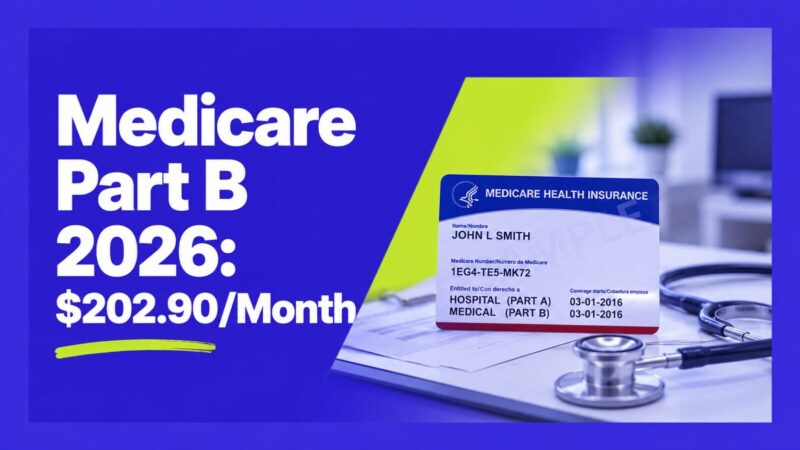
For 2026, Medicare Part B premiums are $202.90/month (up from $185 in 2025) with a $283 annual deductible, per CMS. If you are navigating these decisions for a parent or helping someone choose between Medicare Advantage and Original Medicare, the guides below break it down:
- Medicare Open Enrollment 2026: What You Can Change (Oct 15 – Dec 7)
- Medicare Part B in 2026: Premium, Deductible, and What It Covers
- Medicare Advantage vs Original Medicare: How to Choose
Every Guide in This Pillar
This hub links to every article in the Finance Pulse health insurance and open enrollment cluster for 2026. Work through whichever topics apply to your situation.
For people buying their own insurance:
- Why Did My ACA Marketplace Premium Jump for 2026? The subsidy cliff explained: who lost what and by how much.
- ACA Marketplace 2027: Enrollment Dates, How to Apply, and Who Qualifies for Subsidies Step-by-step signup guide with income/FPL bands for 2026.
- How to Choose a Health Plan at Open Enrollment (2026) HMO vs PPO vs EPO vs HDHP decision framework.
- HDHP + HSA vs Traditional PPO: How to Decide (2026) The core open-enrollment tradeoff, with math.
- HSA vs FSA 2026: Limits, Key Differences, and Which to Use 2026 IRS limits, who qualifies, and when to choose each.
- Health Insurance for Freelancers and Gig Workers (2026) Marketplace, association plans, COBRA, and how to reconcile subsidies at tax time.
- What Happens If You Miss Open Enrollment? Special Enrollment Periods and every qualifying life event that reopens your window.
For Medicare enrollees (and people helping their parents):
- Medicare Open Enrollment 2026 (Oct 15 – Dec 7) What you can change and how AEP differs from the MA OEP.
- Medicare Part B in 2026: The New $202.90 Premium, $283 Deductible, and What It Covers
- Medicare Advantage vs Original Medicare (2026) Pros, cons, and how to decide which fits your situation.
Foundation articles (the basics, always useful):
- How Much Does Health Insurance Cost in 2026?
- Premium vs Deductible vs Copay: What Is the Difference?
- What Is a Deductible in Health Insurance?
- Types of Insurance You Actually Need (and When)
Frequently Asked Questions About Open Enrollment 2026
When does open enrollment start in 2026?
The ACA marketplace open enrollment period for 2027 coverage begins approximately November 1, 2026. The exact end date should be confirmed at HealthCare.gov, as CMS finalized rule changes that may shorten the window from the traditional January 15 close.
Will I still get ACA subsidies in 2026?
It depends on your income. The permanent ACA premium tax credit still exists for households between 100% and 400% of the federal poverty level. What expired at the end of 2025 were the enhanced credits, which also helped households above 400% FPL. If your income is at or below 400% FPL, you likely still qualify for some subsidy, but the amount is smaller than in recent years.
What is the HSA contribution limit for 2026?
For 2026, the IRS set the HSA contribution limit at $4,300 for self-only coverage and $8,550 for family coverage, with a $1,000 catch-up contribution allowed for people age 55 and older. Verify current figures at irs.gov before contributing.
What if I miss open enrollment?
If you miss the ACA marketplace OEP, a qualifying life event (losing other coverage, getting married, having a baby, moving to a new coverage area, and others) opens a Special Enrollment Period of 60 days. The full list of qualifying events is in the SEP guide.
What is the difference between HMO and PPO?
An HMO limits you to in-network providers and requires a primary care physician referral to see specialists. A PPO lets you see any doctor in or out of network without a referral, at higher premiums. For most healthy young adults, an HMO’s lower cost outweighs the flexibility trade-off.
Bottom line: Open enrollment 2026 is the most consequential enrollment season in years. The enhanced subsidies are gone, and average marketplace premiums are 58% higher for people who relied on them. Take 30 minutes before November to compare your options at HealthCare.gov or your state exchange. The difference between the right and wrong plan for your situation can be thousands of dollars over the year.
This article is for informational purposes only and does not constitute health insurance, financial, or legal advice. Health insurance rules, premiums, and eligibility requirements change frequently. Always verify current figures at HealthCare.gov, CMS.gov, and irs.gov, and consider speaking with a licensed insurance navigator or benefits counselor before enrolling. Free help is available at localhelp.healthcare.gov.