By
By 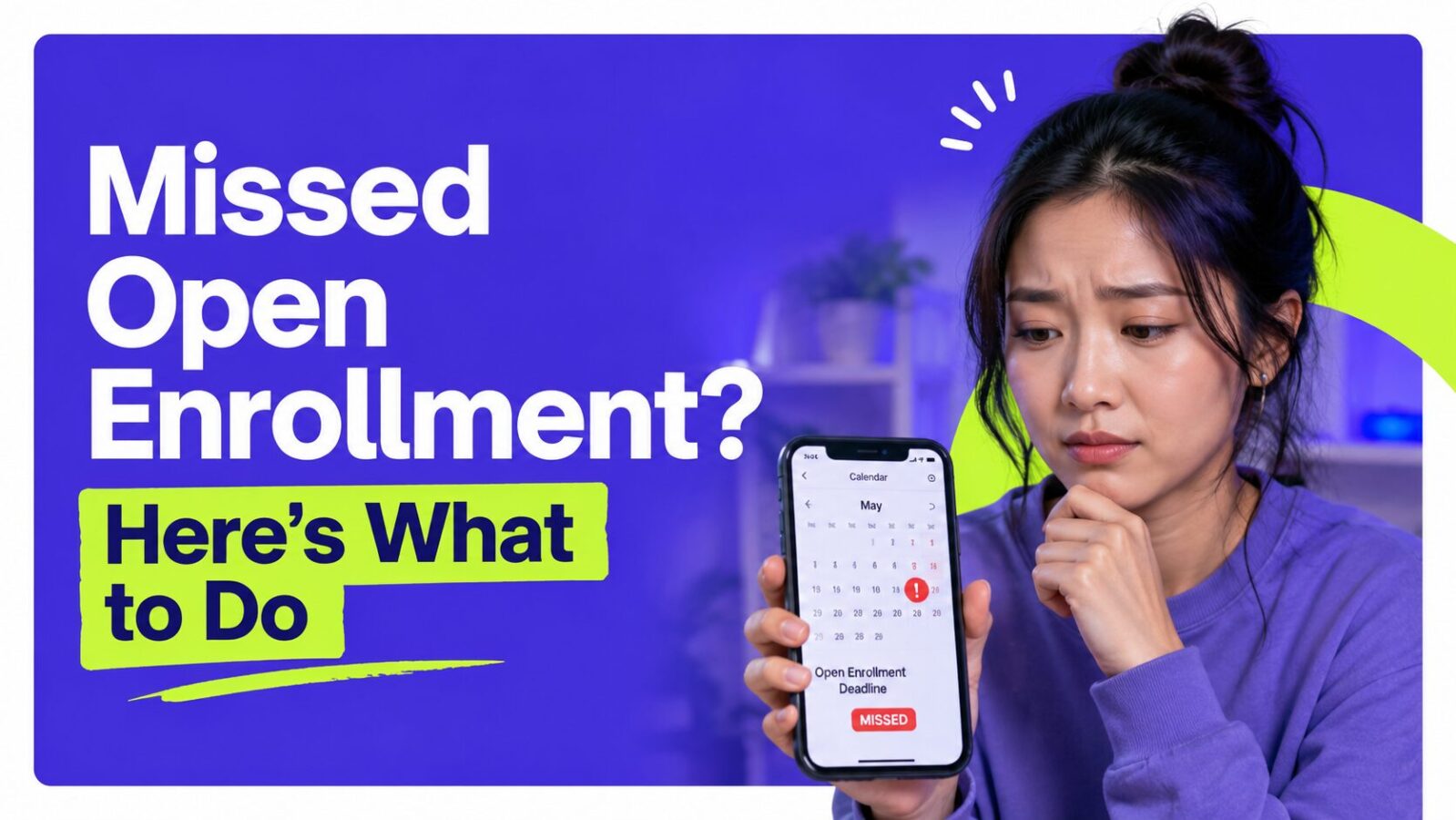
If you miss ACA marketplace open enrollment, you cannot enroll in or change a marketplace plan until the next open enrollment period — unless you experience a qualifying life event (QLE) that triggers a Special Enrollment Period (SEP). A SEP gives you a 60-day window to enroll outside the annual open enrollment dates. The most common qualifying events are losing other coverage, getting married, having a baby, and moving to a new coverage area. Here is the complete list and what to do if none of them apply to you.
Key Takeaways
- Missing open enrollment locks you out of ACA marketplace plans until the next enrollment period, unless you have a qualifying life event.
- A qualifying life event opens a 60-day Special Enrollment Period to enroll in or change marketplace coverage.
- The most common QLEs: losing job-based coverage, getting married, having or adopting a child, and moving to a new coverage area.
- You will need to provide documentation of the qualifying event when you enroll during a SEP.
- Medicaid and CHIP have no enrollment windows — you can apply any time of year if you qualify.
What Is a Special Enrollment Period?
A Special Enrollment Period is a time outside the annual open enrollment window during which you can enroll in, change, or cancel a marketplace health insurance plan. SEPs exist because life does not wait for November. You can lose a job in June, have a baby in March, or move across the country in August — and the ACA framework recognizes that these events should not leave you uninsured for months until the next enrollment window opens.
Most SEPs last 60 days from the date of the qualifying event. Some events give you 60 days before and after — for example, if you know you are losing employer coverage on a specific date, you can enroll in marketplace coverage up to 60 days before that date so coverage starts the day your employer plan ends.
What Are the Qualifying Life Events?
Note: voluntarily dropping coverage or simply forgetting to enroll during open enrollment does not qualify as a QLE. The SEP is for life changes that affect your coverage access, not a catch-up window for missed deadlines.
How Long Do You Have After a Qualifying Event?
For most qualifying life events, you have 60 days from the date of the event to enroll in marketplace coverage. Coverage typically starts the first of the month after your plan selection, so enrolling quickly after a qualifying event minimizes any gap.
For losing job-based coverage specifically, the 60-day window works in both directions. If you know your employer coverage ends on a specific date, you can enroll in marketplace coverage up to 60 days before that date and time your new coverage to start the day the employer plan ends, creating a seamless transition.
The 60-day clock starts on the date of the qualifying event, not the date you notice the event or realize you need coverage. Act promptly — once the window closes, you wait until the next open enrollment.
How Do You Apply During a Special Enrollment Period?
The process is the same as during open enrollment, with one addition: you must provide documentation of your qualifying event. Go to HealthCare.gov (or your state exchange), log into your account, and report the qualifying life event. The system will verify your eligibility for a SEP and prompt you to submit documentation.
Common documents accepted as proof:
- Loss of coverage: a letter from your employer or insurer confirming coverage end date, or a COBRA election notice
- Marriage: marriage certificate
- Birth or adoption: birth certificate, adoption paperwork, or hospital records
- Move: utility bill, lease agreement, or government document showing new address
- Aging off parent’s plan at 26: letter from insurer confirming coverage end date
The marketplace typically gives you 30 days to submit documentation after you report the QLE. If you cannot provide documents in time, your enrollment may be delayed or denied, so gather paperwork as soon as your qualifying event occurs.
What If You Have No Qualifying Event?
If you missed open enrollment and have no qualifying life event, your options are limited:
Check Medicaid eligibility. Medicaid has no enrollment windows. If your income is at or below 138% of the federal poverty level and you are in a Medicaid expansion state, you can apply at any time through your state Medicaid agency or HealthCare.gov. Coverage can often begin the same month you apply.
Check CHIP for children. The Children’s Health Insurance Program covers children in families with incomes too high for Medicaid but too low for marketplace subsidies. CHIP also has no enrollment window restriction.
Consider a short-term health plan as a temporary bridge. Short-term health plans are not ACA-compliant and do not have to cover pre-existing conditions, preventive care, or mental health services. They are significantly cheaper but also significantly riskier. They are appropriate only as a temporary measure while you wait for the next open enrollment — not as a real coverage strategy. Read any short-term plan’s exclusions carefully before enrolling.
Wait for the next open enrollment. ACA marketplace open enrollment for 2027 coverage begins around November 1, 2026. For year-round planning context and enrollment dates, see the ACA marketplace 2027 enrollment guide.
Medicaid and CHIP: No Enrollment Windows
One important distinction: Medicaid and CHIP do not have open enrollment periods. If you qualify based on income and household size, you can apply at any time of year and coverage typically begins quickly, often the month you apply or even retroactively. If you are in a low-income period (job loss, slow freelance quarter, new family expenses), check Medicaid eligibility at HealthCare.gov before assuming you are without options until November.
In the 40 states plus DC that expanded Medicaid under the ACA, a single adult earning up to approximately $20,800 a year (138% FPL, 2026 figures) qualifies for coverage at little or no cost. Check your state’s Medicaid program directly for specific thresholds and application processes.
Frequently Asked Questions
What happens if I miss open enrollment and have no qualifying event?
You cannot enroll in an ACA marketplace plan until the next open enrollment period (around November for the following year’s coverage). Check Medicaid eligibility if your income is low, as Medicaid has no enrollment window. Short-term health plans are available as a limited bridge but lack ACA consumer protections.
How long do I have after a qualifying life event?
60 days from the date of the event. For losing job-based coverage, the window starts 60 days before the coverage end date, allowing you to line up coverage with no gap.
Does losing my job qualify for a Special Enrollment Period?
Yes. Losing job-based health coverage — whether due to being laid off, quitting, or your hours being reduced below coverage eligibility — is one of the most common qualifying life events. You have 60 days before and after your coverage end date to enroll in a marketplace plan.
Does moving trigger a Special Enrollment Period?
Yes, if you move to a new ZIP code, county, or state where different marketplace plans are available. Moving within the same coverage area generally does not qualify. You will need proof of your new address.
Can I enroll in Medicaid outside of open enrollment?
Yes. Medicaid and CHIP have no enrollment windows. You can apply at any time if you meet the income and eligibility requirements for your state.
Bottom line: missing open enrollment does not leave you permanently without options. A qualifying life event opens a 60-day SEP, and Medicaid or CHIP may be available immediately if you qualify on income. If you have no qualifying event and do not qualify for Medicaid, mark your calendar for the next open enrollment window in November. See the Open Enrollment 2026 Complete Guide for the full enrollment timeline.
This article is for educational and informational purposes only and does not constitute insurance or legal advice. Special Enrollment Period rules, qualifying life events, and Medicaid eligibility thresholds vary by state and may change. Verify current rules at HealthCare.gov or your state exchange. Free enrollment help is available at localhelp.healthcare.gov.