 By
By 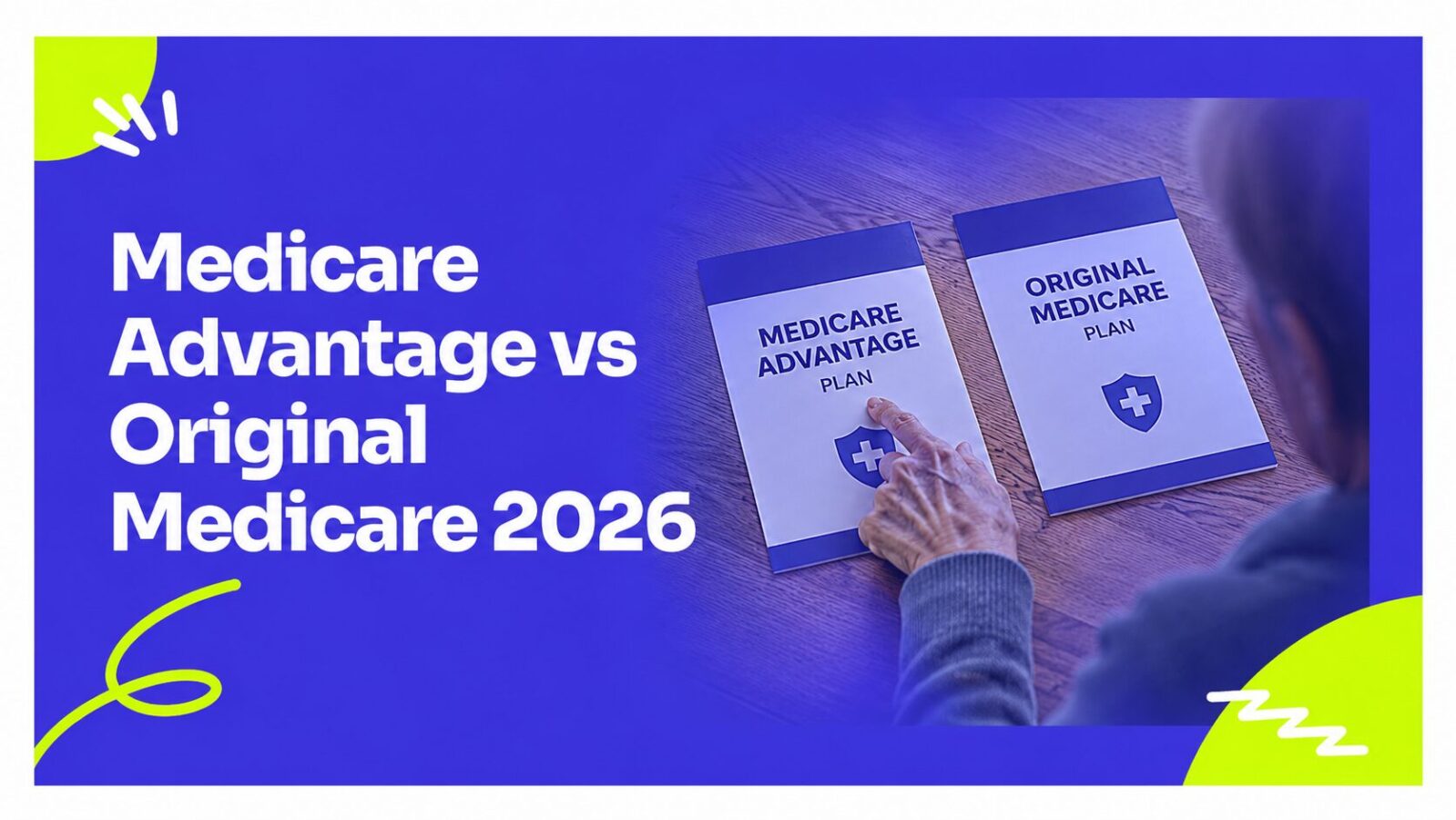
Original Medicare is usually the stronger choice if broad provider access and flexibility matter most. Medicare Advantage can be the better fit if you prefer an all-in-one plan, are comfortable with its provider network, and find a plan whose premiums, copays, prescriptions, and extra benefits work well for you.
Neither option is automatically cheaper or better.
Original Medicare lets you use any doctor or hospital that takes Medicare anywhere in the U.S. Medicare Advantage plans can use networks, prior authorization, and plan-specific cost sharing, but they also have an annual out-of-pocket limit for covered Part A and Part B services and usually include prescription drug coverage.
For 2026, the standard Medicare Part B premium is $202.90 per month, and you generally continue paying it whether you use Original Medicare or Medicare Advantage.
Key takeaways
- Original Medicare offers the broadest provider access. You can use any doctor or hospital that takes Medicare anywhere in the U.S.
- Original Medicare alone has no annual out-of-pocket maximum. Medigap can help pay deductibles, coinsurance, and copayments, depending on the policy.
- Medicare Advantage has an annual out-of-pocket limit for covered Part A and B services. The maximum permitted in-network limit for 2026 is $9,250, although individual plans can set lower limits.
- Most Medicare Advantage plans include Part D drug coverage. With Original Medicare, you generally add a standalone Part D plan if you want Medicare prescription drug coverage.
- Medicare Advantage network rules vary. HMOs generally require network care except for situations such as emergency or urgent care, while PPOs generally allow out-of-network Medicare-covered care at higher cost.
- Switching back to Original Medicare does not guarantee you can buy the Medigap policy you want. Outside protected enrollment situations, federal law may allow Medigap insurers to deny coverage or charge more based on health history.
Original Medicare vs Medicare Advantage at a glance
| Feature | Original Medicare | Medicare Advantage |
|---|---|---|
| Doctor and hospital access | Any provider that takes Medicare in the U.S. | Often uses a network or service area; rules depend on plan type |
| Annual Part A/B out-of-pocket limit | None without supplemental coverage | Yes |
| 2026 standard Part B premium | $202.90 | You generally still pay $202.90 |
| Additional plan premium | None for Original Medicare itself beyond Parts A/B | Varies; some plans charge $0 additional premium |
| Prescription drugs | Usually add standalone Part D | Most plans include Part D |
| Medigap | Can be added if eligible | Cannot be used with Medicare Advantage |
| Prior authorization | Usually not required for most services | May be required for certain services or supplies |
| Specialist referrals | Usually not required | Depends on plan type |
| Routine dental, vision, hearing | Generally limited or not covered by Original Medicare | Plans may offer extra benefits |
| Routine care while traveling in the U.S. | Broad access to Medicare providers | Depends on plan network and type |
Medicare.gov confirms that MA plans must cover medically necessary services covered by Original Medicare, but plans can use different cost-sharing, provider, and authorization rules.
The biggest advantage of Original Medicare: provider freedom
Original Medicare is difficult to beat on access.
You can generally use any doctor or hospital in the United States that takes Medicare, without having to stay inside one insurer’s provider network. Medicare.gov also says you usually do not need a referral to see a specialist.
That can matter if you regularly see several specialists, receive care at multiple health systems, spend part of the year in another state, or simply do not want to recheck a provider network every year.
It is also more flexible if you develop an unexpected medical condition later. You are not limited to the hospitals and specialists contracted with one Medicare Advantage plan.
However, “no network” does not mean every doctor in America must treat you. The provider still needs to take Medicare, and your costs can also differ when a provider does not accept Medicare assignment.
The biggest weakness of Original Medicare: no annual spending cap
Original Medicare by itself has no annual limit on what you can pay out of pocket.
For many Part B services, you generally pay 20% of the Medicare-approved amount after meeting the Part B deductible. The 2026 Part B deductible is $283.
Hospital costs work differently under Part A. For 2026, the Part A inpatient deductible is $1,736 per benefit period, and it is possible to have more than one benefit period during a year.
This is why comparing Medicare Advantage with Original Medicare alone can be misleading.
Many people considering Original Medicare also compare:
Original Medicare + Medigap + Part D
Medigap is private supplemental insurance designed to help pay some of the deductibles, copayments, and coinsurance left by Original Medicare. The amount it covers depends on the Medigap policy you choose.
Adding Medigap can make Part A and B costs substantially more predictable, but you pay another monthly premium for that coverage.
Do not call Medigap an out-of-pocket cap
There is a useful distinction here.
Original Medicare itself still does not have a standard annual out-of-pocket maximum simply because you own Medigap.
Instead, your Medigap policy pays specified portions of Medicare cost sharing according to that policy’s standardized benefits.
Some Medigap policies, specifically Plans K and L, have their own annual out-of-pocket limits. Other popular Medigap designs work differently by covering specified Medicare cost sharing rather than operating like a conventional health-plan maximum.
For a comparison article, the clearest wording is therefore:
Original Medicare has no annual out-of-pocket cap on its own. Medigap can significantly reduce your exposure, depending on the policy.
The biggest advantage of Medicare Advantage: built-in cost protection
Medicare Advantage plans have an annual limit on what you pay for covered Medicare Part A and Part B services. After reaching your plan’s limit, the plan pays the covered health-service costs subject to that limit for the rest of the calendar year.
For 2026, the maximum permitted in-network out-of-pocket limit is $9,250. Individual Medicare Advantage plans can set lower limits.
That is an important protection that Original Medicare alone does not provide.
But do not compare plans based only on the maximum.
A plan with a $5,000 out-of-pocket limit, for example, could be materially different from one close to the federal maximum. Check the actual number for plans available in your ZIP code.
Also remember that the Medicare Advantage Part A/B maximum does not simply turn every Medicare expense into one universal cap. Prescription drug spending follows Part D rules separately.
Medicare Advantage can be cheaper upfront, but $0 premium does not mean $0 cost
Some Medicare Advantage plans charge $0 in additional monthly plan premium. Medicare.gov confirms that some plans may also help pay some or all of the Part B premium.
You generally still must remain enrolled in Part B and continue paying the applicable Part B premium to stay in Medicare Advantage. The standard amount is $202.90 per month in 2026, although higher-income beneficiaries can pay more.
A $0-premium Medicare Advantage plan can therefore still have:
copays for doctor visits, hospital copays, coinsurance, deductibles, prescription costs, and an annual out-of-pocket maximum.
The right comparison is total expected annual cost, not just monthly premium.
Prescription drug coverage is easier to bundle with Medicare Advantage
Original Medicare does not automatically include standard Part D prescription drug coverage.
If you stay with Original Medicare and want Part D, you generally choose a standalone Medicare drug plan and pay whatever premium and cost sharing applies to that plan.
Most Medicare Advantage plans include Part D coverage in the same plan.
That convenience is real, but it does not mean every Medicare Advantage drug benefit is equally good.
Before enrolling, enter your actual medications into Medicare’s Plan Compare tool. Medicare recommends checking whether the plan covers your prescriptions and estimating the yearly cost of the drugs you take.
A plan with an attractive medical network can still be a poor choice if one of your expensive medications is placed on an unfavorable formulary tier or has restrictive coverage rules.
Medicare Advantage networks are more nuanced than “in-network only”
Medicare Advantage includes several plan types, so network rules are not identical.
With an HMO, you generally need to use providers in the plan network except for emergency care, urgent care, and certain other situations. HMO Point-of-Service plans can allow some out-of-network services at higher cost.
With a PPO, you generally have a network but can also use out-of-network Medicare-covered providers, usually at a higher cost.
Private Fee-for-Service and Medical Savings Account plans can work differently again.
So before saying “Medicare Advantage will not cover me outside my area,” check the exact plan type.
Which is better if you travel?
For routine care within the United States, Original Medicare generally offers the cleaner option for frequent travelers because you can use Medicare-participating providers throughout the country.
With Medicare Advantage, Medicare.gov specifically recommends checking whether a plan will cover you if you live in another state for part of the year.
A PPO may give you useful out-of-network flexibility, while an HMO can be much more restrictive for routine non-emergency care.
For international travel, neither system automatically provides broad worldwide coverage.
Original Medicare generally does not cover medical care outside the U.S. except in limited circumstances. Certain Medigap policies can include foreign-travel emergency benefits. Medicare Advantage plans may also offer some additional international emergency or urgent-care coverage depending on the plan.
What about prior authorization?
The original comparison often gets oversimplified here too.
Medicare.gov says Original Medicare generally does not require prior authorization for most services and supplies. That is different from saying prior authorization never exists.
Medicare Advantage plans may require prior authorization before covering certain services or supplies, and Medicare’s own plan-type comparison says MA participants will typically need prior authorization for certain care.
If you receive frequent therapies, imaging, procedures, durable medical equipment, or other recurring services, look at the authorization rules for each plan you are considering rather than relying only on premium and network size.
Original Medicare may be better if provider flexibility is your priority
I would lean toward Original Medicare when the main goal is freedom to choose Medicare providers across the country and you are comfortable handling separate Medicare, Medigap, and Part D coverage if needed.
It can also be attractive for someone who frequently travels within the U.S. or wants access to specialists across different health systems.
The biggest financial question is whether you can obtain Medigap at an acceptable price and whether the combined premiums fit your budget.
Medicare Advantage may be better if the specific plan works well for you
I would lean toward Medicare Advantage when you have found a specific plan, not just a Medicare Advantage label, that has your doctors, hospitals, and prescriptions covered at an acceptable total cost.
The ability to bundle medical and usually prescription coverage into one plan can be convenient, and Medicare Advantage adds an annual cost limit for covered Part A/B services that Original Medicare lacks.
Some plans also offer benefits beyond Original Medicare, including dental, vision, or hearing benefits, although the exact services, limits, networks, and cost sharing vary by plan. CMS says these supplemental benefit offerings remain available across the 2026 Medicare Advantage market.
Do not value a dental allowance, gym membership, or other extra more highly than your doctors, medications, hospital access, and major medical cost sharing.
The Medigap issue can change the entire decision
This may be the most important section if you are thinking about leaving Original Medicare for Medicare Advantage.
When you are first eligible, your federal Medigap Open Enrollment Period lasts six months, beginning the first month you have Part B and are age 65 or older. During this period, an insurer cannot deny you a Medigap policy because of pre-existing health problems.
After that period ends, there is no general federal guarantee that an insurer must sell you the Medigap policy you want unless you qualify for a guaranteed-issue protection. If it does sell you a policy, health history can affect availability or pricing where state law permits. Some states provide additional protections.
That means switching from Original Medicare with Medigap into Medicare Advantage can be easier than reversing the decision later.
Before dropping Medigap, check the rules that would apply if you wanted it again.
How to compare the two for your situation
Start with five questions.
First, check every doctor, specialist, hospital, and facility you care about. Medicare specifically recommends confirming network participation with both the plan and your providers.
Second, enter your prescriptions into Medicare Plan Compare and compare estimated annual drug costs, not just premiums.
Third, calculate annual premiums plus likely copays, coinsurance, deductibles, and the plan’s worst-case out-of-pocket exposure.
Fourth, think about where you receive care during the year. Someone who stays close to home can value a local network differently from someone who regularly moves between states.
Fifth, investigate your Medigap rights before giving up an existing policy.
That process gives you a much better answer than asking whether Medicare Advantage or Original Medicare is “better for healthy people.”
Can you switch between Original Medicare and Medicare Advantage?
Yes, but only during applicable enrollment periods unless you qualify for a Special Enrollment Period.
The annual Medicare Open Enrollment Period runs from October 15 through December 7. During that period, you can move from Original Medicare to Medicare Advantage, switch Medicare Advantage plans, or return from Medicare Advantage to Original Medicare. Changes generally take effect January 1.
For the upcoming cycle, October 15 through December 7, 2026 is the period for making many coverage changes that take effect in 2027.
If you are already enrolled in Medicare Advantage, the Medicare Advantage Open Enrollment Period runs January 1 through March 31. During that period, you can switch to another Medicare Advantage plan or return to Original Medicare and add a standalone drug plan. You cannot use that period to move from Original Medicare into Medicare Advantage.
See our Medicare open enrollment guide for the full calendar.
FAQ
Is Original Medicare better than Medicare Advantage?
Neither is universally better. Original Medicare provides broader nationwide provider access and fewer network restrictions. Medicare Advantage provides a yearly Part A/B spending limit and often bundles Part D and additional benefits. The better choice depends on the specific doctors, prescriptions, plan costs, and coverage rules that matter to you.
What is the Medicare Advantage out-of-pocket maximum for 2026?
The maximum permitted in-network out-of-pocket limit for covered Medicare Part A and B services is $9,250 in 2026. Plans can set lower limits.
Do I still pay the Part B premium with Medicare Advantage?
Generally, yes. You need Part B to remain enrolled in Medicare Advantage and generally continue paying the Part B premium. The standard Part B premium is $202.90 per month in 2026, although higher-income beneficiaries may pay more. Some MA plans may help pay part or all of that premium.
Does Original Medicare have an out-of-pocket maximum?
No. Original Medicare itself does not have an annual out-of-pocket maximum. Supplemental coverage such as Medigap can help pay Medicare cost sharing.
Does Medicare Advantage cover out-of-state care?
It depends on the plan. HMOs generally have stricter network rules for routine care, while PPOs generally allow Medicare-covered out-of-network care at higher cost. Emergency and urgent-care rules are different from routine care. Check your plan if you live in another state for part of the year.
Can I switch from Medicare Advantage back to Original Medicare?
Yes, during eligible enrollment periods. The annual Open Enrollment Period runs October 15 through December 7, and people already in Medicare Advantage have another opportunity from January 1 through March 31. However, returning to Original Medicare does not automatically guarantee access to the Medigap policy you want.
Can I use Medigap with Medicare Advantage?
No. Medigap is designed to supplement Original Medicare, not Medicare Advantage.
Bottom line
Choose Original Medicare when broad provider access and nationwide flexibility matter enough to justify managing separate coverage and potentially paying for Medigap and Part D. Choose Medicare Advantage when a specific local plan gives you the doctors, prescriptions, cost sharing, and benefits you want at a total price you are comfortable with.
Do not decide based on the $0 premium headline or the deductible alone.
For 2026, the standard Part B premium is $202.90 under either route for most beneficiaries. Original Medicare has no annual out-of-pocket maximum on its own, while Medicare Advantage plans have plan-specific limits and cannot exceed $9,250 in-network for covered Part A/B services in 2026.
Most importantly, check your Medigap rights before moving away from an existing supplement. Getting back into Original Medicare is possible during eligible enrollment periods, but getting back into the Medigap coverage you want may be a separate question.
Use Medicare’s Plan Compare tool for plans available in your ZIP code, and Medicare.gov recommends contacting your local State Health Insurance Assistance Program, or SHIP, for free counseling that is not connected to an insurance company or health plan.
See the Open Enrollment 2026 Complete Guide for the broader enrollment checklist.
This article is for general educational purposes and is not individualized insurance, medical, legal, or financial advice. Medicare Advantage plans, premiums, networks, formularies, supplemental benefits, and cost sharing vary by plan and can change each year. Confirm your current options through Medicare.gov, your plan documents, and your State Health Insurance Assistance Program before changing coverage.