By
By 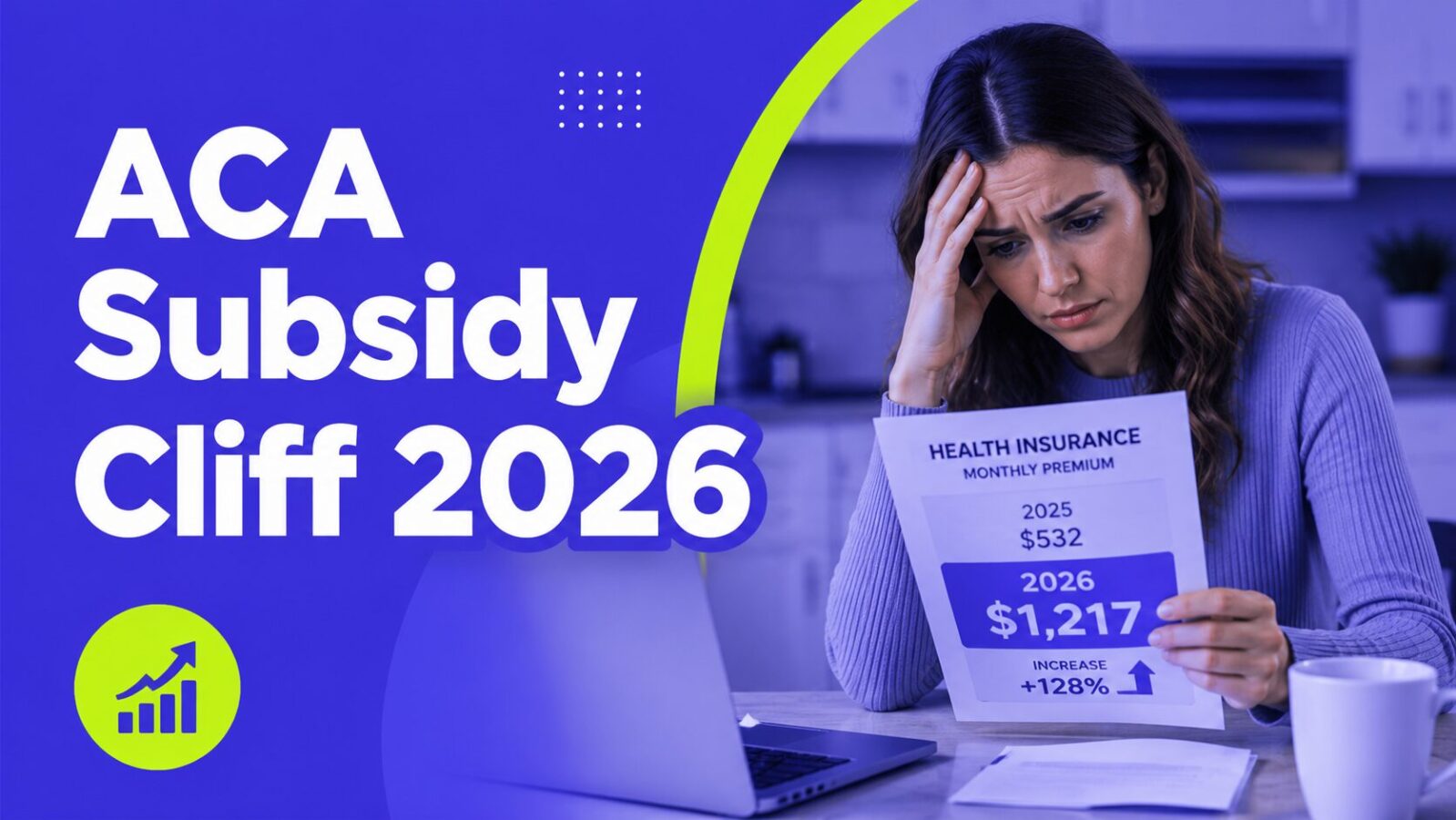
Disclosure: some links on this page are affiliate links. We may earn a commission at no cost to you if you purchase through them. Our editorial content is not influenced by compensation. See our full disclosure.
Your ACA marketplace premium jumped for 2026 because the enhanced premium tax credits (PTCs) that kept costs artificially low from 2021 through 2025 expired on December 31, 2025, and Congress did not extend them. Average net marketplace premiums rose from $113 to $178 per month, a 58% increase, according to KFF analysis of CMS 2026 enrollment data. If your bill went up and you have no idea why, this is the complete explanation.
Key Takeaways
- The enhanced premium tax credits that supplemented ACA subsidies from 2021 to 2025 expired December 31, 2025.
- Average net marketplace premiums (after subsidies) rose 58%, from $113 to $178/month (KFF / CMS data).
- The 400% FPL subsidy cliff is back: households above that income threshold receive no premium tax credit under the original ACA rules.
- Subsidies still exist for incomes between 100% and 400% FPL, but your required share of the premium is higher than in 2025.
- If you received advance premium tax credits in 2026, you will reconcile them on Form 8962 when you file your 2026 taxes.
What Were the Enhanced Premium Tax Credits?
The original Affordable Care Act created premium tax credits to help lower-income households afford marketplace coverage. Those credits were tied to income and capped at households earning up to 400% of the federal poverty level (FPL). Anyone above that threshold received nothing and paid full unsubsidized premiums.
In 2021, Congress passed the American Rescue Plan Act (ARPA), which temporarily enhanced those credits in two important ways. First, it made them more generous for people already in the subsidy range, meaning you paid a smaller share of your income toward premiums. Second, it removed the 400% FPL ceiling entirely, allowing higher-income households to receive some subsidy for the first time. Congress extended those enhancements through 2025 via the Inflation Reduction Act.
The result was that millions more people enrolled in marketplace coverage, often at very low net cost. Between 2020 and 2025, marketplace enrollment roughly doubled, driven largely by the enhanced credits making plans affordable at a much wider income range.
What Exactly Expired, and When?
The enhanced premium tax credits were always temporary. They were set to expire, and they did, on December 31, 2025. ACA coverage renewing for January 2026 reverted to the original, less generous subsidy rules. Congress debated an extension but had not passed one as of mid-2026. Check the current legislative status before assuming the rules will or will not change for 2027.
What did not expire: the ACA itself. The original law’s premium tax credits still exist. What you lost is the enhancement layered on top.
How Much Did Premiums Actually Go Up?
Average net marketplace premiums (what enrollees actually pay after subsidies) rose from $113 to $178 per month in 2026, a 58% jump. Full unsubsidized premiums rose about 114%. (KFF analysis of CMS 2026 enrollment data)
Two separate numbers are circulating and it is worth being clear about which is which:
The 58% figure is what most enrollees felt in their wallet. The 114% gross increase reflects both the credit expiration and actual premium rate increases insurers filed. For people whose subsidy absorbed most of the gross increase, the net hit was smaller but still significant. For people who lost their subsidy entirely, the full gross increase hit them.
The share of marketplace enrollees receiving subsidies fell from 92% to 87%, meaning roughly 5% of enrollees who previously qualified no longer do under the reverted rules (CMS 2026 data).
Who Got Hit Hardest by the Subsidy Cliff?
The people hit hardest fall into three groups:
Households above 400% FPL who newly lost all subsidy. Under the enhanced rules, a household at 450% FPL (roughly $60,750 for a single person in 2026) received some credit. Under the reverted rules, they receive zero. Their premium went from “somewhat subsidized” to “full unsubsidized rate” overnight.
Self-employed people and freelancers with variable income near the cliff. If your income fluctuates and you estimated conservatively last year, you may now be above 400% FPL with no cushion from a subsidy. The freelancer situation is particularly exposed because marketplace coverage is their only option and income unpredictability makes subsidy estimation harder. The freelancer health insurance guide covers this in detail.
Older enrollees at any income level. ACA insurers can charge up to three times more for older enrollees. A 60-year-old who was just over the 400% FPL threshold in 2025 may have had a manageable subsidized premium. In 2026 without any credit, their unsubsidized premium can easily exceed $1,000 a month for a silver plan. Medicare eligibility at 65 is the exit ramp, but the gap years are expensive.
People just under 400% FPL who still qualify but received less. Even if you stayed within the subsidy range, the enhanced credits made your required contribution smaller. With the reversion, you pay a larger share of your income toward premiums than you did in 2025 for the same plan tier.
Do I Still Qualify for Any ACA Subsidy in 2026?
Yes, if your income falls between 100% and 400% of the federal poverty level. The original ACA premium tax credit still exists. Here are the 2026 FPL income thresholds for a single person (verify at HealthCare.gov, as FPL figures update annually):
FPL thresholds update annually and vary by household size. Verify the current figures at HealthCare.gov. These figures are for a single-person household in the 48 contiguous states and DC.
What Can I Do If My Premium Is Now Unaffordable?
You have a few options worth working through in order:
1. Recheck your subsidy eligibility with your actual 2026 income. If you estimated income at the start of the year and it has come in lower, you may qualify for more subsidy than you thought. Update your marketplace application to reflect your current projected annual income. A mid-year income change can trigger a subsidy adjustment right away.
2. Switch to a lower metal tier if you have not already. A bronze plan has higher out-of-pocket costs but a lower premium. If you are healthy and rarely use care, the math can work in your favor. Run the comparison at your state exchange or HealthCare.gov. The plan comparison guide walks through how to model total annual cost, not just the monthly premium.
3. Check Medicaid eligibility if your income dropped. In states that expanded Medicaid, coverage may be free at incomes up to 138% FPL. A qualifying life event, like a job loss that dropped your income, can open a Special Enrollment Period and make you newly eligible.
4. For next open enrollment (November 2026 for 2027 coverage), shop all options. Insurers and plans vary by state, and the difference between carriers for similar coverage can be hundreds of dollars a month. See the ACA marketplace 2027 enrollment guide for dates and how to compare plans.
5. If you are self-employed, reconcile carefully at tax time. If you received advance premium tax credits based on estimated income and your actual income was higher, you may owe some or all of the credit back when you file Form 8962 with your 2026 return. A good tax filing tool makes this reconciliation straightforward.
Could the Enhanced Subsidies Come Back?
Possibly, but it is not guaranteed. Congress has debated extending them as part of broader legislation, but as of mid-2026, no extension has passed. If legislation passes and reinstates the enhanced credits retroactively for 2026, there would likely be a reconciliation process at tax time. Watch for news at Congress.gov or KFF.org, which tracks ACA policy changes closely.
For 2027 coverage, the situation may be different depending on what Congress does before the next open enrollment window. Do not assume 2027 will look like 2026 or like 2025. Check the rules when open enrollment opens in November.
Frequently Asked Questions
Why did my ACA health insurance go up so much in 2026?
The enhanced premium tax credits that reduced your cost since 2021 expired on December 31, 2025. Without them, your subsidy reverted to the smaller original ACA credit, or disappeared entirely if your income is above 400% of the federal poverty level. This is the primary cause of the 2026 premium jump for marketplace enrollees.
What is the ACA subsidy cliff?
The subsidy cliff is the point at which your income exceeds 400% of the federal poverty level and your premium tax credit drops to zero. In 2025, the cliff did not exist because the enhanced credits covered households at any income. As of 2026, the cliff is back under the original ACA rules.
Do I still get an ACA subsidy in 2026?
If your income is between 100% and 400% FPL, yes. The original premium tax credit still exists. The enhanced version, which extended subsidies above 400% FPL and made them more generous below it, is what expired.
What is Form 8962 and do I need to file it?
Form 8962 is the IRS form for reconciling advance premium tax credits. If you received advance credits on your marketplace plan in 2026, you file Form 8962 with your federal tax return to compare what you received against what you were eligible for based on actual income. A shortfall means you owe back credits; a surplus means a refund. Most tax software handles this automatically when you enter your 1095-A form.
What income counts toward the subsidy calculation?
Modified adjusted gross income (MAGI), which is your AGI plus certain items like untaxed Social Security, tax-exempt interest, and foreign income. For self-employed people, net self-employment income after deductions counts. This is why freelancers need to estimate carefully and update their marketplace application if income changes.
Bottom line: Your ACA premium went up in 2026 because the enhanced subsidies expired, full stop. If your income is below 400% FPL you still qualify for some credit under the original ACA rules. If you are above that threshold, you are paying full price. Use the open enrollment window this November to compare plans for 2027 coverage, and if you are self-employed, keep your income estimate updated throughout the year so your advance credits stay accurate. See the Open Enrollment 2026 Complete Guide for everything else you need to know this season.
This article is for educational and informational purposes only and does not constitute tax, financial, or insurance advice. ACA subsidy rules, income thresholds, and premium figures change and vary by state and household size. Verify current rules and your eligibility at HealthCare.gov and consult a tax professional or licensed insurance navigator for advice specific to your situation. Free navigator help is available at localhelp.healthcare.gov.