By
By 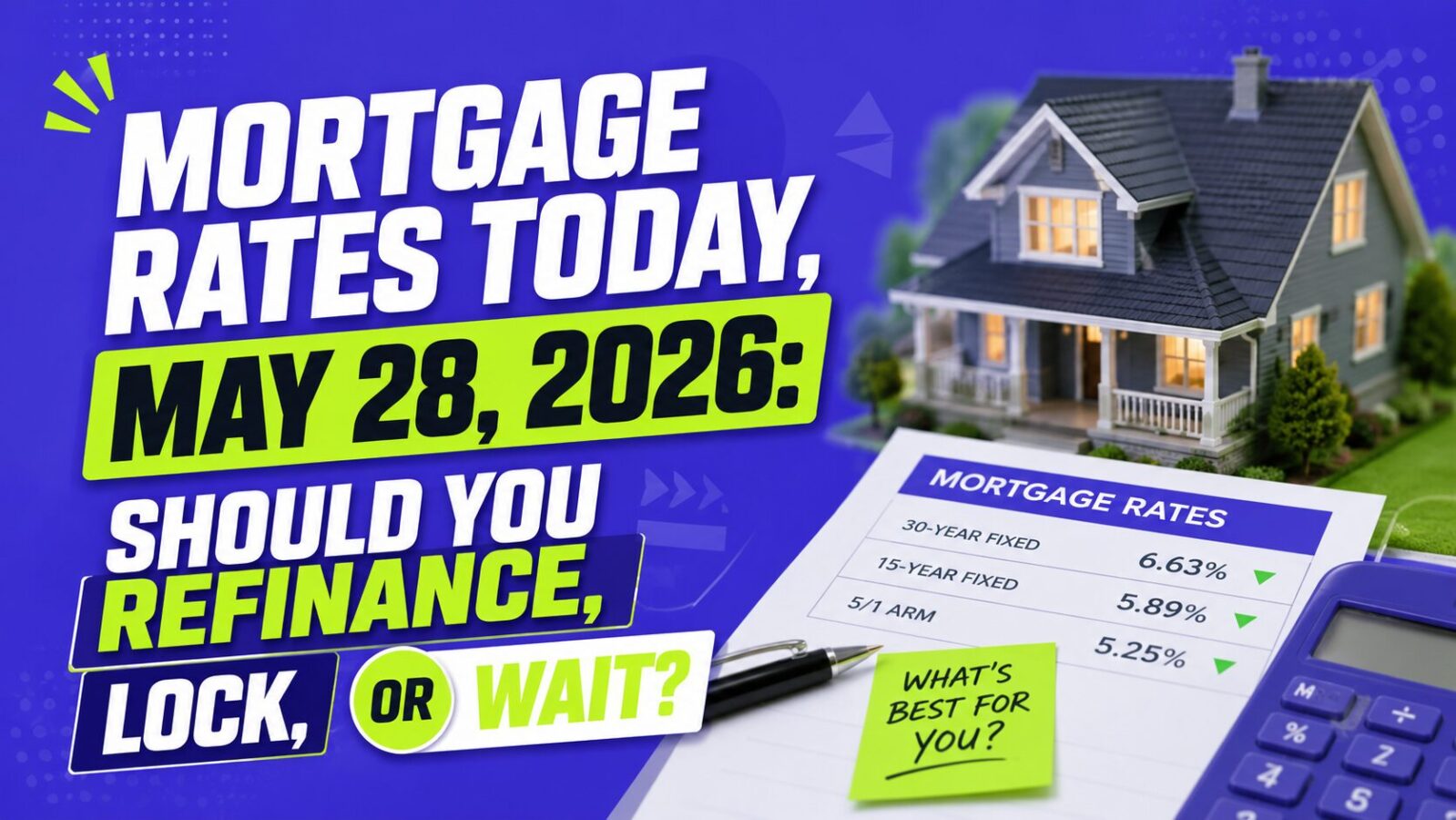
As of mid-June 2026, the average 30-year fixed mortgage rate is hovering around 6.4% APR, with the 15-year fixed near 5.8% and adjustable rates roughly in line with fixed. Rates have stayed elevated because inflation reaccelerated, with the May Consumer Price Index coming in at 4.2%, and the Federal Reserve held its benchmark rate steady at its June 17 to 18 meeting while signaling a more hawkish path. That backdrop makes the refinance, lock, or wait decision a real one. Here is how to think it through. Rates change daily, so get personalized quotes for your actual number.
Key Takeaways
- 30-year rates are around 6.4% as of June 2026, with little sign of a sharp drop soon.
- The Fed held rates and leaned hawkish in June, so big near-term relief is unlikely.
- Refinance when the math works: a meaningful rate cut, enough time to recoup costs, and the credit to qualify.
- Do not try to time the bottom. Decide based on your numbers, not daily moves.
Today’s Mortgage Rates at a Glance
| Loan type | Approx. rate (June 2026) | Notes |
|---|---|---|
| 30-year fixed | ~6.4% APR | Roughly flat to slightly higher in recent weeks |
| 15-year fixed | ~5.8% | Lower rate, higher payment |
| 5-year ARM | ~6.5% | About the same as fixed right now, so little advantage |
These are averages and change throughout the day, so your actual rate depends on your credit, down payment, and lender. Compare quotes from several lenders.
Why Rates Are Stuck
Mortgage rates track the bond market, which has been reacting to two forces: inflation and geopolitics. Inflation reaccelerated, with May CPI at 4.2%, the highest in a couple of years, driven largely by energy prices. That makes the Federal Reserve cautious, and at its June 17 to 18 meeting it held rates steady and signaled it is more worried about inflation than about cutting soon. On top of that, swings in oil and Middle East headlines move bond yields day to day. The practical takeaway: do not read much into any single day’s small move, and do not count on a quick drop.
Should You Refinance?
Refinancing makes sense when three things line up: the rate available is meaningfully lower than your current rate, you will stay in the home long enough to recoup closing costs, and your credit and equity let you qualify at the better rate. A common rule of thumb is to look for at least a 0.5% to 0.75% reduction, but the real test is your break-even point.
The break-even math is simple:
Break-even (months) = total closing costs divided by your monthly savings
For example, if refinancing costs $4,000 and lowers your payment by $200 a month, you break even in 20 months. If you will stay in the home well beyond that, refinancing likely pays off; if you might move sooner, it may not. With rates near 6.4%, refinancing only helps people who currently hold notably higher rates, so many recent buyers will not benefit yet.
Should You Lock or Wait?
If you are buying now and have a rate you can afford, locking protects you from rates rising further, which is a real risk given the inflation picture. Waiting for a lower rate is a bet, and the current signals do not strongly favor it. A reasonable approach: if the payment works at today’s rate, lock and move forward, and refinance later if rates fall meaningfully. Do not buy more house than you can afford on the hope of refinancing into a lower payment, since that drop is not guaranteed. See our guide on how much house you can afford.
A Note on ARMs Right Now
Adjustable-rate mortgages usually tempt buyers with a lower starting rate, but in mid-2026 that discount has largely vanished, with ARM rates roughly in line with or above fixed rates. When an ARM is not cheaper up front, you take on future adjustment risk for little benefit, which weakens the case for one today. Compare your options in our guide to types of mortgages in 2026.
FAQ
What are mortgage rates right now?
As of June 2026, the 30-year fixed is around 6.4%, the 15-year near 5.8%, and ARMs roughly in line with fixed. Rates change daily, so confirm current quotes.
Should I refinance at current rates?
Only if you can cut your rate meaningfully and will stay long enough to recoup closing costs. Calculate your break-even: closing costs divided by monthly savings.
Will mortgage rates drop in 2026?
Uncertain. With inflation reaccelerating and the Fed holding rates and leaning hawkish, a sharp near-term drop is not the base case. Decide on your own numbers rather than waiting for a bottom.
Is an ARM worth it in 2026?
Usually not right now, since ARM rates are about the same as fixed, so you would take adjustment risk without a lower starting rate.
Bottom Line
With rates near 6.4% and the Fed holding steady, this is not a moment to wait for a big drop, so make the decision on your numbers. Refinance if the break-even math works, lock if a purchase payment fits your budget, and skip the ARM while it offers no discount. Confirm current rates with multiple lenders, since they move every day. If you are still weighing the purchase itself, see our rent versus buy breakdown.
This article is for educational and informational purposes only and is not financial or lending advice. Mortgage rates change daily and depend on your credit, down payment, and loan details. Get personalized quotes from multiple lenders before deciding.