By
By 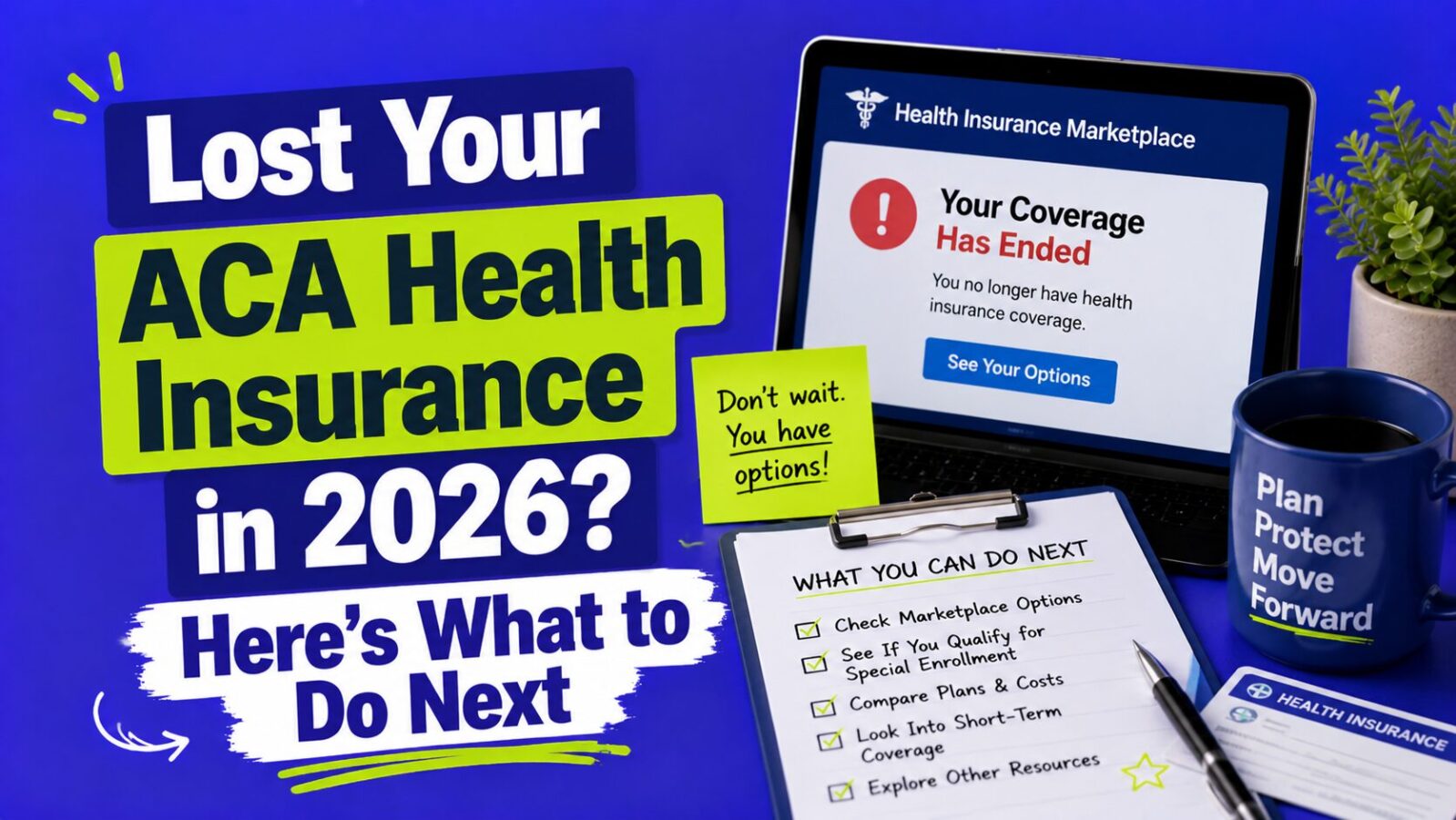
If you lost ACA Marketplace coverage in 2026 after the enhanced premium tax credits expired on December 31, 2025, you still have options. Premiums jumped sharply (average monthly costs rose from about $113 to $178) and millions dropped their plans, but losing coverage usually triggers a Special Enrollment Period. Start by checking Medicaid eligibility, then a spouse’s employer plan, then the Marketplace with whatever smaller subsidies remain. Here is exactly what to do right now.
Key Takeaways
- Enhanced ACA subsidies expired December 31, 2025, so premiums spiked in 2026.
- Losing coverage triggers a Special Enrollment Period, opening options outside open enrollment.
- Check Medicaid first; it is free or low-cost and you can apply any time.
- Smaller ACA subsidies still exist for incomes between 100% and 400% of the poverty level.
What Actually Happened?
The enhanced premium tax credits, created by the American Rescue Plan in 2021 and extended by the Inflation Reduction Act, cut ACA premiums sharply (in some cases to $0 a month) and removed the subsidy cliff for higher earners. Those enhanced credits expired on December 31, 2025, and Congress did not extend them, so many enrollees saw their January 2026 bills arrive two to three times higher and chose not to renew. Dropping coverage because the new premiums became unaffordable generally counts as a life event that triggers a Special Enrollment Period.
What Are Your Options Right Now?
Check Medicaid first. Medicaid is free or very low-cost for people under certain income limits, generally 138% of the federal poverty level in expansion states (about $20,783 for a single person in 2026). If your income dropped at any point in 2026, you may now qualify even if you did not before, and there is no enrollment window. Apply at healthcare.gov or your state Medicaid office. If you have kids, also check CHIP.
Get on a spouse’s employer plan. Losing coverage is a qualifying event, so you typically have 30 days from the date your ACA coverage ended to join a spouse’s or partner’s employer plan. The clock starts when coverage ended, not when you noticed, so contact their HR immediately if you are in the window.
COBRA (only if your prior coverage was employer-sponsored) lets you keep that exact plan for up to 18 months, but you pay the full premium plus a 2% fee, so it is expensive and best for a short gap or mid-treatment.
ACA Marketplace with a Special Enrollment Period. Losing coverage may qualify you to enroll now. Plans are still available, and if your income is between 100% and 400% of the poverty level you still get some (smaller) premium tax credits. Use the healthcare.gov calculator to see your real cost. See our guide on choosing a health plan.
What Are the Lower-Cost (but Riskier) Options?
Short-term health plans are cheaper but not ACA-compliant, so they can deny pre-existing conditions, cap benefits, and exclude treatments. The maximum duration was extended back to 12 months with renewals. They work as a temporary bridge, but read the exclusions carefully if you have ongoing conditions.
Health sharing ministries are not insurance; members share costs, and they can exclude pre-existing conditions and mental health or substance abuse care. Costs are often lower, but some members have been left with large unpaid bills, so they are high-risk for anyone with chronic needs.
HDHP plus HSA. A qualifying high-deductible plan lets you open a Health Savings Account, with a triple tax advantage (pre-tax contributions, tax-free growth, tax-free medical withdrawals). The 2026 HSA limit is $4,400 for individuals and $8,750 for families. If you are generally healthy and want a lower premium plus a tax-advantaged medical fund, this is one of the most efficient setups. See our guide on how deductibles and HSAs work.
What If You Have a Gap in Coverage?
- Delay non-urgent care like elective procedures and routine screenings until you are covered again.
- Use urgent care, not the ER, for non-life-threatening issues ($100 to $200 versus $1,000+).
- Ask for the self-pay discount, often 30% to 60% off the billed rate for uninsured patients who pay upfront.
- Use a community health center. Federally Qualified Health Centers charge on a sliding scale by income; find one at findahealthcenter.hrsa.gov.
- Cut prescription costs with GoodRx, Cost Plus Drugs, and manufacturer assistance programs.
What Is the Longer-Term Picture?
Congress has debated extending the enhanced subsidies, but the outcome remains uncertain. If they are eventually restored, the Marketplace would become affordable again for many who dropped coverage, and there would likely be a special enrollment opportunity for them. Monitor healthcare.gov and your state marketplace for updates so you can act if the subsidies return.
FAQ
Why did my ACA premium go up so much in 2026?
The enhanced premium tax credits that lowered premiums since 2021 expired December 31, 2025, and were not extended, so 2026 bills came in two to three times higher for many enrollees.
Can I still get health insurance if I dropped my ACA plan?
Yes. Losing coverage usually triggers a Special Enrollment Period. Check Medicaid first, then a spouse’s employer plan (within 30 days), then the Marketplace, where smaller subsidies still exist for many incomes.
Do ACA subsidies still exist in 2026?
Yes, the original (smaller) premium tax credits remain for incomes between 100% and 400% of the poverty level. Only the enhanced credits expired, so use the healthcare.gov calculator to see your actual cost.
Are short-term or health sharing plans a good idea?
Only as a temporary bridge, and with caution. Both can exclude pre-existing conditions and cap benefits, so they are risky for anyone with ongoing medical needs. Read the exclusions carefully first.
Bottom Line
Losing ACA coverage in 2026 is not the end of the road: check Medicaid first, then a spouse’s plan within 30 days, then the Marketplace with the subsidies that remain, and use community health centers and self-pay discounts for any gap. The worst outcome is going uninsured with no backup, so pick the best available option now. To go deeper, see our guides on choosing a health plan, health insurance costs, and premiums, deductibles, and HSAs.
This article is for educational and informational purposes only and does not constitute health insurance advice. Coverage options and eligibility vary by state and income, so confirm details at healthcare.gov.