 By
By 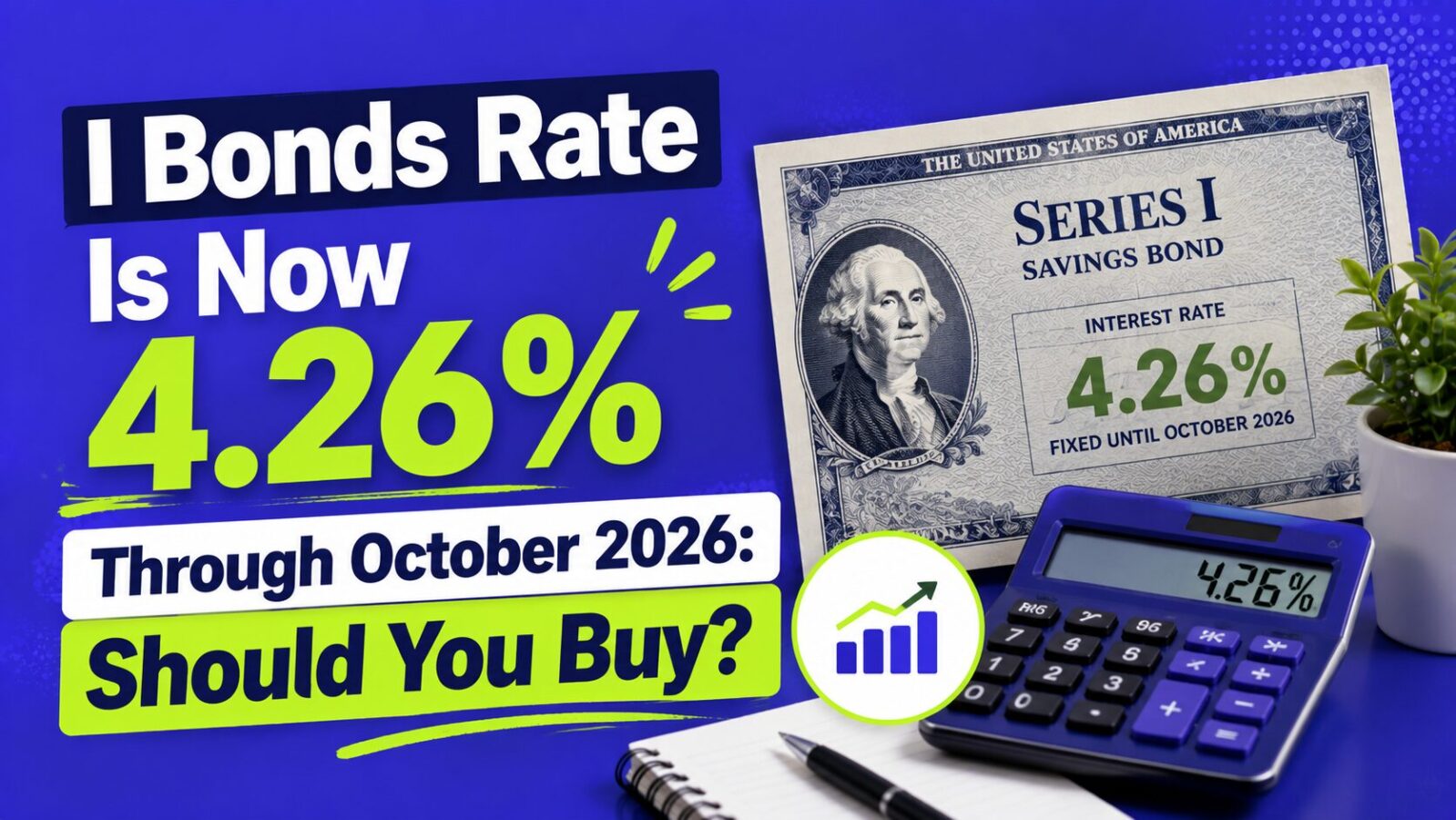
The U.S. Treasury set the Series I Savings Bond composite rate at 4.26% for bonds bought May 1 through October 31, 2026, combining a 0.90% fixed rate (locked for the life of the bond) and a 3.34% variable inflation rate. At face value, 4.26% is competitive but not dramatically better than top high-yield savings or CDs; the real edge is the 0.90% fixed rate that beats inflation for up to 30 years. I Bonds make sense for money you will not touch for at least 12 months. Here is whether to buy now.
Key Takeaways
- The composite rate is 4.26%, with a 0.90% fixed rate locked for the bond’s life.
- The fixed rate is the real draw, guaranteeing a return above inflation for up to 30 years.
- You cannot redeem for 12 months, and lose 3 months of interest if you cash out before 5 years.
- Best as a 2-to-5-year inflation hedge, not for emergency funds or short-term cash.
What Is the New Rate Breakdown?
The 4.26% composite rate combines a 0.90% fixed rate, locked in permanently for the life of any bond bought now (up to 30 years), and a 3.34% annualized variable rate, derived from the change in CPI-U from September 2025 to March 2026. The variable rate resets every six months for every holder, while the fixed rate never changes for bonds already issued. So a bond bought today will always beat inflation by 0.90%, with the inflation component adjusting up or down each May 1 and November 1.
How Do I Bonds Work?
- Purchase limit: $10,000 per person per calendar year, electronically at TreasuryDirect.gov (the paper option via tax refund ended January 1, 2025).
- Minimum hold: 12 months; you cannot redeem before then under any circumstances.
- Early redemption penalty: redeem before 5 years and you forfeit the last 3 months of interest.
- Taxes: interest is exempt from state and local tax, and federal tax is deferred until redemption.
- Safety: backed directly by the U.S. government, with no risk of losing principal.
How Does 4.26% Compare?
| Option | Current rate | Liquidity |
|---|---|---|
| I Bonds (May-Oct 2026) | 4.26% | Locked 12 months, penalty before 5 years |
| Top HYSA | 4.00% to 4.75% | Fully liquid |
| 12-month CD | 3.90% to 4.25% | Locked 12 months |
| 6-month CD | 4.00% to 4.50% | Locked 6 months |
At face value, 4.26% is competitive but not dramatically better than top HYSAs or CDs. The difference is long-term: the 0.90% fixed rate means your bond always outpaces inflation, while a 4.50% HYSA today could be well under 4% in two years if the Fed cuts. See our guide on the best CD rates.
What Is the Case For Buying Now?
The 0.90% fixed rate is solid. It has ranged from 0% (2020-2022) to higher peaks, and at 0.90% it sits below the recent 1.30% (Nov 2023) but well above the 0% floor, a reasonable guaranteed real return to lock in. The state-tax exemption matters. In a high-tax state, exempting I Bond interest from state and local tax raises your effective yield meaningfully. You cannot lose principal, since the composite rate never falls below 0%, even in deflation.
What Is the Case Against?
The 12-month lock-up is real, so do not buy money you might need before then; I Bonds are completely illiquid for the first year. It may not beat top HYSAs for short holders, since at exactly 12 months (factoring the 3-month penalty) a 12-month CD or HYSA can win on flexibility. The $10,000 annual cap limits the strategy, so large reserves need multiple registrations (spouse, trust, business). See our guide on the November rate reset.
Who Should Buy I Bonds Now?
Buy if you have cash you are sure you will not need for at least 12 months, you want inflation protection that adjusts automatically, you live in a high-tax state, or you want a long-term inflation hedge alongside stocks. Skip them if the money is part of your emergency fund, you might need it within 12 months, or you just want to maximize yield over a short 6-to-12-month window, where a 6-month CD around 4.30% wins.
FAQ
What is the current I Bond rate?
4.26% composite for bonds bought May 1 through October 31, 2026, made up of a 0.90% fixed rate and a 3.34% variable inflation rate. The fixed portion stays with the bond for life.
Should I buy I Bonds in 2026?
Yes, if it is money you will not need for at least a year and you want inflation protection. Skip them for emergency funds or short-term cash, where a HYSA or 6-month CD is better.
How much can I buy in I Bonds?
$10,000 per person per calendar year through TreasuryDirect.gov. Couples and entities can each buy their own, and the limit resets every January 1.
Can I lose money on an I Bond?
No. The composite rate never falls below 0%, so you cannot lose principal, and the bonds are backed directly by the U.S. government.
Bottom Line
At 4.26% with a 0.90% fixed rate, I Bonds are a strong long-term inflation hedge for money you can lock away for at least a year, though they are not better than a top HYSA or CD for short-term cash. Buy through TreasuryDirect for 2-to-5-year savings, especially in a high-tax state, and keep your emergency fund liquid elsewhere. To go deeper, see our guides on the November I Bond reset, the best CD rates, and the best high-yield savings accounts.
This article is for educational and informational purposes only and is not financial advice. Rates reset every six months, so confirm current figures at treasurydirect.gov.