By
By 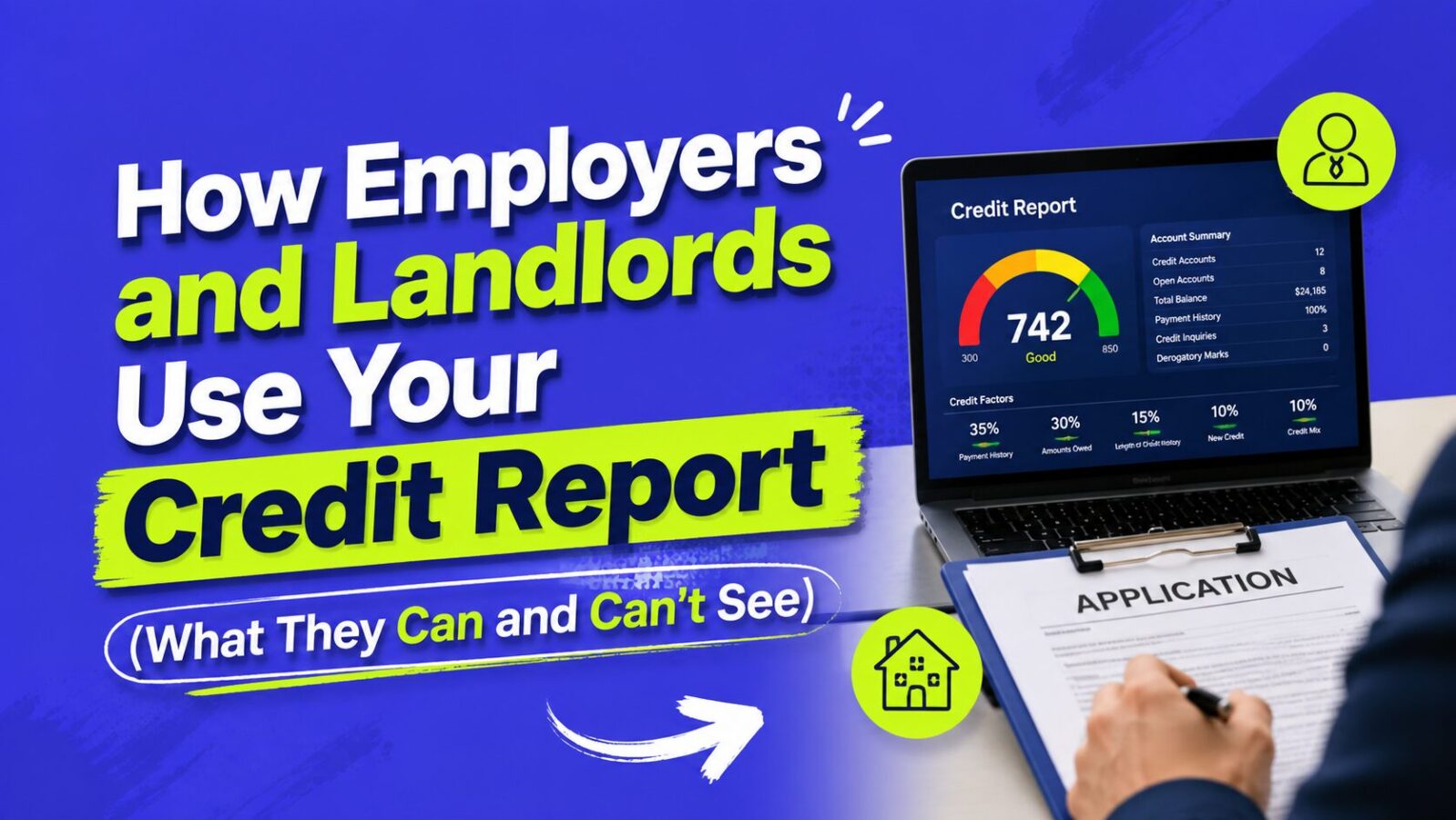
Employers cannot see your three-digit credit score, ever, but they can request a modified version of your credit report, minus your score and account numbers, if you give written permission first. Landlords typically see a fuller version through a tenant screening service, often bundled with an eviction history search. Here is exactly what each one can and cannot access.
KEY TAKEAWAYS
- Employers never see your credit score. They can only request a modified “employment purpose” credit report, which excludes your score and full account numbers.
- Under the Fair Credit Reporting Act (FCRA), employers must get your written consent before pulling any credit-based report, and must notify you if it leads to a negative decision.
- Several states now restrict or ban employer credit checks entirely, including California, Colorado, Illinois, and, as of April 2026, New York.
- Landlords typically see more than employers, often a modified credit report bundled with eviction history through a tenant screening company, and they also need your permission first.
- A soft credit check for pre-employment or rental screening purposes generally does not affect your credit score, unlike a hard inquiry from a loan or credit card application.
What Can an Employer See on Your Credit Report?
Employers can request what is called an “employment purpose” credit report, which strips out your credit score and truncates account numbers, but still shows your payment history, current debts, any collections, judgments, and bankruptcies. They cannot see medical information, and under the FCRA they cannot pull your report without written authorization from you first, and if the report contributes to a decision not to hire you, you must be given a copy and a chance to dispute anything inaccurate before a final decision.
Employers most commonly request credit reports for roles that involve handling money, financial accounts, or sensitive data, like finance, accounting, and some management positions. It is far less common, and in a growing number of states outright illegal, for general hiring across most jobs.
Which States Restrict Employer Credit Checks?
A number of states and cities have passed laws limiting or banning employer credit checks outright, including California, Colorado, Illinois, Maryland, Oregon, Vermont, and Washington, along with cities like Philadelphia and Washington, D.C. New York became one of the most sweeping examples: as of April 2026, the state prohibits employers from requesting or using credit history in most employment decisions, with only narrow exemptions for specific roles like those involving financial fiduciary duties.
These state and local rules typically layer on top of the federal FCRA framework rather than replacing it, so the exact rules depend heavily on where you live and work. If you are asked to authorize a credit check for a job application, it is worth checking your state’s current rules if you are unsure whether it applies to your role.
What Can a Landlord See on Your Credit Report?
Landlords typically use a tenant screening service that pulls a version of your credit report similar to what a lender sees, often combined with an eviction history search and sometimes a criminal background check, depending on the property and local law. According to the CFPB’s research on tenant and employment screening, these bundled reports can vary in accuracy and completeness across different screening companies, which is one reason your application can be read differently by two different landlords.
Unlike employers, landlords are generally allowed to see your actual credit score as part of a tenant screening report, not just a scrubbed version. That is part of why your score matters more directly when apartment hunting than it does when job hunting. For a full breakdown of what landlords typically require, see our guide on the credit score needed to rent an apartment.
Employer vs. Landlord Credit Checks, Side by Side
| What they can see | Employer | Landlord |
|---|---|---|
| Credit score | No | Usually yes |
| Payment history, debts, collections | Yes (modified report) | Yes |
| Full account numbers | No (truncated) | No (truncated) |
| Eviction history | No | Often, via screening service |
| Requires your written consent | Yes | Yes |
Does It Show Up as a Hard Inquiry?
This is a common worry, and the good news is no, in most cases. Employment and tenant screening checks are generally treated as a soft inquiry, meaning they do not affect your credit score, unlike a hard inquiry triggered by applying for a loan or credit card. See our guide on soft vs. hard inquiries for the full distinction.
What to Do Before You Authorize a Check
- Ask what type of check it is and whether it includes your credit score, so you know what the reviewer will actually see.
- Pull your own report first if you are worried about surprises. Our guide on getting your free credit report covers the official way to check.
- Dispute anything inaccurate ahead of time. If you know an old error is sitting on your file, resolve it before a big application rather than after a denial. See how to dispute credit report errors.
- Know your state’s rules if you are asked to authorize an employment credit check, since a growing number of states restrict when employers can even ask.
FAQ
Can an employer see my credit score?
No. Employers can only request a modified employment-purpose credit report that excludes your score and truncates account numbers.
Do I have to give permission for an employer to check my credit?
Yes, under the FCRA, employers must get your written authorization before pulling any credit-based report, and must notify you if it factors into a negative hiring decision.
Does a landlord credit check hurt my score?
Generally no. Tenant screening checks are typically treated as soft inquiries, which do not affect your credit score, unlike a hard inquiry from a loan or credit card application.
Which states ban employer credit checks?
States including California, Colorado, Illinois, Maryland, Oregon, Vermont, Washington, and, as of April 2026, New York restrict or ban the practice for most jobs, though exemptions often exist for specific financial roles.
Bottom Line
Employers never see your actual credit score, only a modified report, while landlords typically can see your score as part of a fuller tenant screening report. Both need your written permission first, and neither type of check should ding your score the way a loan or credit card application would.
A quick note: employment and tenant screening rules vary by state and change over time, so if you are unsure whether a specific check is allowed for your situation, it is worth checking your state’s current labor or consumer protection office directly.