By
By 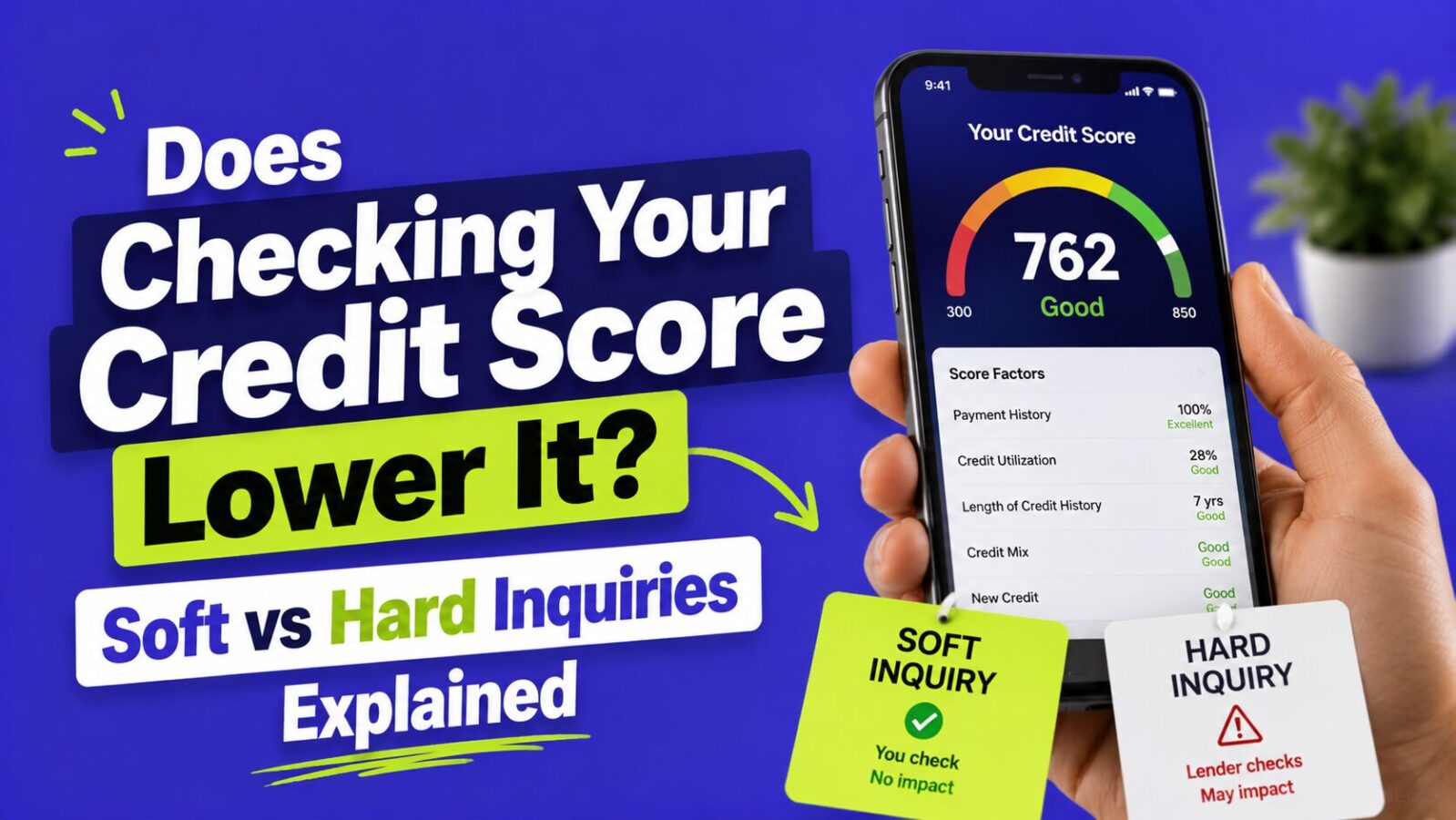
No, checking your own credit score does not lower it. Looking at your own credit is a soft inquiry, which never affects your score, no matter how often you do it. Only a hard inquiry, which happens when you apply for new credit, can have a small, temporary effect. This myth keeps people from monitoring their credit, which actually hurts them. Here is exactly what each type of inquiry is and which one matters.
Key Takeaways
- Checking your own score is a soft inquiry with zero impact, ever.
- Only hard inquiries (from applying for credit) can lower your score, and only a little.
- Rate shopping is protected: multiple loan inquiries in a short window count as one.
- Check your credit often, since monitoring catches errors and fraud early at no cost.
What Is a Soft Inquiry?
A soft inquiry is a credit check that does not affect your score. These happen when:
- You check your own credit score or report.
- A lender pre-approves you for an offer you did not apply for.
- An employer runs a background check (with your permission).
- A card issuer reviews existing accounts for a limit increase.
- You use Credit Karma, Experian, or your bank’s free score tool.
Soft inquiries appear in a section of your report visible only to you, not to lenders, and they have no effect on your score under any circumstances.
What Is a Hard Inquiry?
A hard inquiry happens when you apply for new credit and authorize a lender to pull your full report. These include:
- Credit card applications
- Mortgage applications
- Auto loan applications
- Personal loan applications
- Private student loan applications
- Apartment applications (some landlords run hard pulls)
A single hard inquiry usually lowers your score only slightly, often by just a few points, and the effect typically fades within about 12 months even though the inquiry stays on your report for two years. The exact impact varies by your profile.
How Does Rate Shopping Work?
When you shop for a mortgage, auto loan, or student loan, FICO treats multiple hard inquiries within a short window (roughly 14 to 45 days, depending on the model) as a single inquiry. That lets you compare rates from several lenders without each one counting separately, so cluster your applications within a couple of weeks to be safe.
This protection does not apply to credit cards. Each card application counts as its own hard inquiry, no matter the timing.
When Do Hard Inquiries Actually Matter?
A single hard inquiry is nearly meaningless against your overall score. Inquiries start to matter when:
- You apply for several cards in a few months, which can signal risk to lenders.
- You are right at a scoring threshold where even a few points could drop you below a cutoff.
- You have a thin file, where any negative factor carries outsized weight.
For most people, applying for one or two credit products a year has no meaningful effect on outcomes. See our guide on how your credit score is calculated.
How Can You Check Your Credit for Free?
- annualcreditreport.com: free full reports from all three bureaus, weekly.
- Credit Karma: free VantageScore from TransUnion and Equifax, updated weekly.
- Experian free account: free FICO Score 8 from Experian, monthly.
- Your bank or card app: many show a free FICO score in your dashboard.
Since checking your own credit has zero impact, do it often. Regular monitoring catches errors and identity theft early, neither of which you can fix if you are not looking. See our guide on the best free credit monitoring.
FAQ
Does checking my credit score lower it?
No. Checking your own score is a soft inquiry and never lowers it, no matter how often you check. Only hard inquiries from new credit applications can have a small, temporary effect.
How many points does a hard inquiry cost?
Usually only a few points, and the effect typically fades within about 12 months. The exact amount depends on your overall profile, and a single inquiry is rarely significant.
How long do hard inquiries stay on my report?
Two years, though they only affect your score for about the first 12 months. After that they remain visible but no longer factor into your score.
Will rate shopping for a loan hurt my score?
Not much. FICO counts multiple mortgage, auto, or student loan inquiries within a short window as a single inquiry, so comparing lenders quickly is safe. This does not apply to credit cards.
Bottom Line
Checking your own credit score is a soft inquiry that never lowers it, so monitor freely; only hard inquiries from applying for new credit have a small, temporary effect. Cluster loan rate-shopping into a short window, avoid a flurry of card applications, and check your reports often. To go deeper, see our guides on what a credit score is, how it is calculated, and the best free credit monitoring.
This article is for educational and informational purposes only and is not financial advice. Credit scoring is individual, and the effect of any inquiry varies by your unique profile. Review your reports for free at annualcreditreport.com.