By
By 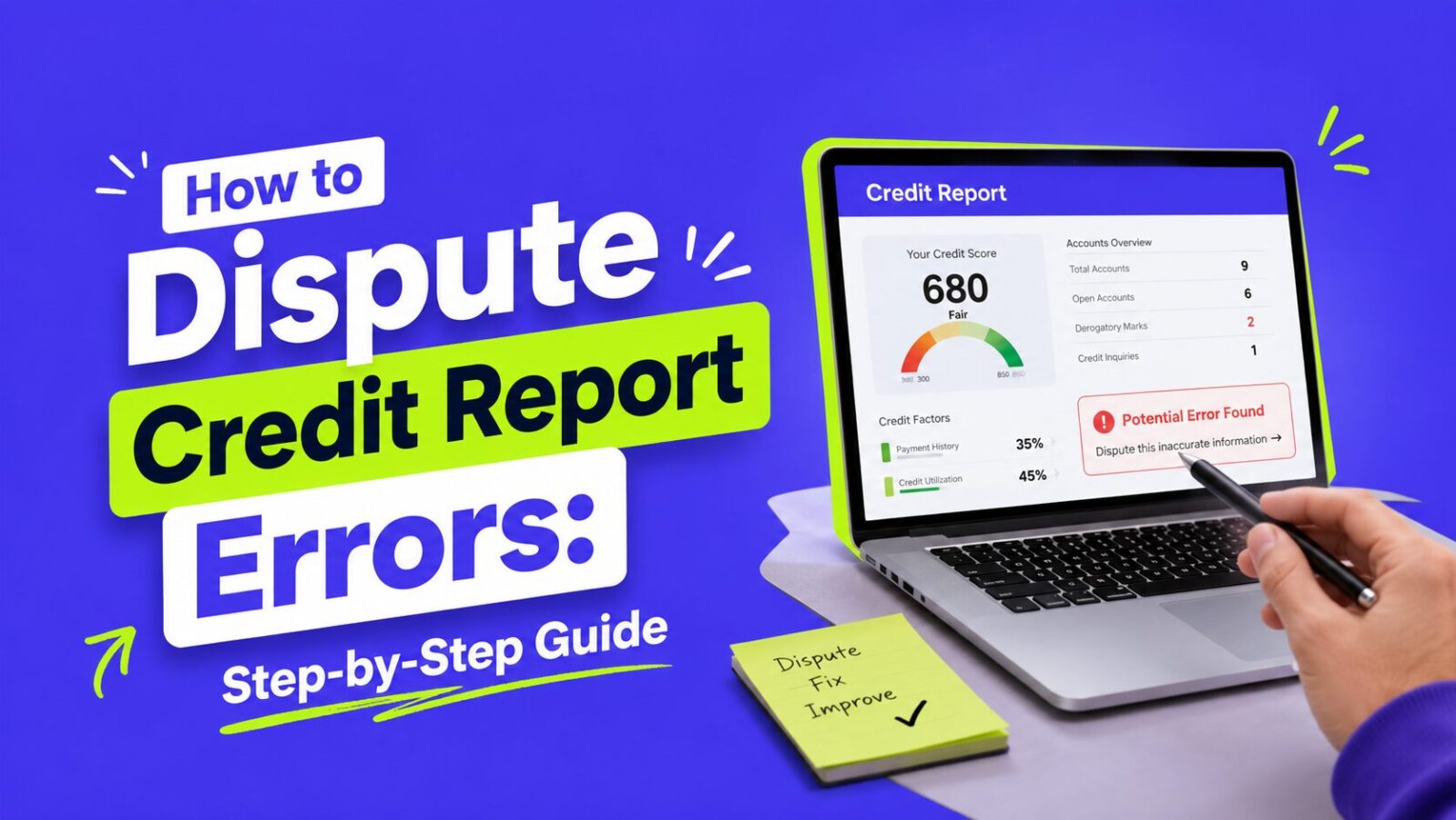
You have the legal right to dispute errors on your credit report for free, and under federal law the credit bureaus must investigate, usually within 30 days, and correct anything inaccurate. This matters because about one in three Americans has at least one error on their report (Consumer Reports), and errors like accounts you did not open, wrong late payments, or outdated collections can meaningfully lower your score. Here is the exact process.
Key Takeaways
- Disputing is free and a legal right under the Fair Credit Reporting Act (FCRA).
- Bureaus must investigate within 30 days and remove anything they cannot verify.
- Dispute with each bureau separately, since an error can appear on one or all three.
- Escalate if rejected: dispute the furnisher, add a statement, or file a CFPB complaint.
Step 1: Pull Your Reports From All Three Bureaus
Go to annualcreditreport.com, the official free source, and pull your reports from Equifax, Experian, and TransUnion, since an error may appear on one or all of them. Review each carefully for accounts you did not open, late marks on accounts you paid on time, collections you already paid or that are past the seven-year window, wrong balances or limits, accounts shown as open that you closed, duplicate accounts from the same debt, and personal information errors. See our guide on getting your free credit report.
Step 2: Gather Documentation
Before filing, collect evidence: bank statements or payment confirmations showing on-time payments, account closure letters, settlement agreements for debts marked outstanding, and identity documents if the error involves someone else’s account. Strong documentation makes a dispute far more likely to succeed.
Step 3: File the Dispute
File with each bureau where the error appears, using their online dispute portals, which are the fastest option. For complex cases or when you want a paper trail, mail a written dispute by certified mail, using the CFPB’s free dispute letter templates at consumerfinance.gov. In your dispute, include your name and address, the specific item and why it is wrong, copies (not originals) of your documentation, and your requested fix (remove the item, correct the balance, or update the status).
Step 4: The Investigation
The FCRA requires the bureau to investigate within 30 days (45 if you add information during the investigation). It contacts the furnisher, the lender or collector that reported the item, and asks them to verify it. There are three common outcomes:
- Corrected: the item is updated or removed, and you get written notice.
- Verified: the bureau keeps the item and explains why.
- Deleted for no response: if the furnisher does not respond in time, the item must be removed, though it can be added back later if verified.
What If Your Dispute Is Rejected?
If the bureau keeps an item you still believe is wrong, you have more options:
- Dispute directly with the furnisher under FCRA Section 623. They must investigate and correct inaccuracies.
- Add a 100-word consumer statement to your file explaining the dispute, which future creditors will see.
- File a CFPB complaint at consumerfinance.gov/complaint, which companies tend to take seriously.
- Consult a consumer-law attorney. Reporting information known to be inaccurate can be an FCRA violation with real damages, and many attorneys work on contingency.
How Fast Does My Score Improve After a Fix?
Once a verified error is removed, your score reflects the change at the next update, usually within about 30 days. Removing a major error, like a collection that was not yours or an inaccurate bankruptcy, can raise your score substantially, though the exact change depends on your overall profile. Smaller corrections have smaller but still real effects.
FAQ
Is disputing a credit report error free?
Yes. Disputing is free and a legal right under the FCRA. Pull your reports at annualcreditreport.com and file directly with the bureaus at no cost.
How long does a credit dispute take?
Bureaus must investigate within 30 days, or 45 if you add information during the process. If the item cannot be verified, it must be removed.
What if the bureau says the item is accurate but I disagree?
Dispute directly with the furnisher under FCRA Section 623, add a 100-word statement to your file, file a CFPB complaint, and consider a consumer-law attorney for ongoing violations.
How much will my score go up after removing an error?
It varies by your profile. Removing a major inaccurate item can help significantly, while small corrections help less. There is no guaranteed number.
Bottom Line
Disputing credit report errors is free, a legal right, and one of the highest-value things you can do for your score. Pull all three reports, document the error, file with each bureau, and escalate to the furnisher or the CFPB if needed. Once a verified error comes off, your score usually updates within about 30 days. To go deeper, see our guides on how your credit score is calculated and why scores drop.
This article is for educational and informational purposes only and is not legal or financial advice. Credit reporting rules and outcomes vary, and scoring is individual. For ongoing violations or a complex case, consult a consumer-law attorney, and use annualcreditreport.com and the bureaus’ official channels.