By
By 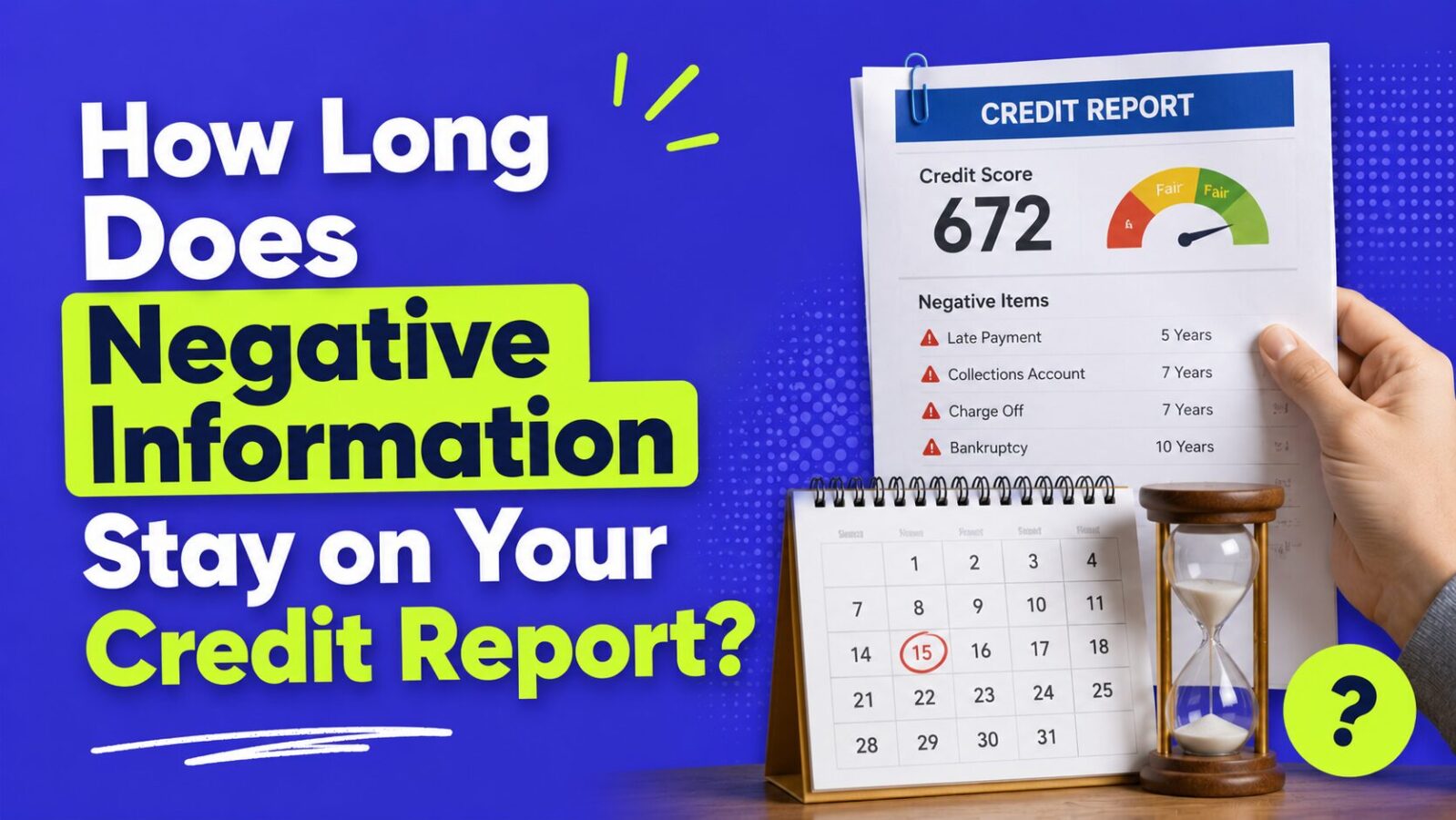
Most negative information stays on your credit report for 7 years from the date of the first missed payment, including late payments and collection accounts. Bankruptcy is the big exception: Chapter 7 stays for 10 years, while Chapter 13 typically falls off after 7 years. Here is the exact timeline for every type of negative mark.
KEY TAKEAWAYS
- Late payments and collections: 7 years from the date of first delinquency, not from when it was paid or sold to a new collector.
- Chapter 7 bankruptcy: up to 10 years. Chapter 13 bankruptcy: typically 7 years.
- Paying off an old debt does not restart or extend the clock. The removal date is fixed to the original delinquency date under the Fair Credit Reporting Act (FCRA).
- Hard inquiries fall off after 2 years, though they usually only affect your score for the first 12 months.
- Tax liens are no longer included on credit reports at all, following changes the credit bureaus made starting in 2018.
How Long Does Each Type of Negative Item Stay on Your Report?
| Negative item | Time on report |
|---|---|
| Late payment (30/60/90 days) | 7 years from first delinquency |
| Collection account | 7 years (plus about 180 days) from first delinquency |
| Charge-off | 7 years from first delinquency |
| Chapter 7 bankruptcy | 10 years from filing date |
| Chapter 13 bankruptcy | 7 years from filing date |
| Civil judgment | Generally no longer reported by the major bureaus |
| Tax lien | No longer included on credit reports |
| Hard inquiry | 2 years (impacts score mainly in year one) |
Why Doesn’t Paying Off a Debt Remove It Sooner?
This trips up a lot of people. Paying a collection account in full closes the balance, and it can help your reputation with future lenders since it shows the debt is resolved. But under the Fair Credit Reporting Act, the clock for how long an item can be reported is tied to the date of first delinquency on the original account, not to when you paid it or when a collector bought the debt.
That means if you missed a payment in March 2023 and the account went to collections, then you paid it off in 2026, the collection can still legally stay on your report until roughly March 2030, the same 7 years from the original 2023 delinquency. Some newer credit scoring models (like VantageScore 4.0 and FICO 9 and later) ignore paid collections when calculating your score, even while the account is still visible on the report itself.
Does the Reporting Clock Ever Restart?
No, and this is one of the most important protections in the FCRA. Selling a debt to a new collection agency, or a collector re-aging the account to make it look more recent, does not legally restart the 7-year clock. If you notice a debt with a first-delinquency date that looks wrong or suspiciously recent, that is worth disputing. See our guide on how to dispute credit report errors for the exact steps.
This distinction also matters for the separate statute of limitations on debt, which is a state law question about how long a collector can sue you over unpaid debt. It is a different clock from credit reporting, and the two do not always match up. A debt can be too old to sue over but still show up on your credit report, or vice versa.
What Happens After a Negative Item Falls Off?
The item is removed automatically. You do not need to request removal once the reporting period ends, and legitimate negative information does not require your permission to come off, it just disappears from your file on schedule. If an accurate item is still showing after its legal window has closed, that is a reportable error you can dispute directly with the bureau that is still listing it.
In the meantime, the effect of a negative item on your actual score fades well before it drops off your report entirely. Most scoring models weigh recent history more heavily, so a 5-year-old late payment has far less impact than one from last month, even though both are still technically visible.
How to Rebuild While Negative Items Age Off
- Keep new accounts spotless. Fresh, on-time payment history is the fastest way to offset older negative marks while you wait for them to expire.
- Watch your utilization. Keeping balances low is one of the highest-leverage moves you control right now. See our 30% utilization rule guide.
- Consider a secured card or credit builder loan to add positive history if your file is thin after a rough patch. See our best secured credit cards roundup.
- Track your recovery timeline. If you’re rebuilding after bankruptcy specifically, see our dedicated credit score after bankruptcy guide.
FAQ
Can a collection agency re-age my debt to keep it on my report longer?
No, this is illegal under the FCRA. The 7-year clock is fixed to the original delinquency date regardless of who owns the debt now.
Does paying off a collection remove it from my credit report?
Not immediately. It updates the account to show a $0 balance and “paid,” but it typically remains visible until the standard 7-year window ends, though some newer scoring models ignore paid collections when calculating your score.
How long does bankruptcy affect my credit score?
Chapter 7 can stay on your report for up to 10 years, Chapter 13 for about 7 years, but the actual score impact fades well before the item is removed, especially if you rebuild with on-time payments afterward.
Do closed accounts in good standing stay on my report?
Yes, positive closed accounts can remain on your report for up to 10 years and continue to help your score by adding to your length of credit history.
Bottom Line
Most negative marks clear your credit report on a fixed 7-year timeline (10 years for Chapter 7 bankruptcy), and paying off an old debt does not shorten that window. Focus your energy on building fresh, positive history, since recent behavior carries far more weight in your score than an aging negative mark waiting to fall off.
A quick note: this guide covers standard FCRA reporting periods, not legal advice about your specific situation. If you spot an error or a negative item that looks like it has been re-aged, our dispute guide walks through how to challenge it directly with the credit bureau.