By
By 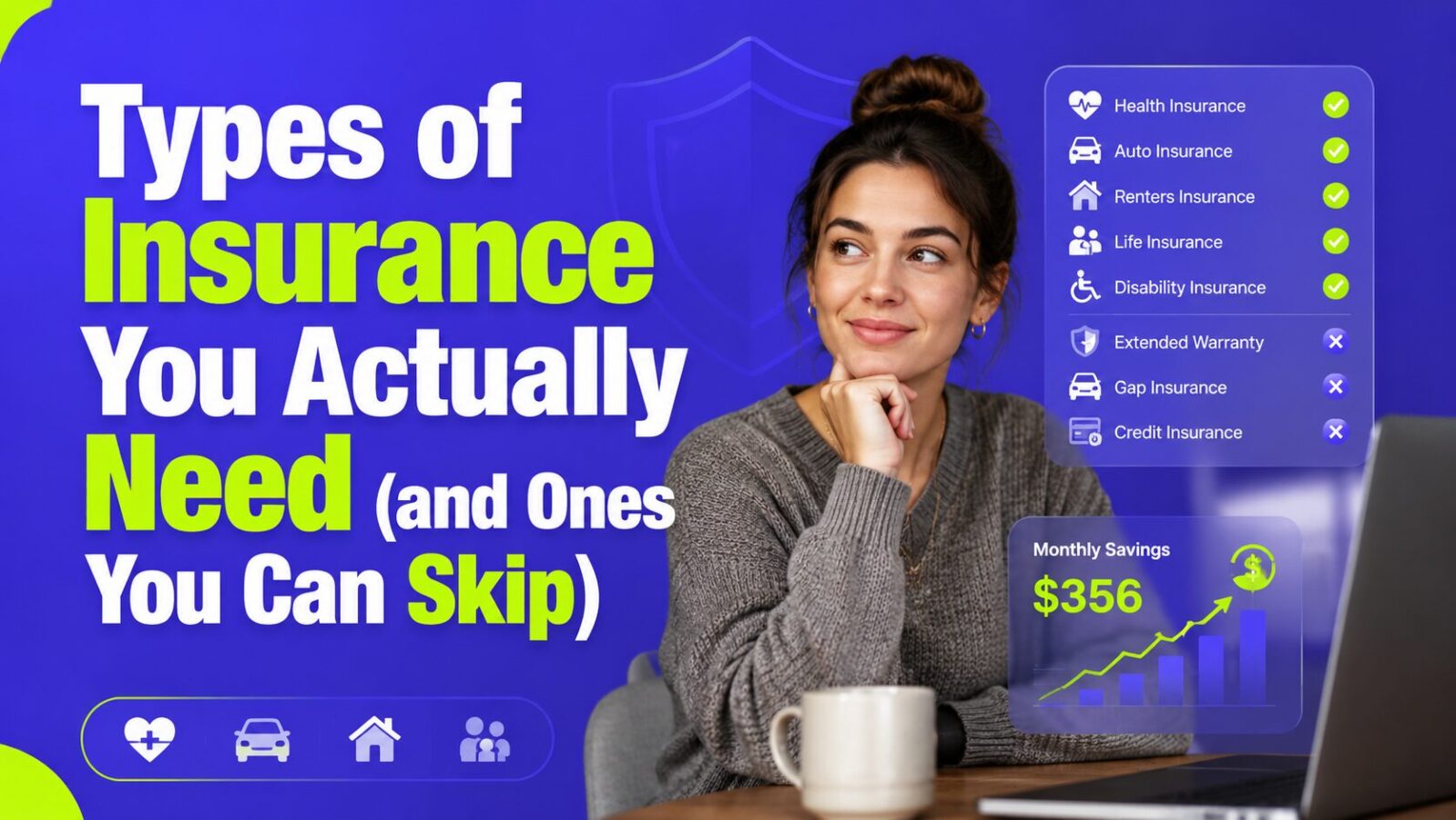
Insurance protects against catastrophic losses, the kind of events so large they could wipe out your savings, income, or financial stability. So the right question is not “what insurance exists” but “what losses would be catastrophic for me that I cannot cover myself?” Here is how to think about every major type, from the ones you almost certainly need to the ones you can usually skip.
Key Takeaways
- Insure against catastrophe, self-insure the rest. Buy coverage for losses that could ruin you financially, not small ones you can absorb.
- The essentials: health, auto, renters or homeowners, life (if you have dependents), and disability.
- Disability insurance is the most overlooked, because your income is your biggest asset.
- Skip the low-value extras: extended warranties, credit card payment protection, child life insurance, and flight insurance.
Insurance You Almost Certainly Need
Health insurance
A serious illness or injury without coverage is a leading driver of personal bankruptcy, since a single hospitalization can run $50,000 to well over $500,000. Get coverage through your employer if you can. If you are self-employed or between jobs, use the ACA marketplace. If your income is low, Medicaid may be free. If you are under 26, you can stay on a parent’s plan. Note for 2026: the enhanced ACA subsidies expired at the end of 2025, so marketplace premiums are higher this year for many people, but subsidies still exist for incomes between 100% and 400% of the federal poverty level. See how much health insurance costs in 2026 and the Open Enrollment 2026 Complete Guide for enrollment dates and what changed.
Auto insurance
Auto insurance is required in nearly every state. New Hampshire is the main exception, and Virginia ended its fee-based alternative in 2024, so essentially all drivers now need at least minimum liability. Even where minimums are low, adequate liability coverage is essential: a serious accident without enough can lead to judgments against your assets and wages. See our guide on getting the cheapest car insurance without sacrificing coverage.
Renters or homeowners insurance
If you rent, renters insurance covers your belongings and liability for about $15 to $30 a month, and your landlord’s policy does not cover your personal property, so it is one of the best values in insurance. If you own, homeowners insurance is required by your lender and protects the structure and your liability. Keep coverage updated for current rebuild costs, since many owners are underinsured after years of rising construction prices. See our guides on renters insurance and what homeowners insurance covers.
Life insurance (if you have dependents)
If your death would create financial hardship for a spouse, children, or others who rely on your income, life insurance is essential. If no one depends on you financially, it is optional. See our guide on how much life insurance you need.
Disability insurance
This is the most overlooked essential. Your ability to earn is your most valuable asset: a 35-year-old earning $75,000 has roughly $2.25 million in future earnings over 30 years. Disability insurance replaces 60% to 70% of your income if illness or injury stops you from working. Many people have short-term disability through work, but long-term disability, which starts after a few months and can last years, is far less common and far more important. If your employer does not offer it, individual policies are available.
Insurance That Is Valuable for Many People
Umbrella insurance
This adds liability coverage above your auto and home limits, often $1 million for around $150 to $300 a year. It is worth having if you have significant assets, own property, or have extra liability exposure like a pool or teenage drivers.
Long-term care insurance
This covers nursing home, assisted living, and home care costs in old age. A nursing home can run roughly $8,500 to $10,500 a month, and without this coverage or substantial savings, those costs can drain a lifetime of assets. It is usually most cost-effective to buy between ages 55 and 65, since premiums climb steeply with age.
Insurance You Probably Do Not Need
- Retail extended warranties. Highly profitable for sellers because claims are rare. Items you can afford to replace, or that your homeowners, renters, or credit card already protects, rarely justify the extra cost.
- Credit card payment protection. The premium usually costs more than the benefit over time. Build an emergency fund instead.
- Child life insurance. Children have no dependents relying on their income, so the financial case is weak. The money is almost always better used in a 529 college savings plan or invested for their future.
- Flight insurance. Commercial aviation accident rates are near zero, and your life insurance already covers accidental death from any cause.
The Framework: Insure Against Catastrophe, Self-Insure the Rest
Insurance makes sense when a loss is both large enough to be catastrophic and unpredictable enough that you cannot plan around it. A serious illness, a car accident that injures someone, a house fire: these clear the bar easily. A cracked phone screen does not. Keep a few dollars a month and pay for the repair if it happens. Run every insurance decision through that test, and you will skip most of the add-ons you do not need.
Frequently Asked Questions
What insurance does everyone need?
Health and auto insurance for nearly everyone, renters or homeowners insurance, life insurance if you have dependents, and disability insurance to protect your income. These five categories cover the losses most likely to be financially catastrophic.
Is disability insurance really necessary?
For most working people, yes. Your income is your biggest asset, and long-term disability replaces a large share of it if you cannot work. It is the most widely underinsured type of coverage.
Should I buy an extended warranty?
Usually not. Claims are rare, and your credit card or home or renters policy may already cover the item. Self-insure what you can afford to replace.
Do I need life insurance if I have no dependents?
Only if someone depends on your income or you have co-signed debt a survivor would owe. Otherwise it is optional.
Bottom line: Buy insurance for the losses that could wreck you financially, and self-insure everything small. Cover health, auto, your home or rental, life if people depend on you, and your income through disability insurance. For how to navigate health insurance this open enrollment season, see the Open Enrollment 2026 Complete Guide.
This article is for educational and informational purposes only and is not insurance advice. Insurance needs vary significantly by person, family situation, and state. Consult a licensed insurance professional for advice tailored to your situation.