By
By 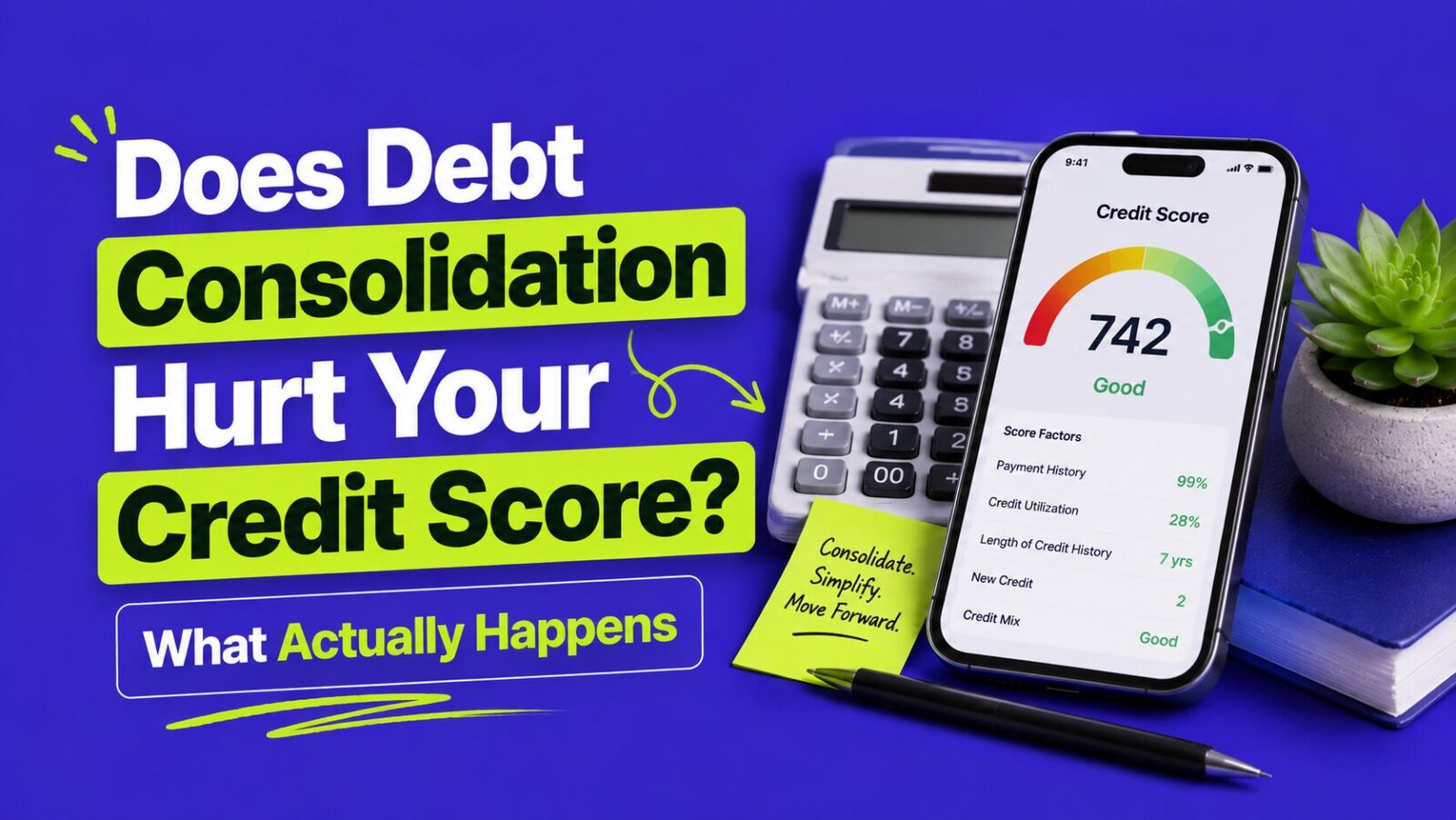
Debt consolidation usually causes a small, temporary dip in your credit score when you apply, then often raises it meaningfully over 6 to 12 months as your utilization drops and on-time payments add up. Whether it helps or hurts depends entirely on how you handle it afterward, especially what you do with the paid-off cards. The loan itself is neutral; your behavior decides the outcome. Here is what happens at each stage.
Key Takeaways
- Applying causes a small, temporary dip from the hard inquiry.
- Paying off cards drops your utilization, which can lift your score notably.
- Do not close the paid-off cards or charge them back up; both hurt your credit.
- On-time loan payments drive a net improvement over 6 to 12 months.
What Happens to Your Credit When You Apply?
Applying for a consolidation loan or balance transfer card triggers a hard inquiry, which typically lowers your score slightly and stays on your report for 2 years (but only affects your score for about 12 months). It is small, temporary, and expected. If you compare several lenders, FICO treats multiple inquiries for the same loan type within a short window (roughly 14 to 45 days) as one, so shop within a couple of weeks rather than over months. See our guide on soft vs hard inquiries.
What Happens When the Loan Is Funded?
When you use the loan to pay off card balances, two things happen:
Positive: utilization drops sharply. If you had $15,000 on cards with $20,000 in limits, your utilization was 75%; paying them off takes card utilization to 0%. Since utilization is about 30% of your FICO score, this single change can raise your score considerably for many borrowers.
Slightly negative: average account age may dip. A new loan lowers your average account age, a minor factor that fades as the loan ages.
What Should You Do With the Paid-Off Cards?
This is where most people go wrong.
Do not close them. Closing a card cuts your available credit, which raises utilization on any remaining balances, and it shortens your credit history. Both lower your score.
Do not charge them back up. Paying cards off with a loan and then running new balances leaves you with both loan debt and card debt, doubling what you owe.
The right move: keep the cards open, put them away, and use each for a small purchase once a year to stay active. High available credit with low utilization helps your score, so open cards at $0 are an asset. See our guide on credit utilization.
How Does the Score Recover Over 6 to 12 Months?
After the initial dip and the utilization boost, every on-time payment on the consolidation loan helps, since payment history is about 35% of your FICO score. Six months of on-time payments with card balances staying low or at zero typically leaves you with a net improvement versus where you started, and it keeps building from there.
How Do Different Consolidation Methods Compare?
| Method | Initial impact | 6 to 12 month trend |
|---|---|---|
| Personal (consolidation) loan | Small dip from hard inquiry | Often a solid net gain as utilization falls and payments post |
| Balance transfer card | Small dip from hard inquiry | Net gain as utilization shifts and payments post |
| Debt settlement | Large drop (requires delinquency) | Slow recovery over 2 to 4 years |
| Nonprofit DMP | Small to moderate dip (some accounts closed) | Neutral to positive with consistent payments |
The exact point changes vary by your profile, but the direction is consistent: loans and balance transfers help if you behave well, while settlement hurts the most up front.
FAQ
Does debt consolidation hurt your credit score?
Only briefly. Applying causes a small, temporary dip from the hard inquiry, but paying off card balances lowers your utilization and usually lifts your score over the following months, for a net positive if you do not run the cards back up.
Should I close my cards after consolidating?
No. Closing them reduces your available credit and shortens your history, both of which lower your score. Keep them open at a $0 balance and use each occasionally to stay active.
How long until my score recovers after consolidation?
Usually within 6 to 12 months, as the utilization drop and on-time loan payments outweigh the small inquiry dip. The exact pace depends on your overall profile.
Which consolidation method is best for credit?
A personal consolidation loan or balance transfer card is best when handled well. Debt settlement damages credit the most because it requires going delinquent first.
Bottom Line
Done right, debt consolidation dips your score briefly from the hard inquiry, then improves it over 6 to 12 months as utilization falls and on-time payments build, for a net gain for most borrowers. Keep the paid-off cards open at zero and do not run them back up; the loan is neutral, but your behavior afterward decides the result. To go deeper, see our guides on credit utilization, improving your score fast, and soft vs hard inquiries.
This article is for educational and informational purposes only and is not financial advice. Credit scoring is individual, and the effect of any move varies by your profile. Confirm terms with your lender.