By
By 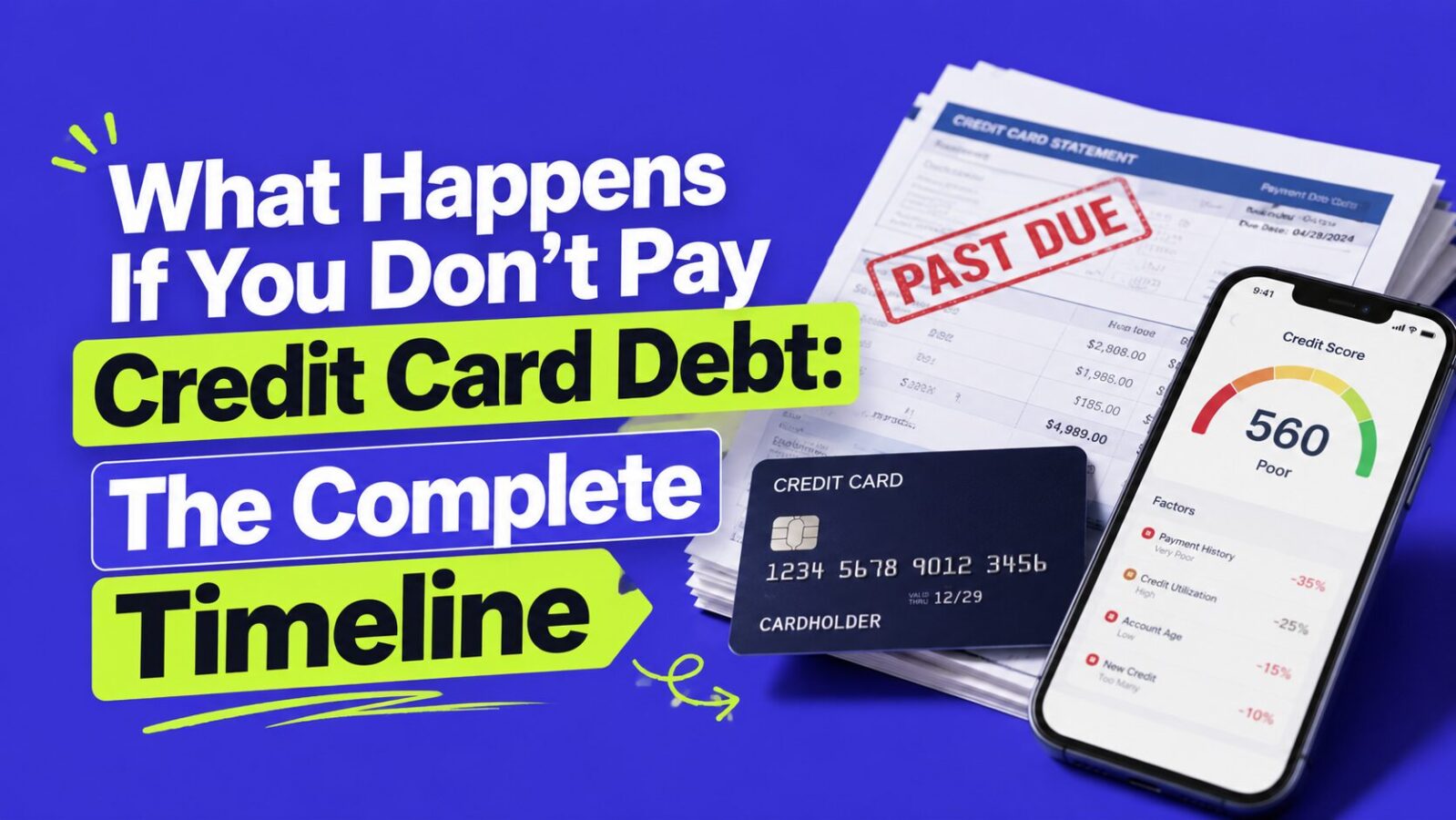
If you stop paying a credit card, a predictable sequence unfolds: late fees within days, a credit-bureau hit at 30 days, a charge-off around 180 days, then collections and possibly a lawsuit, with the credit damage lasting 7 years. Some of it is reversible, some is not, but every stage has an intervention point that beats the next one. Here is the complete timeline so you know exactly what to expect and when to act.
Key Takeaways
- 30 days late is the first credit-bureau hit; before that, paying fast usually avoids reporting.
- Charge-off comes around 180 days, but you still owe every dollar.
- A lawsuit can lead to garnishment or bank levies, so always respond to a summons.
- Negative marks last 7 years from first delinquency, then fall off automatically.
Day 1 to 29: Missed Payment
Your payment is late, but nothing dramatic happens yet. You will get reminder calls and emails, and a late fee of roughly $29 to $40, and your account is now delinquent. If you can pay, do it now: a single payment under 30 days late is not reported to the bureaus by most major issuers. Call and ask to waive the late fee if this is your first miss in years.
Day 30: First Credit Bureau Report
At 30 days past due, most issuers report your account as delinquent to all three bureaus. A 30-day late mark can drop a high score by a large margin (the exact amount varies by profile, with bigger drops from higher starting scores), and it stays on your report for 7 years from the missed payment. Collection calls increase as the issuer’s internal team works your account.
Day 60 to 90: Increasing Pressure
A second and third missed cycle add 60-day and 90-day late marks, each compounding the damage. Your rate may jump to the penalty APR (often around 29.99%) on future purchases if your card has that clause, the issuer may suspend the card, and collection calls grow more frequent.
Day 120 to 180: Charge-Off Territory
Around 180 days past due, the issuer charges off the account, an accounting term meaning they write the balance off as a loss. It does NOT mean the debt is gone; you still owe every dollar. A charge-off is one of the most serious negative marks, drops your score significantly, and stays 7 years from first delinquency. At this point the bank either keeps the debt in collections or sells it to a third-party collector for pennies on the dollar.
Month 6 to 2 Years: Collections
Once sold, the debt appears as a separate collection account on top of the original charge-off, so two negative items now show for the same debt. Collectors can call, write, and contact others within limits. The FDCPA bars them from calling before 8am or after 9pm, threatening violence, using obscene language, making false statements, or continuing contact after you send a written cease-communication request. Keep everything in writing. See our guide on talking to debt collectors.
Month 6 to 4 Years: Potential Lawsuit
Creditors or collectors can sue you in civil court for a judgment, which unlocks bank levies, wage garnishment, and property liens. Whether they sue depends on the balance (usually only worthwhile above $1,000 to $2,000), your assets, and the collector’s model. If you are served, respond: ignoring it means an automatic default judgment, while responding forces them to prove they own the debt and that the amount is right, which is not always easy after a debt is resold.
What Is the Statute of Limitations?
Every state has a statute of limitations on credit card debt, typically 3 to 6 years, after which collectors cannot sue you. It does not erase the debt from your credit report (that runs 7 years from first delinquency); it only removes the lawsuit threat. Making a payment or acknowledging the debt in writing can reset the clock in many states.
| State | Statute of limitations (credit card) |
|---|---|
| California | 4 years |
| Texas | 4 years |
| Florida | 5 years |
| New York | 3 years |
| Illinois | 5 years |
| Most other states | 3 to 6 years |
See our full guide on the statute of limitations on debt.
Year 7: Credit Report Cleanup
Seven years from your first missed payment, the negative items from this debt fall off your report automatically: charge-offs, late payments, and collection accounts all disappear, and your score gets a meaningful recovery. The debt may still legally exist if the statute has not run, but the credit-reporting damage is gone.
What Should You Do If You Cannot Pay Right Now?
You have real options before the worst consequences hit. Call your issuer immediately, since most have hardship programs that temporarily cut your rate or minimum or waive fees, even if they are not advertised. Contact a nonprofit credit counselor through the NFCC (nfcc.org), whose Debt Management Plan can lower interest to roughly 0% to 8% while you repay in full. And consider bankruptcy if your unsecured debt exceeds your annual income with no realistic payoff path, since Chapter 7 discharges most unsecured debt and the credit hit is not worse than a charge-off plus collections plus judgments. The worst outcome is doing nothing. See our guide on your credit score after bankruptcy.
FAQ
How long before a missed credit card payment hits my credit?
About 30 days. Most issuers report at 30 days past due, so paying within the first 29 days usually avoids a credit-bureau mark, though late fees still apply.
What is a charge-off?
An accounting move around 180 days late where the bank writes the balance off as a loss. You still owe the money, and it is one of the most damaging marks, staying 7 years from first delinquency.
Can I be sued for unpaid credit card debt?
Yes, usually within the statute of limitations (3 to 6 years). A judgment can lead to wage garnishment or bank levies, so always respond to a lawsuit rather than letting a default judgment happen.
When does unpaid credit card debt fall off my credit report?
Seven years from the date of first delinquency. After that, the late payments, charge-off, and collection accounts drop off automatically and your score recovers.
Bottom Line
Not paying a credit card runs a predictable path from late fees to a 30-day credit hit, a charge-off near 180 days, collections, and a possible lawsuit, with damage lasting 7 years. Every stage has a better intervention than the next, so call your issuer, use credit counseling, or weigh bankruptcy before garnishment ever starts. To go deeper, see our guides on the statute of limitations on debt, talking to debt collectors, and your credit score after bankruptcy.
This article is for educational and informational purposes only and does not constitute legal advice. Timelines and rules vary by issuer and state, so consult a professional for your situation.