By
By 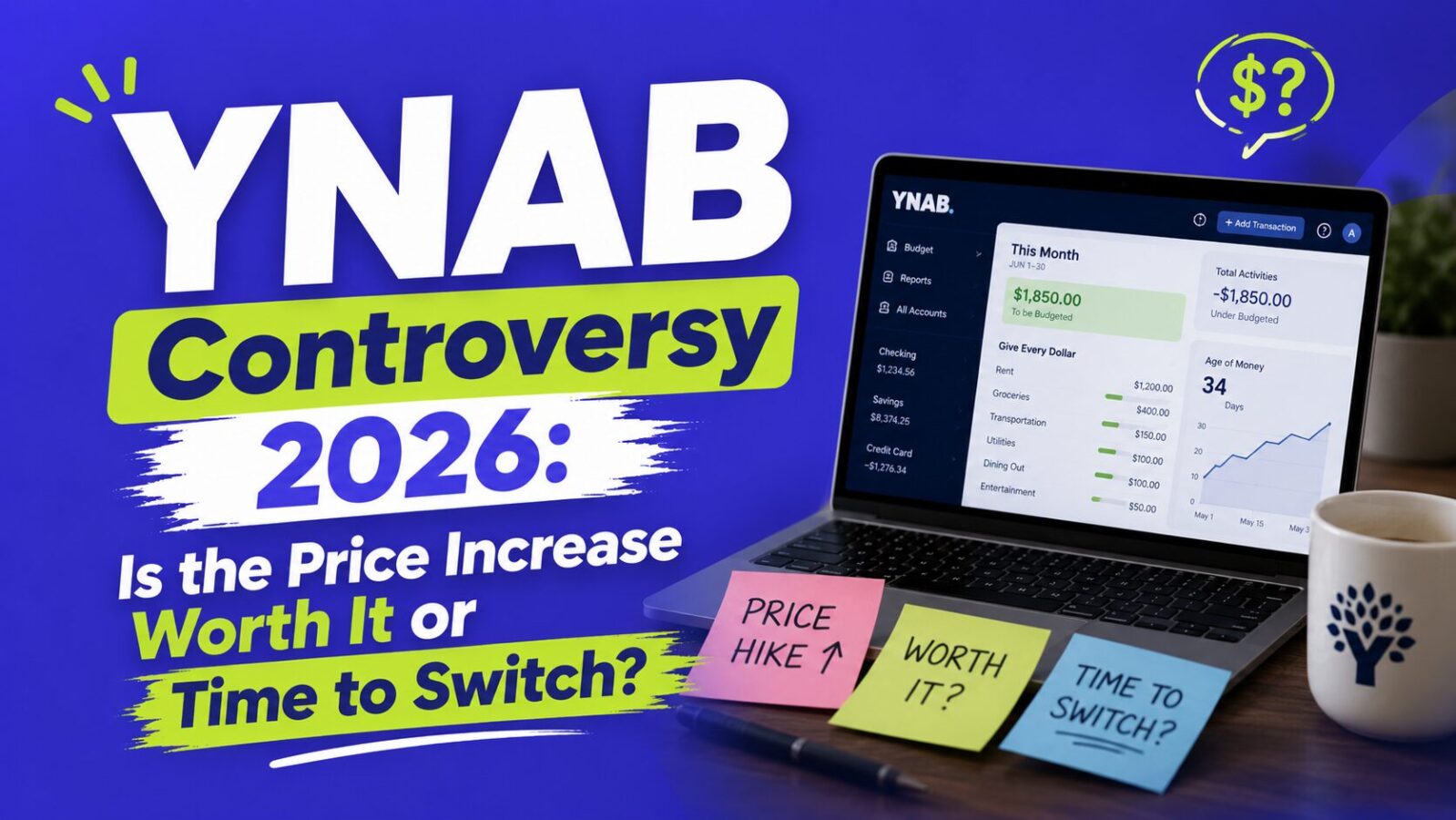
Finance Pulse may earn a commission if you sign up through links on this page. This does not affect our analysis.
YNAB costs $109 a year in 2026, up from a one-time $60 purchase at launch and $50 a year when it went subscription in 2015, a roughly 118% increase while the core method stayed the same. That is the controversy: not a scandal or shutdown, just the fair question of whether an app built to help you spend less is worth $109 a year forever. The honest answer: worth it if you are actively tackling debt or budgeting as a family, but reconsider if your finances are stable or you never built the habit. Here are both sides.
Key Takeaways
- YNAB is not shutting down; it is a profitable, subscription-funded company, unlike ad-funded Mint.
- The real grievance is price: $50/year in 2015 to $109 now, with an unchanged core method.
- Worth it for debt payoff, first-time budgeters, and families (up to 6 users on one plan).
- Consider switching if your finances are stable, you want passive tracking, or the habit never stuck.
Is YNAB Shutting Down?
No. The rumor resurfaces every few months, usually sparked by Mint’s 2024 closure making people anxious about paid apps, but there is no credible evidence YNAB is at risk. It is a privately held, profitable company funded directly by subscriptions since 2015, not by ads like Mint was, and as of 2026 it still ships regular updates including an AI assistant, new goal types, and better reporting.
Why Has YNAB Gotten More Expensive?
| Year | Price | Model |
|---|---|---|
| 2004-2015 | ~$60 | One-time purchase |
| 2015 | $50/year | Subscription launch |
| 2018 | $84/year | First increase |
| 2021 | $99/year | Second increase |
| 2023-2026 | $109/year ($14.99/month) | Current price |
Someone who joined in 2015 at $50 now pays $109, a 118% rise over 11 years, while the core function is unchanged: assign every dollar, move money between categories when life happens, follow the four rules. The AI assistant and better reporting are real, but they did not double the value for most users. The compound cost stings too: a 2015 subscriber has paid roughly $900 through 2026, with the irony of paying real money for a tool meant to help you spend less.
What Does YNAB’s $109 Actually Get You?
To be fair, the product is excellent for the right user. You get the zero-based, four-rules methodology that users credit with paying off debt and building savings habits; cross-platform access (iOS, Android, full web); family sharing for up to 6 people on one plan (about $18 per person for a family of six); a loan and debt-payoff planner that Monarch and Copilot lack; 12 months free for verified students; the longest free trial in the category at 34 days; and an active educational ecosystem of workshops and community support.
When Is YNAB Worth $109?
It earns its price for users who are carrying debt and need behavioral change rather than just tracking, who engage with the app weekly and make deliberate decisions, who have a family to split the cost across, or who have tried free passive trackers and found they did not change their behavior. The zero-based system forces you to confront spending in a way passive apps do not.
When Should You Switch Away From YNAB?
It is not worth the money if your finances are now stable and you no longer need the active method, if you want passive tracking and investment visibility (Monarch offers more breadth for less time), if you are on Android and want better design, or if you have repeatedly failed to build the YNAB habit. Some brains are not wired for zero-based budgeting, and passive tracking beats nothing.
What Are the Best Alternatives?
Monarch Money ($99.99/year): best for former YNAB users who want budgeting with less active management, and for couples (shared access included). Broader features including investments and net worth, but no zero-based method. See our Monarch Money review.
Copilot Money ($95/year): best for iPhone users who want beautiful design and AI categorization. No Android, no household sharing without a second subscription.
Goodbudget (free basic tier): envelope budgeting like YNAB’s philosophy but with manual entry, which some people prefer for the awareness it forces. Free tier allows 10 envelopes and 1 account.
Spreadsheet (free forever): a well-built Google Sheets budget with your bank’s export gives full control and immunity from price increases. Less convenient than bank sync, but infinitely customizable.
FAQ
Is YNAB shutting down?
No. There is no credible evidence it is closing. It is a privately held, profitable company funded by subscriptions, not ads like Mint, and it still ships regular updates as of 2026.
How much does YNAB cost in 2026?
$109 a year or $14.99 a month, unchanged since 2023. One subscription covers a household of up to 6 people, with a 34-day free trial and 12 months free for verified students.
Is YNAB worth it in 2026?
For people actively tackling debt or building a first budget, and for families splitting one plan, yes. If your finances are already stable or you want passive tracking, Monarch or a free spreadsheet may deliver more value.
What is the best alternative to YNAB?
Monarch Money ($99.99) for couples and passive tracking, Copilot ($95) for iPhone design, Goodbudget for free envelope budgeting, or a free spreadsheet for full control at zero cost.
Bottom Line
YNAB’s price increases are a legitimate frustration, but at $109 a year it is still likely the most effective tool for anyone actively working through debt or building a first real budget, and cheap next to the cost of not changing. If your finances are stable or you want passive tracking, Monarch or a free spreadsheet may serve you better. To go deeper, see our Monarch Money review, our guide on getting out of debt, and lowering your tax bill.
YNAB pricing verified at ynab.com as of 2026. Prices and features change, so confirm current details before subscribing. This article is for educational and informational purposes only and is not financial advice.