 By
By 
Yes, Public Service Loan Forgiveness still exists in 2026. The basic rule is unchanged: eligible borrowers can have the remaining balance on their Direct Loans forgiven after 120 qualifying monthly payments while working full time for a qualifying public service employer. Those 120 payments do not have to be consecutive.
What has changed is the repayment landscape. SAVE is gone, the new Repayment Assistance Plan, or RAP, launched July 1, 2026, and the new Tiered Standard Plan does not count toward PSLF. A separate rule that was supposed to change which employers qualify was struck down by federal courts before it could take effect.
Key takeaways
- PSLF was not eliminated. You still need 120 qualifying monthly payments while working full time for a qualifying employer.
- RAP counts toward PSLF. IBR also remains a qualifying option for eligible borrowers.
- PAYE and ICR can still count while they remain available to eligible borrowers, although both are scheduled to end no later than July 1, 2028.
- The 10-year Standard Repayment Plan can count toward PSLF. The new Tiered Standard Plan cannot.
- SAVE ended on March 10, 2026. SAVE borrowers must choose another repayment plan after receiving their servicer’s transition notice.
- The planned 2026 PSLF employer restriction did not take effect. Federal courts vacated the rule on June 30, 2026.
Does PSLF still exist in 2026?
Yes.
PSLF remains available to borrowers with eligible Direct Loans who make the equivalent of 120 qualifying monthly payments while working full time for a qualifying employer. Federal regulations generally define full-time employment as an average of at least 30 hours per week during the period being certified.
That means the headlines about student loan changes in 2026 should not be read as “PSLF is gone.” The bigger issue for borrowers is making sure future payments are being made under a PSLF-qualifying repayment plan.
Which repayment plans count toward PSLF in 2026?
RAP and IBR can count, but they are not the only qualifying repayment plans in 2026.
Federal PSLF regulations include qualifying income-driven repayment plans, the 10-year Standard Repayment Plan, and certain other repayment arrangements that meet specific requirements. RAP was expressly added as a qualifying PSLF plan. The new Tiered Standard Plan was not.
For most borrowers, the plans worth knowing about are:
| Repayment plan | Counts toward PSLF? | What to know |
|---|---|---|
| RAP | Yes | New income-driven plan available starting July 1, 2026 |
| IBR | Yes | Remains available to eligible borrowers |
| PAYE | Yes, if eligible | Scheduled to end no later than July 1, 2028 |
| ICR | Yes, if eligible | PSLF-qualifying payments under ICR are limited through June 30, 2028 under the new rules |
| 10-year Standard | Yes | Usually pays the loan off within 10 years, which may leave little or nothing to forgive |
| Tiered Standard | No | Payments under this new plan do not qualify for PSLF |
Federal Student Aid currently lists RAP, IBR, PAYE, and ICR among the available income-driven options, subject to each plan’s loan and borrower eligibility rules. PAYE and ICR are scheduled to be retired no later than July 1, 2028.
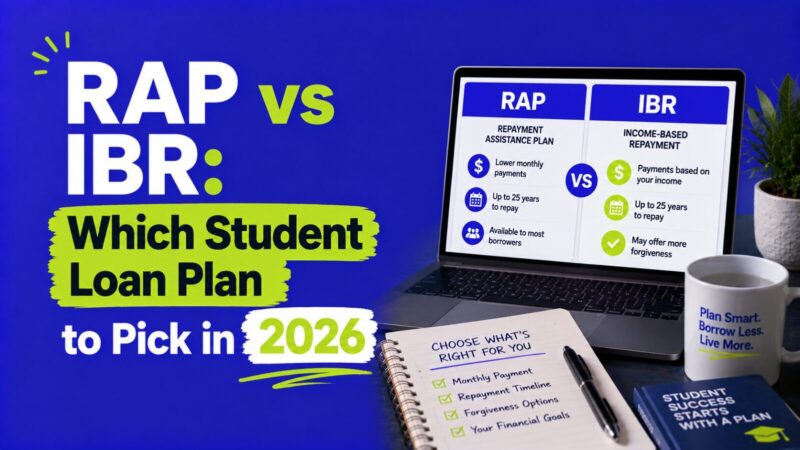
If you are deciding between the two options most likely to matter long term, see our comparison of RAP vs. IBR.
Does the Tiered Standard Plan count toward PSLF?
No.
This point is unusually clear in the final federal regulations. The Department of Education states that the Tiered Standard Plan is not included among the repayment plans Congress allows to count toward PSLF. Payments made under Tiered Standard therefore do not qualify toward the 120-payment requirement.
That distinction matters because Tiered Standard became one of the major federal repayment options on July 1, 2026.
For Direct Loans made on or after July 1, 2026, borrowers generally have a much narrower choice between RAP and Tiered Standard. If a borrower with those new loans does not choose a plan, federal rules generally place the borrower into Tiered Standard by default.
If PSLF is your goal, that default matters. RAP can earn qualifying PSLF credit. Tiered Standard cannot.
See our full guide to the Tiered Standard Repayment Plan before choosing it.
What happened to SAVE in 2026?
SAVE is no longer available.
A federal court order ended the Saving on a Valuable Education Plan on March 10, 2026. Borrowers enrolled in SAVE, or with pending SAVE applications, must move to another repayment plan.
The July 1 date is still important, but for a different reason.
Beginning July 1, 2026, federal loan servicers started sending affected SAVE borrowers notices giving them at least 90 days to choose another repayment plan. Your actual deadline comes from your servicer, so do not assume everyone has the same date.
If you do not select a plan by the deadline stated in your notice, the Department says you may be automatically placed into either the Standard Repayment Plan or Tiered Standard Plan, depending on your loans and repayment eligibility.
That creates a particularly important distinction for PSLF borrowers:
Standard and Tiered Standard are not the same thing.
The qualifying 10-year Standard Repayment Plan can count toward PSLF. The new Tiered Standard Plan does not.
What should SAVE borrowers pursuing PSLF do?
Do not simply wait for the system to choose a repayment plan for you.
Start by logging in to StudentAid.gov and checking:
- which loans you have
- your current repayment status
- the deadline in your servicer notice
- which repayment plans your loans qualify for
- your current PSLF qualifying payment count
Then compare the PSLF-eligible plans available to you.
For many borrowers with older loans, that may mean comparing IBR with RAP. Some borrowers may also remain eligible for PAYE or ICR while those plans continue to exist. Borrowers with newer Direct Loans may have a much narrower choice, with RAP being the relevant income-driven option for PSLF.
Use our guide to switching out of SAVE for the transition steps.
Do the SAVE forbearance months count toward PSLF?
Do not assume every month automatically counts.
Periods in certain deferment or forbearance statuses may not appear as qualifying PSLF payments. Federal Student Aid offers PSLF buyback for some borrowers who have nonqualifying deferment or forbearance months.
But buyback has an important restriction: you generally must already have 120 months of qualifying employment, and buying back the eligible months must result in forgiveness under PSLF or TEPSLF.
So if you spent part of the SAVE litigation period in forbearance, do not rely on a blanket statement that those months did or did not count. Check your official payment history at StudentAid.gov first.
Did the new PSLF employer rule take effect?
No. This is another major correction to earlier 2026 guidance.
The Department of Education finalized a rule in October 2025 that was scheduled to take effect July 1, 2026. It would have allowed the Department to disqualify certain employers determined to have a “substantial illegal purpose.”
But on June 30, 2026, federal courts struck down the rule before its effective date.
The Department later confirmed through Federal Student Aid that the rule had been vacated and that it was removing the related employer attestation from the PSLF form to comply with the court order.
So as of August 2026, you should not treat the “substantial illegal purpose” employer test as an active PSLF requirement.
The usual PSLF employer rules remain the relevant starting point, including qualifying government employers, qualifying 501(c)(3) organizations, and certain other eligible nonprofit public service employers.
You can check a specific employer using the PSLF Employer Search and PSLF Help Tool at StudentAid.gov rather than relying on the organization’s name or nonprofit status alone.
How to protect your PSLF progress in 2026
There are three things worth checking now: your repayment plan, your employer certification, and your qualifying payment count.
First, make sure the plan you are paying under actually counts toward PSLF. This is especially important after SAVE and after the introduction of Tiered Standard.
Second, keep your employment history up to date through the PSLF Help Tool. Federal Student Aid lets borrowers view their payment count, employment history, and PSLF form status online.
Third, review the actual qualifying payment count rather than calculating ten years yourself. PSLF requires 120 qualifying monthly payments, and periods of forbearance, deferment, nonqualifying repayment, or nonqualifying employment can affect the timeline.
If you change jobs, certify the new employer rather than assuming it qualifies.
Is PSLF forgiveness taxable?
PSLF forgiveness is not subject to federal income tax under current federal rules.
Federal Student Aid says borrowers do not have to pay federal tax on debt forgiven through PSLF, although state tax treatment can differ.
This is different from some other types of student loan discharge, so do not automatically apply general “student loan tax bomb” rules to PSLF.
FAQ
Is PSLF going away in 2026?
No. PSLF still forgives the remaining balance on eligible Direct Loans after 120 qualifying monthly payments while you work full time for a qualifying employer. The 2026 repayment changes did not eliminate the program.
Does RAP count toward PSLF?
Yes. RAP was specifically added as a qualifying repayment plan for PSLF beginning with the new repayment system in 2026.
Does IBR still count toward PSLF?
Yes. IBR remains an income-driven repayment option for eligible borrowers, and qualifying payments can count toward PSLF when the other PSLF requirements are met.
Does PAYE still count toward PSLF in 2026?
Yes, for borrowers who are eligible to use it. PAYE is still part of the current IDR system in 2026, but Federal Student Aid says it will be retired no later than July 1, 2028.
Does the Tiered Standard Plan count toward PSLF?
No. Federal regulations specifically exclude Tiered Standard from the repayment plans that qualify for PSLF.
What happens if I do nothing after SAVE?
Your servicer should give you a specific transition deadline of at least 90 days. If you do not choose another plan within that period, the Department says you may be placed into Standard or Tiered Standard repayment depending on your loans. Because Tiered Standard does not count toward PSLF, borrowers pursuing forgiveness should review their options before their individual deadline.
Did the new employer restrictions start July 1, 2026?
No. Federal courts vacated the employer eligibility rule on June 30, 2026, one day before it was scheduled to take effect. The Department subsequently began removing the related language from the PSLF form.
How do I check whether my employer qualifies?
Use the PSLF Employer Search or PSLF Help Tool at StudentAid.gov and submit your employment certification. That gives you a much better record than assuming an employer qualifies based only on its name or industry.
Bottom line
PSLF is still here in 2026, and the 120-payment structure remains intact. What changed is the repayment system around it.
SAVE is gone. RAP now counts toward PSLF. IBR remains important for eligible borrowers, while PAYE and ICR are being phased out by 2028. The 10-year Standard Plan can count, but the new Tiered Standard Plan cannot.
And the proposed 2026 employer restriction is not currently part of the program. Courts vacated that rule on June 30 before it could take effect.
If you are pursuing PSLF, the practical move is to check your actual repayment plan, servicer deadline, qualifying payment count, and employer certification at StudentAid.gov instead of assuming your old setup will continue automatically.
For a broader look at the repayment overhaul, see our guide to student loan changes in 2026.
This article is for educational purposes only and is not financial, legal, or tax advice. Federal student loan rules, court orders, repayment options, and individual eligibility can change. Verify your current loan and PSLF information through StudentAid.gov before changing repayment plans.