 By
By 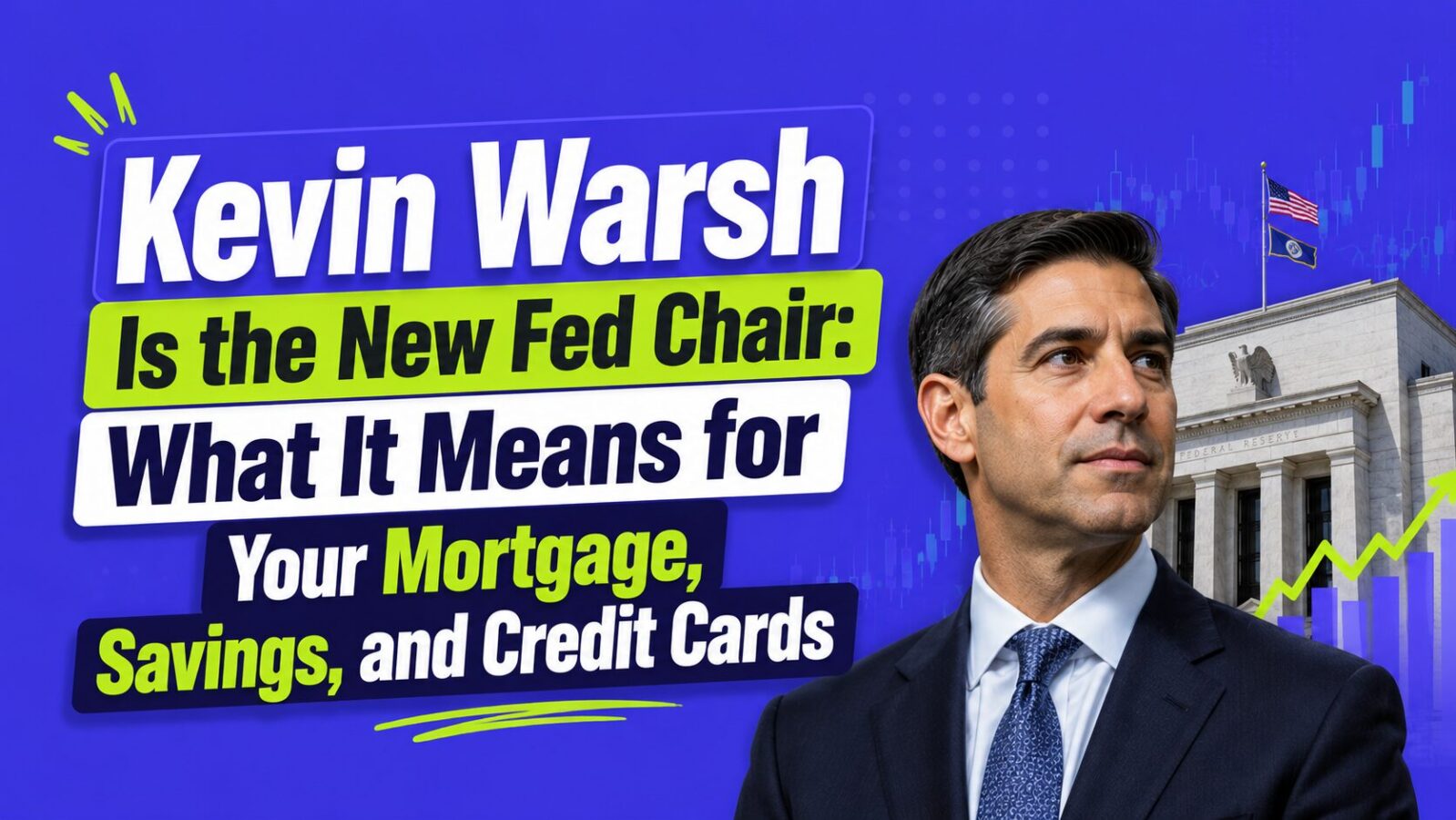
Kevin Warsh was confirmed as the 17th chair of the Federal Reserve on May 13, 2026, replacing Jerome Powell. At his first FOMC meeting on June 16-17, the Fed held rates steady at 3.50% to 3.75% and signaled its next move could be a rate increase, not a cut. Warsh is seen as more hawkish than Powell, which points to higher-for-longer rates. Here is what that means for your mortgage, savings, credit cards, and student loans.
Key Takeaways
- The Fed held rates at 3.50% to 3.75% at Warsh’s first meeting and hinted at a possible hike.
- Mortgages: a hawkish Warsh means rates near 6% may persist into 2027.
- Savings: good news short term, as high HYSA and CD rates stay elevated longer.
- Credit cards: no relief coming, so pay down balances aggressively.
Who Is Kevin Warsh?
Warsh, 46, was a Fed governor from 2006 to 2011 under Ben Bernanke, in the room during the 2008 crisis. He later joined the Hoover Institution and became a prominent critic of the post-2008 era of near-zero rates and quantitative easing, arguing prolonged loose policy distorted markets. Trump nominated him in January 2026, citing his market experience and his criticism of Powell’s pace on rate cuts. Markets view him as more hawkish than Powell (more focused on inflation, more willing to hold or raise rates) but more open to financial innovation, including digital assets.
What Did the June Meeting Signal?
At Warsh’s first meeting on June 16-17, the Fed unanimously held rates at 3.50% to 3.75%, as expected, and its projections suggested one rate increase could come in 2026, with nine of 18 officials seeing the rate finishing the year above the current range. Warsh also shortened the policy statement and stressed the committee “will deliver price stability,” an early shift in how the Fed communicates. The takeaway: rate cuts are not the base case in the near term, and an increase is on the table.
What Does a Warsh Fed Mean for Mortgage Rates?
The 30-year fixed sits around 6.5%, driven more by the 10-year Treasury yield than the fed funds rate directly, but Fed signaling moves Treasury yields. Warsh’s hawkish lean makes aggressive cuts less likely, so mortgage rates may stay elevated longer, and the roughly 6% to 6.5% environment could persist into 2027. If you have been waiting for rates well below 6%, recalibrate: they may drift down gradually rather than drop sharply. The old advice holds, marry the house, date the rate, buy when the numbers work and refinance later. See our guide on mortgage rates and refinancing.
What Does It Mean for Your Savings Account?
This is good news for savers short term. A more hawkish Warsh means the Fed is less likely to cut quickly, so high-yield savings rates stay elevated longer, currently around 4.20% to 4.75% APY at top banks. The risk is later: if Warsh eventually judges inflation contained and the economy slowing, cuts follow and HYSA rates fall, but that is months away at best. For anyone holding cash, the window to lock a 12-month CD above 4% remains open, and a Fed on hold through summer argues for locking in now. See our guide on the best high-yield savings accounts.
What Does It Mean for Credit Card Rates?
Credit card rates track the prime rate, which moves with the fed funds rate. With fed funds at 3.50% to 3.75%, prime is 6.75% and average card APRs run around 21%. If Warsh holds or hikes, card rates stay near current levels, so there is no near-term relief for anyone carrying a balance. Whether Powell or Warsh is chair, paying off 21% card debt as fast as possible remains the highest-return move most people can make. See our guide on paying off credit card debt fast.
What Does It Mean for Student Loans?
Federal student loan rates for 2026-27 are set from the 10-year Treasury yield plus a fixed add-on, determined by the May auction, and they are rising for 2026-27 given elevated Treasury yields. A Warsh Fed holding rates reinforces that trajectory, so if you are borrowing for the coming year, expect higher rates than two or three years ago and budget accordingly.
What About Warsh’s Views on Financial Innovation?
Warsh is seen as more open to digital assets and fintech than Powell, with personal disclosures showing crypto and fintech exposure. His personal views do not directly change monetary policy or digital-asset oversight (which sits more with the SEC and Treasury), but he is likely more receptive to bank-fintech partnerships, which could speed the rollout of new financial products during his tenure.
FAQ
Who is the new Federal Reserve chair?
Kevin Warsh, confirmed May 13, 2026 as the 17th Fed chair, replacing Jerome Powell. A former Fed governor, he is viewed as more hawkish on inflation and more open to financial innovation.
Did the Fed change interest rates in June 2026?
No. At Warsh’s first meeting on June 16-17, the Fed held rates at 3.50% to 3.75% and signaled a possible increase later in 2026 rather than a cut.
Will mortgage rates go down under Warsh?
Probably not sharply. His hawkish lean makes aggressive cuts less likely, so 30-year rates near 6% to 6.5% may persist into 2027, drifting down only gradually.
Is a hawkish Fed good for savers?
Short term, yes. Holding rates higher keeps high-yield savings and CD rates elevated, so locking in a CD above 4% now is attractive before any eventual cuts.
Bottom Line
Kevin Warsh’s Fed held rates at 3.50% to 3.75% and hinted at a possible hike, pointing to higher-for-longer: plan for ~6% mortgages into 2027, lock in CDs while savings rates stay high, and pay down credit card debt since no relief is coming. Watch his communications for the tone of the rest of 2026. To go deeper, see our guides on mortgage rates and refinancing, the best high-yield savings accounts, and paying off credit card debt fast.
This article is for educational and informational purposes only and does not constitute financial advice. Rates and Fed policy can change, so confirm current figures with official sources.