By
By 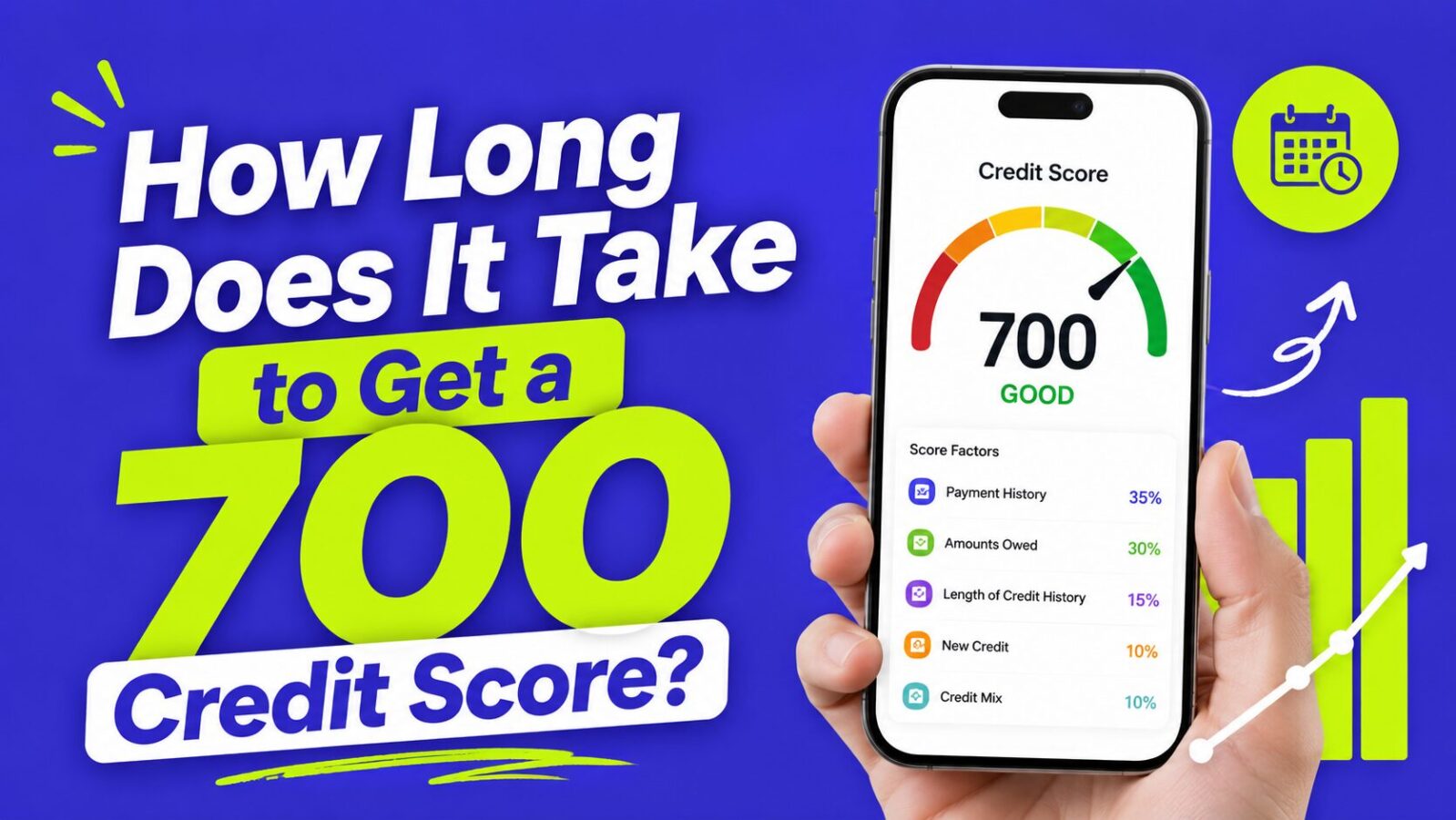
It depends on where you start, but for most people, reaching a 700 credit score takes roughly 12 to 24 months of consistent good habits, and longer if you are starting from no credit or recovering from recent damage. There is no single answer, since the exact timeline and point changes vary by your profile. Here is a realistic breakdown for every common starting point.
Key Takeaways
- From scratch: expect roughly 18 to 24 months, since you first need a few months of history to even have a score.
- From fair credit (around 580 to 670): often 6 to 24 months, depending on what hurt your score.
- The fastest levers are paying down balances and disputing errors, which can show results in a billing cycle or two.
- Late-payment recovery takes time, since its impact fades gradually rather than all at once.
Starting From No Credit History
Rough timeline to 700: 18 to 24 months. You cannot generate a FICO score until you have an account open for about six months that has reported recently. That first score, often after 6 to 9 months with a secured card and on-time payments, usually lands in roughly the 580 to 630 range. From there, reaching 700 generally takes another year or so of keeping utilization low, paying on time, and adding a second account to build your file. Being added as an authorized user on an old, well-paid account can give a meaningful early boost, though the benefit varies.
Starting From Fair Credit (Around 580 to 620)
Rough timeline to 700: 12 to 24 months. At this range you likely have some negative history alongside some positive. Reaching 700 means paying every account on time going forward, getting utilization under 30% (ideally under 10%), and adding no new negative marks. The pace depends on what hurt you: high utilization you pay down can improve your score within a billing cycle or two, while late payments simply take time to fade.
Starting From Fair to Good (Around 640 to 670)
Rough timeline to 700: 6 to 18 months. You are close. The gap usually closes with another stretch of clean payment history, lower utilization, and disputing any report errors. If your utilization is high, paying it down can move you fairly quickly, sometimes within a couple of billing cycles. If utilization is already low and the gap is mainly account age and history, expect several more months of steady behavior.
Starting After a Late Payment
Rough timeline back to 700+: 6 to 24 months. A single late payment on an otherwise good profile can cause a large drop. Recovery depends on how recent it was, how strong the rest of your file is, and whether it was a one-off or a pattern. Most people with a single late payment on a good file return to 700+ within about 12 to 18 months of consistent on-time payments. The late payment stays on your report for seven years, but its score impact diminishes significantly after about two years.
What You Can Control vs What Takes Time
| Factor | Controllable now | Time-dependent |
|---|---|---|
| Utilization | Yes, pay down balances | No |
| Errors on report | Yes, dispute them | No |
| Late-payment recovery | Partly, add positive history | Yes, impact fades over time |
| Account age | Partly, keep old accounts open | Yes, only time increases age |
| Payment history | Yes, pay on time every month | Yes, history accumulates |
The fastest path to 700 from any starting point is paying down utilization and disputing errors. Almost everything else depends on time and consistency.
FAQ
How long does it take to build a 700 credit score?
For most people, roughly 12 to 24 months of on-time payments and low balances, though it is faster from a higher starting point and slower from no credit or recent damage.
What is the fastest way to raise my score?
Pay down your credit card balances to lower utilization and dispute any errors on your report. Both can show results within a billing cycle or two.
How long does a late payment affect my score?
It stays on your report for seven years, but its impact fades significantly after about two years of on-time payments afterward.
Can I reach 700 with no credit history?
Yes, usually in about 18 to 24 months. You need a few months to generate a score first, then steady on-time payments and low utilization to climb toward 700.
Bottom Line
Reaching 700 takes most people about 12 to 24 months, but the timeline depends entirely on your starting point and what you do next. The fastest levers are paying down balances and fixing report errors, while building history and recovering from a late payment simply take time and consistency. To go deeper, see our guides on how your credit score is calculated, why scores drop, and credit builder loans.
This article is for educational and informational purposes only and is not financial advice. Credit scoring is individual, and timelines and point changes vary by your unique profile. Review your reports at annualcreditreport.com.