By
By 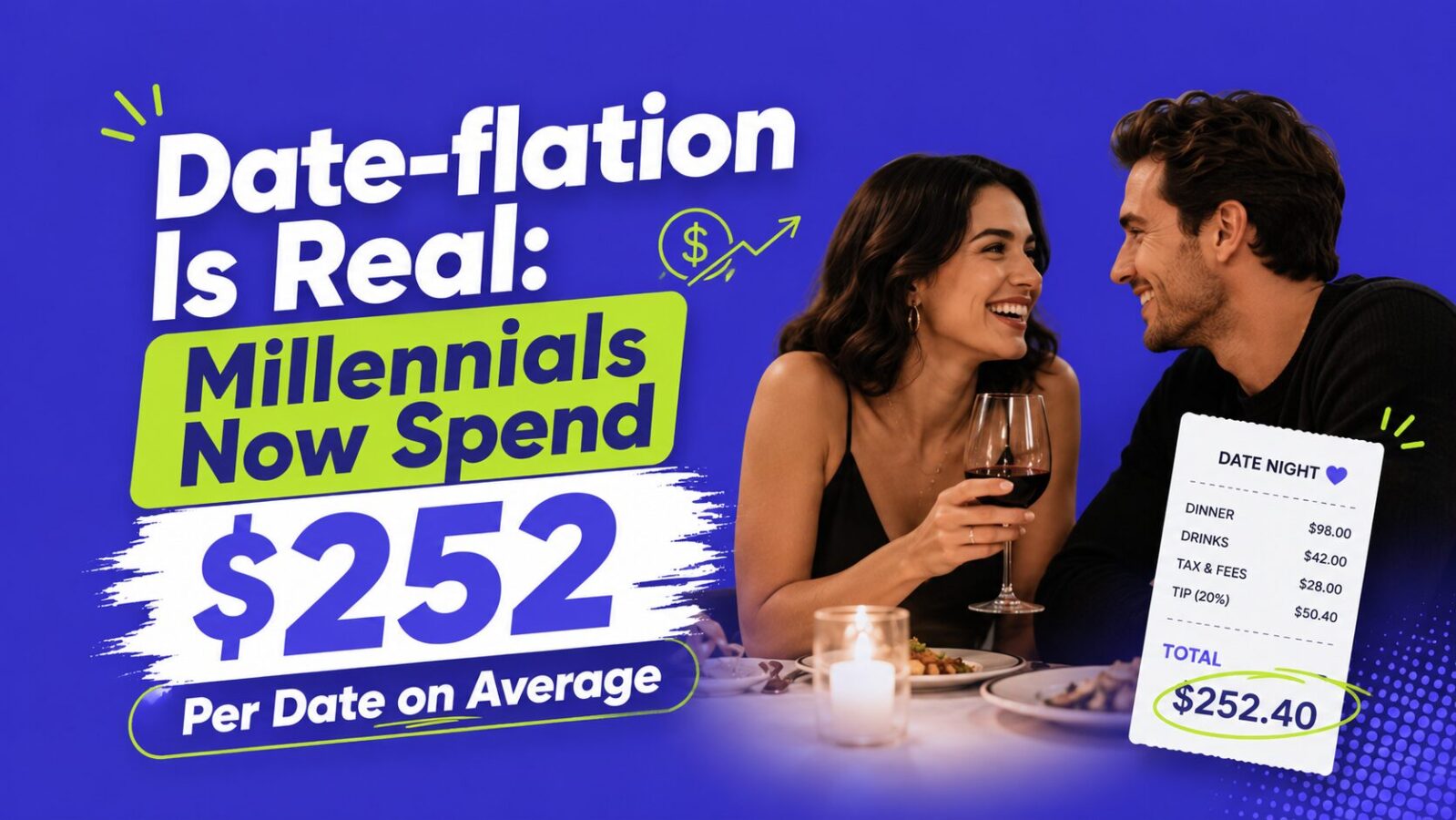
The average millennial spends about $252 per date in 2026, according to a BMO study, covering dinner, drinks, an activity, and transportation. Two dates a month is $504, four is over $1,000, so dating has become a real budget line item driven by food inflation and rising expectations. The fix is not to spend as little as possible, but to budget for dating intentionally and use lower-cost options without awkwardness. Here is what “date-flation” looks like and how to handle it.
Key Takeaways
- The average millennial spends ~$252 per date in 2026 (BMO), up sharply from prior years.
- Two dates a month is about 37% of the “wants” budget for someone earning $60,000.
- Budget for dating like any recurring expense, and use “loud budgeting” to suggest cheaper plans.
- Cooking in, markets, museums, and happy hour can match a $252 night out for far less.
Why Did Dating Get So Expensive?
The $252 average is not just pricier restaurants; several forces compound. Food and drink inflation: a dinner for two that ran $80 in 2020 is $110 to $130 in 2026, and $12 cocktails are now $16 to $18. Social media pressure: TikTok and Instagram reward elaborate, photogenic dates, shifting the baseline for what counts as a “good” date upward. App fatigue: arriving knowing the other person has many options creates subtle pressure to spend more to be memorable. The experience economy: stacking dinner plus an activity (escape room, concert, class) has become a standard template that costs more than dinner alone.
Who Pays, and Does Splitting Help?
The BMO study did not break down who pays, but the question has gotten more complicated. A 2025 Pew Research survey found most Americans still think men should pay on a first date, though attitudes vary by age, with Gen Z far more open to splitting. The math shifts with the arrangement: if one person pays $252, that is a meaningful expense; if both split, each spends $126. Either way, the total cost of dating in 2026 is real money.
What Does a $252 Date Actually Look Like?
| Item | Estimated cost |
|---|---|
| Dinner for two (mid-range) | $90 to $120 |
| Drinks (2 rounds, 2 people) | $40 to $60 |
| Activity (movie, mini golf, bar) | $30 to $50 |
| Transportation (rideshare each way) | $25 to $40 |
| Tip (20%) | $20 to $30 |
| Total | $205 to $300 |
The average lands squarely at $252. None of this is extravagant; it is a normal, pleasant evening out in most cities. The cost is real even when the experience is modest.
How Does Dating Fit Into a Budget?
In the 50/30/20 framework, dating falls under the 30% “wants” category. For someone earning $60,000 with $4,500 a month in take-home, wants is $1,350, so two $252 dates ($504) eats about 37% of that before entertainment, hobbies, or subscriptions. For someone actively dating, with multiple first dates in a week, date costs can quietly push the wants budget into deficit until the credit card bill arrives.
Use this calculator to set your needs, wants, and savings split:
50/30/20 Budget Calculator
How Do You Talk About Money Without Awkwardness?
The most financially efficient move while dating is to talk about money earlier than feels comfortable, not by asking someone’s salary, but by being willing to suggest lower-cost options. Proposing a walk and ice cream instead of a $130 dinner is not a red flag; it signals you can have a good time without overspending, which is useful to know early. Someone who reacts badly to a thoughtful low-cost date is giving you information. The “loud budgeting” trend made this easier: saying “I’d love to see you, but I’m keeping spending down this month, want to do something low-key?” is now culturally normal rather than an awkward admission.
What Are Lower-Cost Dates That Don’t Feel Cheap?
- Cooking together at home ($30 to $60). Collaborative and more intimate than a restaurant, ideal for a second or third date.
- Farmer’s market morning ($15 to $30). Low stakes, outdoors, easy to extend or cut short.
- Museum or gallery ($20 to $40). Many have free days, with built-in conversation, first-date energy without dinner prices.
- Happy hour instead of dinner ($40 to $60). Lower cost and lower stakes, easy to exit if the vibe is off.
- Free outdoor events. Park concerts, food festivals, outdoor movies; the experience can match a $252 date for a fraction of the price.
When Should You Talk About Money With a Partner?
Date-flation is a useful nudge toward the bigger conversation. If spending is real and the relationship is progressing, you eventually need to know whether your financial values match, since financial incompatibility is among the top predictors of breakups. It does not need to be a formal sit-down: asking “how do you think about money?” or “are you saving for anything right now?” is low-pressure. A partner who talks openly and is not hiding financial stress is a better long-term match than one projecting wealth they cannot sustain. Date-flation is partly people spending to look more financially stable than they are. See our guide on financial wellness.
FAQ
What is date-flation?
Date-flation is the rising cost of dating driven by inflation and expectations. The average millennial now spends about $252 per date in 2026, up sharply from prior years.
How much does the average date cost in 2026?
About $252 per date for millennials, according to BMO. Two dates a month is roughly 37% of the wants budget for someone earning $60,000.
How do you date on a budget without seeming cheap?
Budget for dating as a recurring expense and use loud budgeting to openly suggest lower-cost plans. Cooking in, markets, museums, happy hour, and free local events can match an expensive night out.
Who pays on a date in 2026?
Most Americans still think men should pay on a first date (Pew), but Gen Z is far more open to splitting. Splitting a $252 date means each person spends about $126.
Bottom Line
At about $252 a date, dating is a legitimate budget line in 2026, and left unexamined it can quietly derail savings or push spending onto a credit card. Decide what you want to spend monthly, build it into your plan, and use lower-cost dates and honest money talk to spend intentionally rather than chasing someone else’s Instagram. To go deeper, see our guides on financial wellness, getting out of debt, and the best high-yield savings accounts.
This article is for educational and informational purposes only and is not financial advice. Survey figures are as reported by the cited sources and reflect averages that vary by location and lifestyle.