By
By 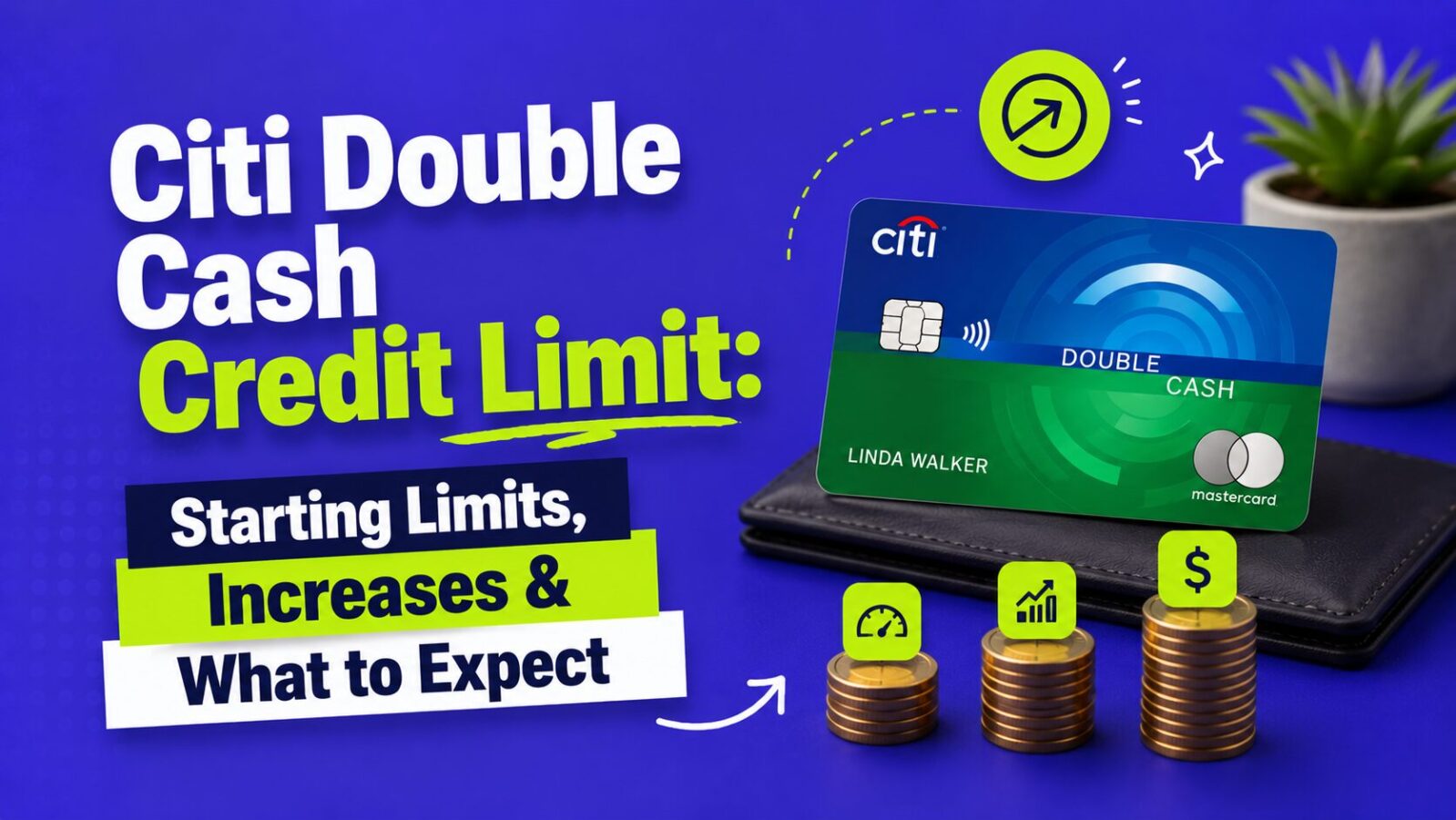
The Citi Double Cash starts with a minimum credit limit of $500, but approved cardholders with strong credit profiles have reported limits as high as $40,000. Where you land depends on several factors Citi evaluates at approval, and your starting limit is not permanent. For a full overview of what the card offers, see our Citi Double Cash benefits guide. Here is everything you need to know about the Citi Double Cash credit limit, what determines it, and how to get it raised.
What Is the Starting Credit Limit on Citi Double Cash?
Citi guarantees a minimum starting credit limit of $500 for everyone approved for the Citi Double Cash. Beyond that floor, the actual limit assigned varies widely based on the applicant’s credit profile.
User-reported data and issuer information suggest typical starting limits in the $1,500 to $5,000 range for applicants with good to very good credit (FICO scores in the 670 to 740 range). Applicants with excellent credit, high income, and long credit history have reported starting limits of $10,000 or more. The Motley Fool has reported user-reported limits on the Citi Double Cash as high as $40,000, making it one of the more generous no-annual-fee cards for high-income, high-credit applicants.
Citi does not publish a maximum credit limit for the Double Cash, and the upper range is determined case by case based on individual credit profiles.
What Factors Determine Your Citi Double Cash Credit Limit?
Citi considers several factors when assigning an initial credit limit. None of these factors is individually decisive, but together they give Citi a picture of how much credit risk to extend.
Credit score. This is the primary factor. The Citi Double Cash is available to applicants with fair to excellent credit (FICO 580 and above per Citi’s stated range), but approval at the lower end of that range typically comes with a lower credit limit. Most financial experts recommend having a score of at least 670 before applying, and a score above 700 meaningfully improves both approval odds and the starting limit assigned.
Annual income. Citi asks for your total annual income on the application, which includes employment income, self-employment income, and other income sources you can reasonably claim. Higher reported income signals a greater capacity to repay, which correlates with a higher credit limit. If your income has grown since you last applied for credit, that alone can result in a higher limit than you might expect based on credit score alone.
Existing debt load. Citi looks at how much debt you are already carrying relative to your income and credit limits. A high debt-to-income ratio or high utilization across existing credit cards reduces the limit Citi is willing to extend. Reducing existing balances before applying can improve your initial limit.
Credit history length. Longer credit history with a clean payment record signals lower risk. Applicants with shorter credit histories, even those with good scores, tend to receive more conservative starting limits.
Number of recent inquiries. Multiple recent hard pulls on your credit report indicate you may be seeking a lot of new credit in a short period, which can reduce the limit assigned. Spacing out credit applications helps here.
Existing Citi relationship. If you already have other Citi accounts with a positive history, Citi may be more generous with your initial limit on a new card, since they have their own data on your repayment behavior.
How to Request a Citi Double Cash Credit Limit Increase
You can request a credit limit increase on your Citi Double Cash in three ways: through the Citi website, through the Citi Mobile App, or by calling Citi customer service at 1-800-950-5114.
The online and app process is the most straightforward. Log in to your Citi account, navigate to Services, then Credit Card Services, then select “Request a Credit Limit Increase.” You will be asked to enter your current annual income and monthly housing payment. Citi processes the request in seconds and notifies you of the decision immediately. If approved, the new limit takes effect right away.
Before you submit the request, Citi will notify you whether your request will involve a soft credit pull or a hard credit pull. Soft pulls do not affect your credit score. Hard pulls cause a temporary, modest dip (typically 5 to 10 points) that recovers within a few months. Most routine increase requests result in a soft pull. A hard pull is more likely if you are pushing back on a counteroffer or requesting a large increase that requires more thorough underwriting.
Citi will not do a hard pull without your explicit permission. If the process indicates a hard pull will be involved, you have the option to decline before it happens.
When to Ask for a Credit Limit Increase
Timing matters. Citi generally limits credit limit increases to once every six months, whether you are requesting one or receiving an automatic one. Asking more frequently than that reduces your chances of approval and may flag your account for review.
The strongest position to be in when requesting an increase is:
- At least 6 consecutive months of on-time payments on the card
- Low current utilization on the Citi Double Cash (ideally below 30%)
- Income that has grown since you originally applied, or since your last income update with Citi
- No recent hard inquiries from other new credit applications
Updating your income information with Citi is particularly useful and often overlooked. If your salary has increased since you opened the account, logging in and updating the income on file with Citi costs nothing and can directly influence both automatic increase eligibility and the outcome of a manual request. Citi reviews this information during its periodic account evaluations.
Automatic Credit Limit Increases
Citi periodically reviews existing accounts and may offer automatic credit limit increases to cardholders with a strong track record. These automatic reviews always involve a soft pull only, so your credit score is not affected. You do not need to do anything to be considered for an automatic increase: Citi’s systems evaluate your payment history, utilization, and income on file and may extend an increase without you asking.
Automatic increases tend to occur every 6 to 12 months for cardholders who consistently pay on time and keep utilization relatively low. You cannot count on them arriving on a predictable schedule, but responsible card use is the most reliable way to stay eligible.
If Citi offers you an automatic increase and you counter with a request for a higher amount than what was offered, the counter-request is more likely to involve a hard pull. Accept or decline Citi’s offer as presented if you want to avoid a credit inquiry.
How Your Credit Limit Affects Your Credit Score
Your Citi Double Cash credit limit directly affects one of the most important factors in your credit score: credit utilization, which is the percentage of your available credit that you are currently using. Lower utilization generally correlates with a higher credit score, and a higher credit limit on any card reduces your overall utilization ratio even if your spending stays the same.
For example, if you carry a $500 balance on a card with a $1,000 limit, your utilization on that card is 50%, which is high. If your limit increases to $3,000 and you still carry the same $500 balance, utilization drops to about 17%, which is much more favorable. Credit scoring models generally reward utilization below 30%, and the closer to 0% the better.
This is one reason why requesting a credit limit increase on the Citi Double Cash can improve your credit score even if you have no intention of spending more. The higher limit alone reduces your utilization ratio and can meaningfully lift your score over the following 1 to 2 billing cycles.
What to Do If Your Limit Is Too Low
If you were approved for the Citi Double Cash but received a lower limit than you hoped for, a few paths forward are worth considering.
Wait 6 months, then request an increase. Use the card for everyday purchases and pay in full each month. After 6 months of clean payment history on the account, request an increase through the app or online. The combination of a short payment track record plus updated income information gives Citi enough data to extend more credit.
Update your income on file. If your income has grown at all since you applied, update it in your Citi account settings. This is one of the most direct levers you have for influencing Citi’s willingness to extend a higher limit.
Reduce utilization on other cards before requesting. If you carry balances on other cards, paying those down before requesting a Citi increase can improve your credit score and reduce the debt signals Citi sees in your credit report.
Consider whether a different card better fits your needs. If you need a high credit limit for a specific large purchase and your Citi limit is not sufficient, a card from a different issuer with a separate credit line may be worth adding. Opening a second card also increases your total available credit, which reduces your overall utilization ratio.
The Bottom Line
The Citi Double Cash starts with a guaranteed minimum of $500 and can scale well into five figures for applicants with strong credit and income. Your starting limit is primarily driven by your credit score, income, and existing debt load. Increases are available every 6 months by request or automatically, typically through a soft pull that does not affect your score. Keeping your income updated with Citi and maintaining a clean payment history are the two most direct ways to stay on track for higher limits over time.
Credit limit information is based on publicly available issuer data and aggregated user-reported data from verified third-party sources as of May 2026. Individual credit limits vary and are determined by Citi at their sole discretion. Finance Pulse is not a financial advisor. This article is for informational purposes only. Finance Pulse may earn affiliate compensation if you apply through links on this page.