Skip to content

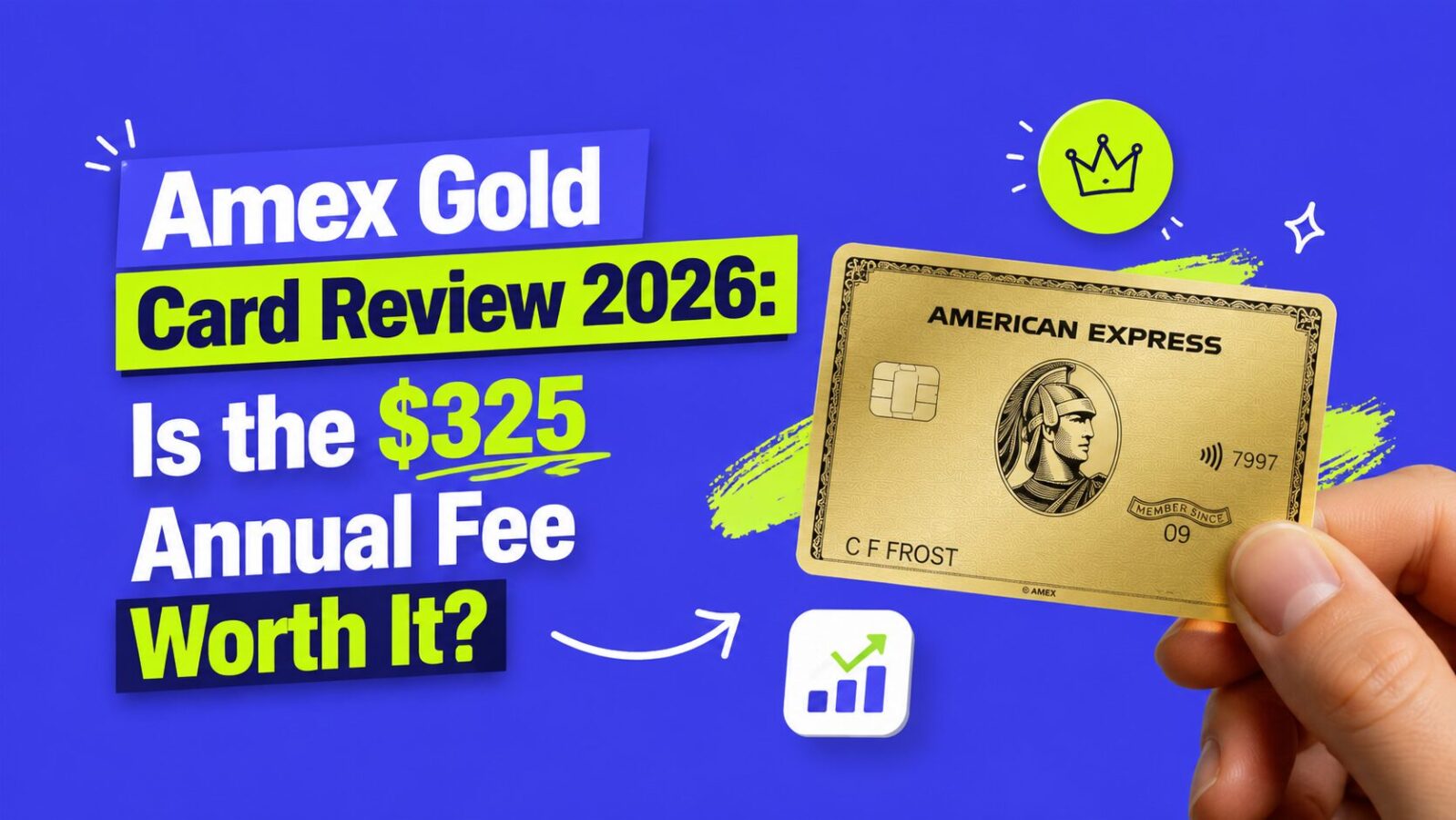
Amex Gold Card Review 2026: Is the $325 Annual Fee Worth It?

Amex Gold Card Review 2026: Is the $325 Annual Fee Worth It?
Finance Pulse Verdict
American Express Gold Card

Annual Fee

$325

Best Earn Rate

4x dining

Foreign Transaction Fee

None

Best for: People who spend heavily on dining and groceries and can consistently use the monthly statement credits. If you eat out frequently and shop at US supermarkets regularly, the credits can bring the effective annual fee down to near zero or even negative. If you rarely dine out or cannot remember to use monthly credits, skip it.

The American Express Gold Card is one of the most talked-about mid-tier rewards cards on the market, and for good reason. It earns 4x Membership Rewards points at restaurants worldwide and at US supermarkets, which are two of the highest-spending categories for most Americans. But with a $325 annual fee, it only makes financial sense for a specific type of spender.

This review covers everything: the exact earning rates, all the statement credits and how to actually use them, who gets real value from this card, and who is better off with a no-fee alternative. There is also a personalized calculator below so you can see your actual annual value before you decide.

Amex Gold Card: Key Details at a Glance

Feature Details
Annual fee $325
Welcome bonus Typically 60,000 to 90,000 Membership Rewards points after meeting minimum spend (verify current offer)
Dining earn rate 4x points at restaurants worldwide (including delivery services)
Grocery earn rate 4x points at US supermarkets (up to $25,000 per year, then 1x)
Flight earn rate 3x points on flights booked directly with airlines or through Amex Travel
All other purchases 1x points
Dining credit Up to $120/year ($10/month) at select restaurant partners
Uber Cash credit Up to $120/year ($10/month) for Uber Eats or Uber rides in the US
Resy credit Up to $100/year at US Resy restaurants
Foreign transaction fees None
Card network American Express (acceptance gap vs Visa/Mastercard internationally)

Card terms and credit amounts change. Always verify current offers directly at AmericanExpress.com before applying.

Earning Rates: Where the Gold Card Wins

4x at Restaurants Worldwide

This is the card’s headline benefit and it is genuinely excellent. The 4x dining rate applies at restaurants globally, including:

  • Sit-down restaurants and fast food
  • Bars and cafes
  • Food delivery services like DoorDash, Grubhub, and Uber Eats
  • International restaurants when traveling abroad (no foreign transaction fee)

If you spend $400 per month on dining, that is $1,600 in dining charges earning 4x. At a conservative valuation of 1.5 cents per Membership Rewards point, that is $96 in monthly value from dining alone, or $1,152 per year.

4x at US Supermarkets

The 4x grocery rate applies at US supermarkets up to $25,000 in spending per year (roughly $2,083 per month). Most households hit nowhere near that cap. Exclusions include warehouse clubs like Costco and Sam’s Club, and superstores like Walmart and Target, which earn only 1x.

If you spend $500 per month on groceries at qualifying supermarkets, that earns 2,000 points per month, worth roughly $30 per month or $360 per year at 1.5 cents per point.

3x on Flights

The 3x flight rate applies to tickets purchased directly with airlines or through Amex Travel. Booking through a third-party site like Expedia or Kayak earns only 1x. If you travel a few times per year and book directly, this adds meaningful value on top of the dining and grocery earn.

1x Everywhere Else

The 1x rate on all other purchases is a real weakness. For spending outside dining, groceries, and flights, the Gold Card is not competitive. A flat 2% cash back card like the Citi Double Cash earns more on general spending. This is why the Gold Card works best when your spending is concentrated in the bonus categories rather than spread across many types of purchases. See our review of the best 2% cash back cards for the strongest options for non-category spending.

The Credits: Can They Offset the $325 Fee?

The Amex Gold Card’s value proposition depends heavily on using its statement credits. Here is the honest breakdown of each one.

$120 Dining Credit ($10/Month)

The dining credit is $10 per month at a rotating list of select partners. As of 2026, qualifying merchants include Grubhub, The Cheesecake Factory, Goldbelly, Wine.com, and others. The specific list changes over time.

Honest assessment: This credit is useful if you order from Grubhub regularly or patronize the partner restaurants. It is less useful if none of the partners fit your dining habits. The monthly structure means unused credits do not roll over, so you must use $10 every month to capture the full $120/year.

$120 Uber Cash Credit ($10/Month)

The Uber Cash credit provides $10 per month for Uber Eats orders or Uber rides in the United States. You must add the Gold Card to your Uber account to activate this benefit.

Honest assessment: If you order Uber Eats or take Uber rides at least once per month, this is straightforward to use. If you rarely use Uber, this credit disappears. Again, monthly credits do not roll over.

$100 Resy Credit

The Resy credit provides up to $100 per year at qualifying US Resy restaurants. Resy is a restaurant reservation platform used by upscale restaurants in major cities.

Honest assessment: Highly location-dependent. If you live in a major city (New York, Los Angeles, Chicago, etc.) and dine at Resy restaurants, this is genuinely valuable. In smaller cities or suburban areas, Resy restaurant coverage may be limited.

The Full Credit Picture

If you use all three credits fully: $120 dining + $120 Uber Cash + $100 Resy = $340 in annual credits. That exceeds the $325 annual fee by $15, meaning the card is theoretically free (or slightly profitable) before any rewards earning.

The catch: actually using $340 in credits requires consistent monthly engagement, the right city and lifestyle, and patronizing specific merchants. People who love the Gold Card typically use all three credits easily. People who struggle with it usually underuse one or more.

Personalized Calculator

Is the Amex Gold Worth It for You?

Enter your monthly spending and credit usage to see your real annual value from this card. Assumes Membership Rewards points at 1.5 cents each.

Which credits will you realistically use each month?
The Welcome Bonus: How Much Is It Actually Worth?

The Amex Gold Card typically offers a welcome bonus of 60,000 to 90,000 Membership Rewards points after meeting a minimum spend requirement in the first few months. The exact offer varies by applicant and changes frequently.

At 1.5 cents per point (a conservative benchmark), 60,000 points is worth $900 and 90,000 points is worth $1,350. At 2 cents per point through airline transfer partners, those same bonuses are worth $1,200 and $1,800 respectively.

The welcome bonus alone frequently offsets three to four years of annual fees at face value, which is why many people find the Gold Card compelling even before considering ongoing rewards. Always verify the current offer directly on the American Express website, as welcome bonuses can vary significantly based on how you access the application page.

Important: Amex has a once-per-lifetime rule on welcome bonuses. If you have held the Gold Card before and received the bonus, you are not eligible for the bonus on a new application.

Membership Rewards Points: How to Get Real Value

Membership Rewards points are most valuable when transferred to airline and hotel partners rather than redeemed for cash or statement credits. The key partners include:

  • Delta SkyMiles (1:1 transfer): useful for Delta flights and SkyTeam partners
  • Air Canada Aeroplan (1:1 transfer): excellent for Star Alliance flights including United and Lufthansa
  • British Airways Avios (1:1 transfer): strong for short-haul flights on American Airlines
  • Marriott Bonvoy (1:1 transfer): hotel redemptions
  • Hilton Honors (1:2 transfer): the ratio is less favorable

Cash redemptions through Amex Travel or statement credits typically yield only 0.6 to 1 cent per point, dramatically less than transfer partner value. If you plan to redeem for cash, the Gold Card math becomes much less compelling. The card’s value is designed around travelers who use airline transfers.

Who Should Get the Amex Gold Card

Strong Yes

  • You spend $300 or more per month on dining out or food delivery
  • You spend $300 or more per month on US supermarkets
  • You can reliably use the Grubhub/Uber Eats or Uber credit monthly
  • You live in a major city with Resy restaurant coverage
  • You value Membership Rewards points and have a use case for airline transfers
  • You travel internationally at least once per year (no foreign transaction fees)

Skip It

  • You spend less than $300 per month combined on dining and groceries
  • You rarely use food delivery or Uber
  • You prefer cash back over points and have no interest in airline transfers
  • You shop primarily at Walmart, Target, or Costco (all earn 1x, not 4x)
  • You want a simple, low-maintenance card without monthly credits to track
  • You carry a balance month to month (the interest charges will far exceed any rewards value)

Amex Gold vs the Competition

Amex Gold vs Chase Sapphire Preferred ($95 Annual Fee)

The Chase Sapphire Preferred costs $95 per year versus the Gold Card’s $325. The Sapphire Preferred earns 3x on dining and 2x on travel, versus the Gold’s 4x on dining and groceries. The Gold wins on earning rate for food spending. The Sapphire Preferred wins on total annual cost and the breadth of its travel earning category. For people who value simplicity and a lower annual fee, the Sapphire Preferred is often the better starting point. See the full Chase Sapphire Preferred review for a complete breakdown.

Amex Gold vs No-Annual-Fee Cash Back Cards

A card like the Wells Fargo Autograph earns 3x on dining with zero annual fee. The Gold earns 4x on dining but costs $325 after credits (assuming you use them fully, close to break-even or slightly positive). For people who do not want to track monthly credits or manage a points program, a no-fee card often wins on simplicity and net value. Our no-annual-fee travel card guide covers the strongest options.

Amex Gold Card Pros and Cons

Pros Cons
4x on dining worldwide, including delivery $325 annual fee requires consistent credit usage to justify
4x at US supermarkets (huge category for most households) Monthly credits expire and unused value is forfeited
Up to $340 in annual credits can offset the fee fully 1x on all non-bonus spending is weak
No foreign transaction fees Amex acceptance is lower than Visa/Mastercard internationally
Strong welcome bonus with solid point value Best value requires airline transfer knowledge
Valuable Membership Rewards transfer partners Walmart, Target, Costco earn only 1x (not 4x)
Purchase protection and extended warranty Once-per-lifetime bonus rule limits second applications

Frequently Asked Questions

Is the Amex Gold Card worth the annual fee?

For heavy dining and grocery spenders who consistently use the monthly credits, yes. If you spend $300 or more per month on dining and groceries combined, and you use at least two of the three credit types (dining, Uber Cash, Resy), the card typically pays for itself before rewards earning is even factored in. Run the calculator above to see your specific numbers before applying.

What is the Amex Gold Card annual fee?

The annual fee is $325 as of 2026. Amex raised the fee from $250 in late 2024, adding new credits to offset the increase. The fee is charged in full on the first statement and again each year on your anniversary date. It is not refundable after the first 30 days in most cases.

Does the Amex Gold Card have foreign transaction fees?

No. The Amex Gold Card charges no foreign transaction fees, making it a solid choice for international dining and travel spending. The main caveat is Amex acceptance, which is lower than Visa or Mastercard in some countries, particularly in rural or less-touristed areas. Carry a Visa or Mastercard as a backup when traveling internationally.

What credit score do I need for the Amex Gold Card?

American Express typically approves the Gold Card for applicants with good to excellent credit, generally 700 or above on the FICO scale. Approval also depends on your income, existing Amex relationship, and overall credit profile. Amex allows a soft-pull prequalification check on their website that does not affect your credit score, which can give you a sense of your approval odds before applying.

Can I get the Amex Gold welcome bonus twice?

No. American Express applies a once-per-lifetime policy on welcome bonuses. If you have previously held the Gold Card and received the welcome bonus, you are not eligible for the bonus on a new application. Amex may still approve the card, but you would not receive the bonus points. Check your Amex account history before applying if you are unsure whether you have previously held this card.

What are Amex Gold Card credits and how do they work?

The Gold Card currently offers three types of credits. A $120 dining credit provides $10 per month at select restaurant partners including Grubhub. A $120 Uber Cash credit provides $10 per month for Uber Eats or Uber rides in the US after linking the card to your Uber account. A $100 Resy credit provides up to $100 per year at qualifying US Resy restaurants. Credits apply automatically when you make qualifying purchases but they do not roll over month to month, so unused amounts are forfeited.

How do I get the most value from Membership Rewards points?

The highest value typically comes from transferring points to airline loyalty programs at a 1:1 ratio and redeeming for business or first class flights, where the cents-per-point value can reach 2 to 4 cents. Cash back redemptions and statement credits yield significantly less, usually 0.6 to 1 cent per point. If you plan to cash out points rather than transfer to airlines, the Gold Card’s math becomes much harder to justify against no-annual-fee alternatives.

The Bottom Line

The Amex Gold Card is an excellent card for a specific type of spender: someone who eats out frequently, buys groceries at US supermarkets regularly, and can consistently capture the monthly statement credits. For that person, the card’s effective annual cost approaches zero or less, and the 4x earning on two major spending categories generates real ongoing value.

For everyone else, the $325 annual fee is a genuine hurdle. If your dining and grocery spending is modest, or if you cannot reliably use the monthly credits, a no-annual-fee card earning 2x to 3x in those categories will likely net you more money overall with less management overhead.

Use the calculator above with your actual monthly numbers. That result tells you more than any general review can about whether this card belongs in your wallet.

For comparison, see how the Chase Sapphire Preferred stacks up as a lower-fee alternative, or explore our cash back vs travel rewards guide to decide which rewards strategy fits your goals.

Savings Goal Calculator

Result

Written by

We founded Finance Pulse to cut through the noise in personal finance content. We research brokerages, credit cards, and money tools so you don't have to. Every review is independent, every recommendation is one we'd give a friend.

Leave a Reply

Your email address will not be published. Required fields are marked *