 By
By 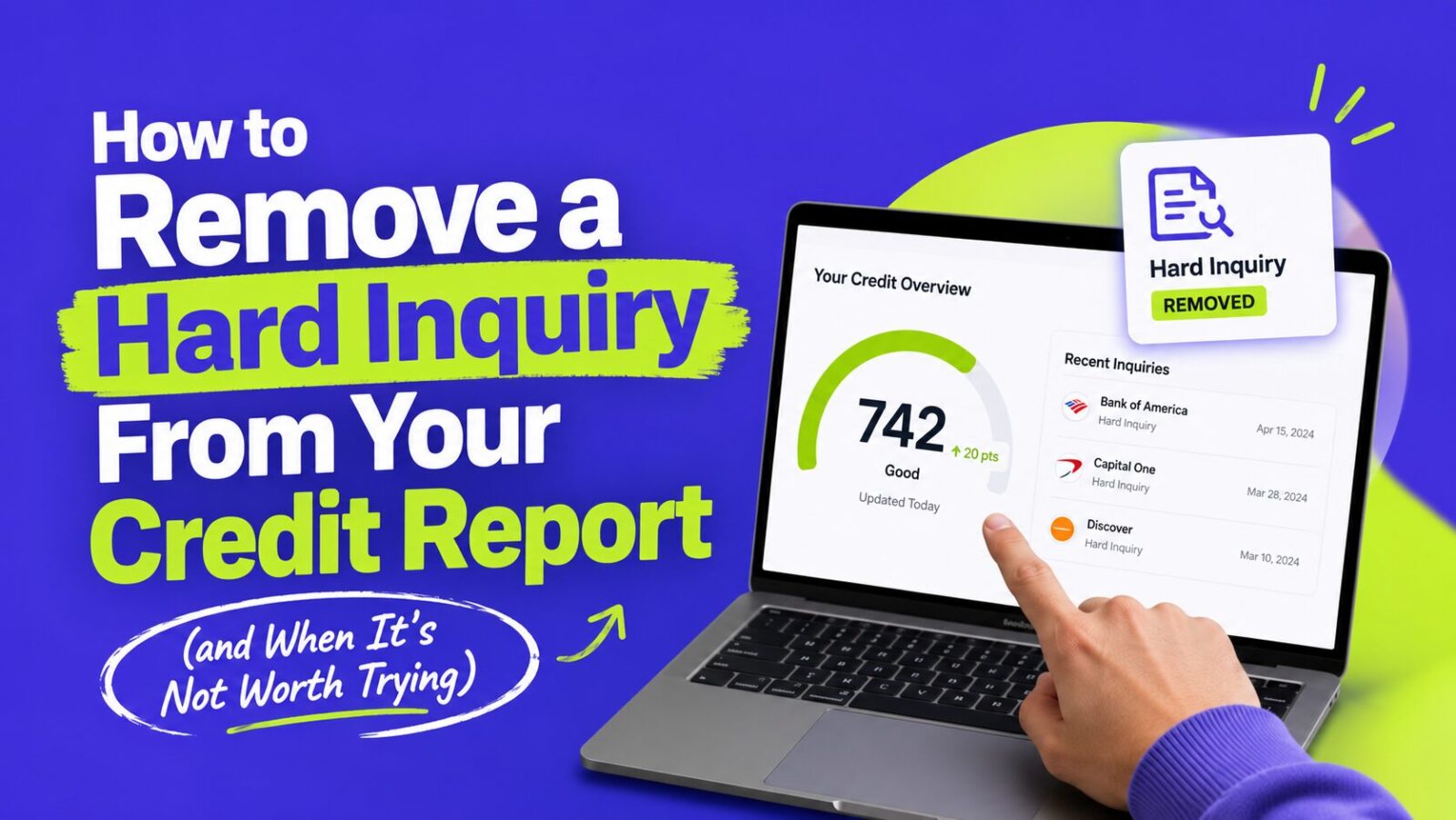
You can remove a hard inquiry from your credit report if it’s inaccurate or unauthorized, by disputing it with the credit bureau. But if the inquiry is legitimate, meaning you actually applied for the credit, there’s no legal way to have it deleted early. The good news: hard inquiries fall off automatically after 2 years and matter far less to your score than most people assume.
KEY TAKEAWAYS
- A legitimate hard inquiry, one you authorized by applying for credit, cannot legally be removed early. It falls off automatically after 2 years.
- An unauthorized or inaccurate hard inquiry (fraud, a lender error, or a mix-up with someone else’s file) can and should be disputed for removal.
- Hard inquiries typically affect your score for only about 12 months, even though they stay visible on your report for 2 years.
- A single hard inquiry usually costs just a few points, far less than a late payment or high utilization.
- Rate-shopping for a mortgage, auto loan, or student loan within a short window (often 14-45 days) is typically counted as a single inquiry by scoring models, not one per lender.
Can You Remove a Legitimate Hard Inquiry?
No, not through any legal process. If you applied for a credit card, loan, or other financing and the lender pulled your report with your authorization, that inquiry is accurate and the credit bureaus have no obligation, or legal ability, to remove it before its 2-year window ends. Be skeptical of any credit repair service or “guaranteed removal” offer that claims otherwise, since no legitimate company can remove accurate information from your file.
When Can You Actually Get One Removed?
- You never applied for the credit in question. This can happen with identity theft or fraud, someone used your information to apply without your knowledge.
- A lender pulled your report without proper authorization, for example, running a hard inquiry when you only requested a rate quote or pre-qualification (which should be a soft inquiry).
- The inquiry belongs to someone else due to a mixed credit file, a data entry error, or a similar name/Social Security number mix-up.
In any of these cases, you have the right to dispute the inquiry directly with the credit bureau reporting it. See our how to dispute credit report errors guide for the exact process, since disputing an inquiry follows the same general steps as disputing any other inaccurate item.
Does Checking My Own Credit Count as a Hard Inquiry?
No. Checking your own credit score or report, through a free monitoring service or your bank’s app, is always a soft inquiry and never affects your score. See our full breakdown in does checking your credit score lower it for the complete list of what counts as soft versus hard.
How Much Does a Hard Inquiry Actually Hurt Your Score?
Less than most people fear. A single hard inquiry typically costs just a few points, and its effect fades well before it drops off your report entirely, usually mattering most in the first few months and becoming negligible after about a year. Multiple hard inquiries in a short period can compound this effect, which is why opening several new accounts in a short window (unrelated to comparison shopping for one loan) can add up to a more noticeable dip.
What About Rate Shopping for a Loan?
Scoring models recognize that comparing rates for a single mortgage, auto loan, or student loan involves multiple lenders pulling your credit within a short period, and they generally treat all of these inquiries within a defined window, commonly 14 to 45 days depending on the scoring model, as a single inquiry for scoring purposes. This means shopping around for the best auto loan or mortgage rate shouldn’t cost you more than one inquiry’s worth of impact, as long as you complete your shopping within that window.
Should You Even Bother Trying to Remove a Legitimate Inquiry?
Generally, no, it’s not worth the effort. Since a legitimate inquiry falls off automatically in 2 years and its score impact fades even faster, spending time and money trying to dispute an accurate inquiry (or worse, paying a credit repair company to attempt it) is rarely worthwhile. Focus that energy instead on the factors that carry far more weight: payment history and credit utilization.
How Do You Dispute an Unauthorized Inquiry?
- Pull your full credit report from all three bureaus to identify exactly which inquiry is in question and confirm you don’t recognize it.
- Contact the lender listed on the inquiry first, sometimes a quick call resolves the confusion, especially if it was a data entry or processing error rather than fraud.
- File a formal dispute with the credit bureau if the lender can’t or won’t resolve it, explaining that the inquiry was unauthorized.
- If it’s identity theft, file a report at IdentityTheft.gov and consider a credit freeze to prevent further unauthorized inquiries.
FAQ
Can I remove a hard inquiry I actually authorized?
No. Legitimate hard inquiries can’t be removed early through any legal process. They automatically fall off your report after 2 years.
How long does a hard inquiry affect my credit score?
Its impact is strongest in the first few months and generally fades to negligible by around 12 months, even though it remains visible on your report for 2 years.
Can a credit repair company remove hard inquiries for a fee?
Not legitimate ones. They can only dispute genuinely inaccurate or unauthorized inquiries, the same right you have for free. Anyone promising to remove accurate inquiries for a fee is misrepresenting what’s legally possible.
Does shopping for a mortgage rate count as multiple hard inquiries?
Usually not. Scoring models typically count multiple mortgage (or auto/student loan) inquiries within a short shopping window as a single inquiry.
Bottom Line
You can only remove a hard inquiry if it’s genuinely unauthorized or inaccurate, legitimate inquiries simply age off after 2 years and matter less to your score than most people think. Save your energy for the factors that actually move your score the most, like payment history and utilization.
A quick note: this guide covers standard hard inquiry rules, not a promise about any specific dispute outcome. If you suspect identity theft is behind an unfamiliar inquiry, act quickly through IdentityTheft.gov and consider a credit freeze while you sort it out.