By
By 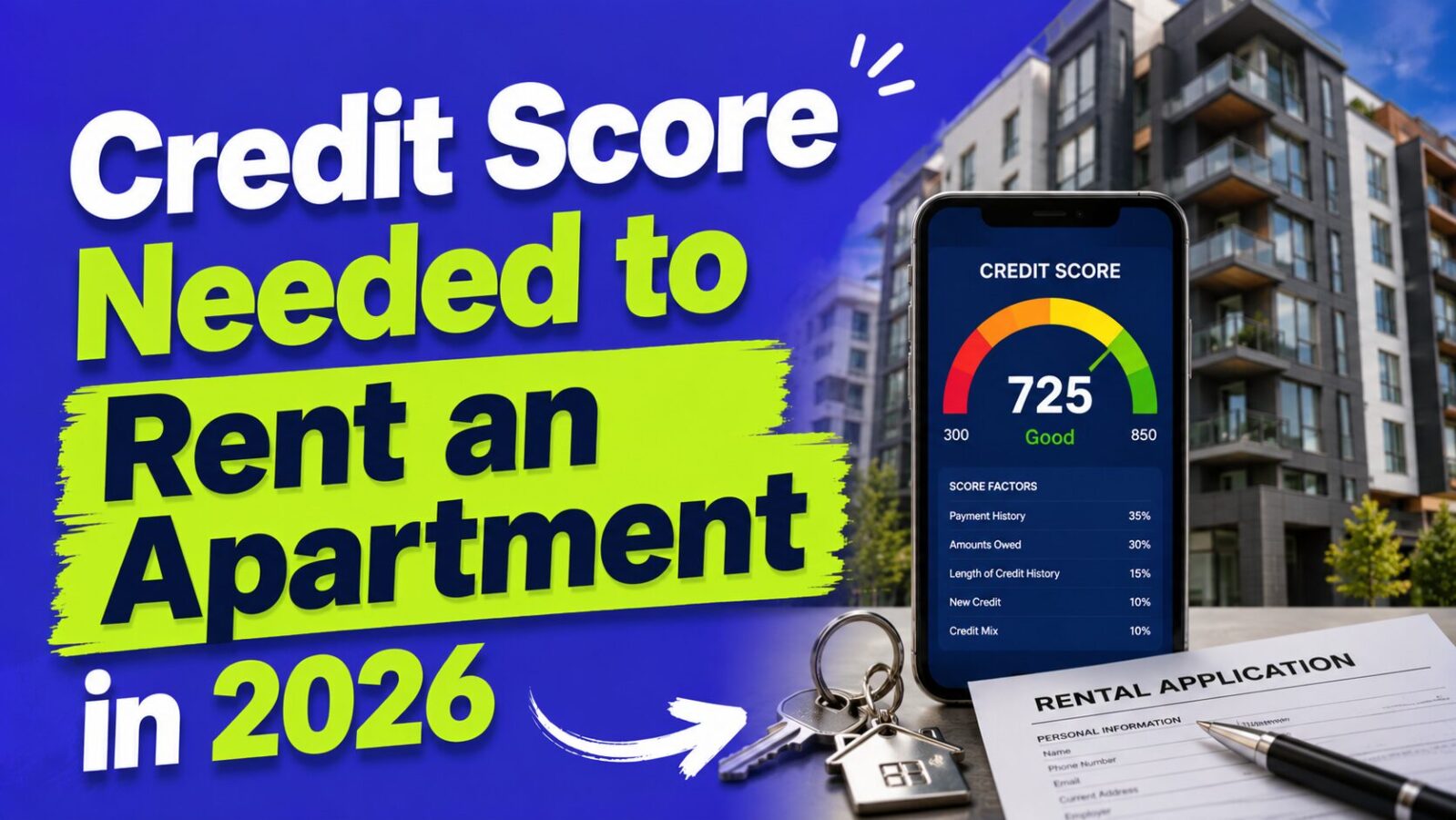
Most landlords look for a credit score of about 620 to 650 to approve an apartment application without extra conditions, and closer to 640 to 680 for a single-family rental house. There is no legal minimum score to rent nationwide. Every landlord and property manager sets their own bar, and a lower score does not automatically mean a denial if the rest of your application is strong.
KEY TAKEAWAYS
- Typical approval range: 620-650 for apartments, 640-680 for houses, 700+ for luxury or high-demand buildings.
- There is no federal or state minimum credit score for renting. Every landlord or property management company sets its own policy.
- Scores between 580 and 619 can often still get approved with a larger security deposit, a co-signer, or proof of stronger income.
- Credit is one input among several. Income (commonly 2.5x-3x the rent), rental history, and background checks matter just as much.
- Landlords need your written permission before pulling a credit report, under the Fair Credit Reporting Act.
What Credit Score Do You Actually Need to Rent?
Since there is no single national rule, the range below reflects common practice rather than a legal standard:
| Property type | Typical score needed |
|---|---|
| Standard apartment | 620-650 |
| Single-family rental house | 640-680 |
| Luxury or high-demand building | 700+ |
| 580-619 (subprime) | Often approvable with a bigger deposit or co-signer |
Big property management companies tend to use automated screening tools that weigh credit score alongside eviction history and income, while individual landlords renting out one unit may be far more flexible, or far stricter, depending on their own comfort level.
What Do Landlords Actually See on Your Credit Report?
When you apply, most landlords use a tenant screening service that pulls a modified version of your credit report, often bundled with an eviction history search and sometimes a criminal background check. According to the CFPB’s research on tenant screening, these reports can vary in accuracy and completeness between services, which is one reason two landlords might read your file differently even on the same day.
What they are typically looking for: on-time payment history, total debt load, any collections or charge-offs, and red flags like a prior eviction judgment. A single late payment from years ago rarely sinks an application; a pattern of missed payments or a recent eviction is what tends to trigger a denial.
Can You Rent With a Low or Thin Credit File?
Yes, in most cases, though it takes more legwork. A few common paths:
- Offer a larger security deposit. Some landlords will accept a higher deposit (sometimes 1.5x to 2x the standard) in exchange for approving a below-threshold score.
- Bring a co-signer or guarantor. A co-signer with strong credit and income backs the lease, giving the landlord recourse if rent goes unpaid.
- Show proof of income and savings. Pay stubs, an offer letter, or bank statements showing 3-6 months of rent in savings can offset a thin or damaged credit file.
- Use a rent guarantee service. Several third-party services will co-sign for a fee, which can be worth it if you keep getting denied on credit alone.
- Ask about alternative data. Some property managers now accept rent-reporting or cash-flow data instead of, or alongside, a traditional credit score. See our guide on how rent and utility payments can boost your score.
If your score just needs a general lift before you start apartment hunting, our guide on building credit from scratch walks through the fastest legitimate ways to move the number, and disputing credit report errors covers what to do if an old mistake is dragging your file down before you apply.
What Counts as a “Good” Score for Renting?
Landlords are not using the same “good/excellent” bands as mortgage lenders. A score in the high 600s comfortably clears most apartment applications, while anything above 700 rarely raises a question at all. For a full breakdown of what counts as good by lender type, see what is a good credit score in 2026.
FAQ
What is the minimum credit score to rent an apartment?
There is no legal minimum. In practice, most landlords approve applicants with a score of 620 or higher, though this varies widely by property and market.
Can I rent with a 550 credit score?
It is harder but not impossible. Expect to need a larger deposit, a co-signer, or a private landlord willing to weigh income and rental history more heavily than credit alone.
Do landlords check your credit score or your full credit report?
Usually both, bundled into a tenant screening report that includes payment history, debts, and sometimes eviction records, not just the three-digit score.
Does applying to multiple apartments hurt my credit score?
Each hard inquiry has a small, temporary impact, but scoring models typically group rental and mortgage inquiries made within a short window (often 14-45 days) as a single inquiry for scoring purposes.
Bottom Line
Aim for the high 600s if you want your credit score to be a non-issue when apartment hunting, but a lower score does not have to be a dead end. A bigger deposit, a co-signer, or strong proof of income can often make up the difference.
A quick note: this guide explains common rental screening practices, not a promise about how any specific landlord will decide. Screening policies vary by property and state, so it is worth asking directly what a landlord requires before you apply.