By
By 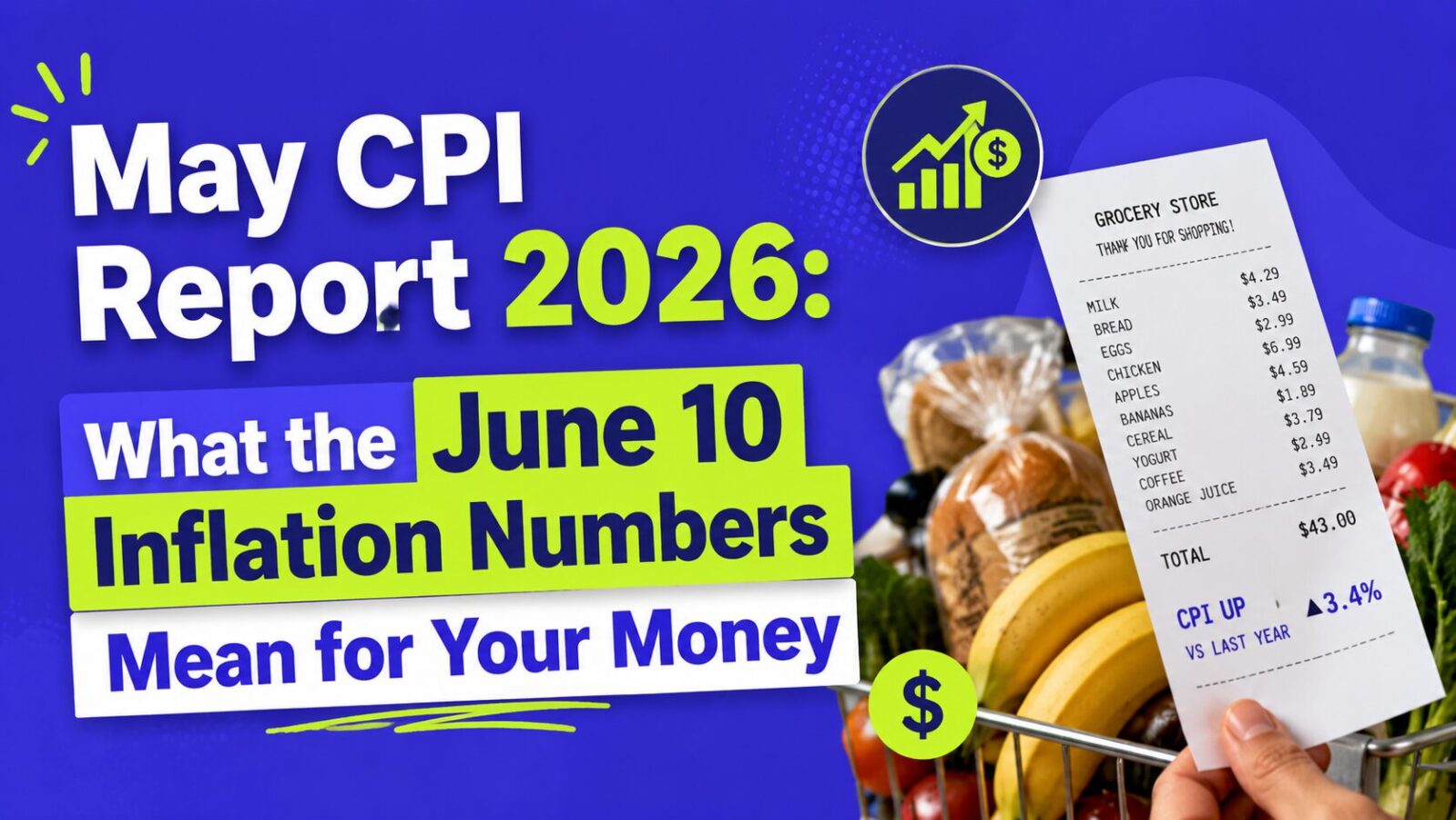
The Bureau of Labor Statistics released the May 2026 Consumer Price Index (CPI) on Wednesday, June 10, 2026. Inflation came in hot: prices rose 4.2% over the past year, the highest annual rate since April 2023, up from 3.8% in April. A surge in energy prices drove most of the increase. Here is what the report showed and what it means for your money.
Key Takeaways
- May 2026 CPI rose 4.2% year over year (up from 3.8% in April), with core CPI at 2.9%.
- Energy did the damage, jumping 3.9% for the month and 23.5% over the year, responsible for more than 60% of the monthly increase.
- The Federal Reserve held rates steady at 3.50% to 3.75% on June 18, and its projections flipped toward possible rate hikes later in 2026.
- With inflation above 4%, a 4%-plus high-yield savings account is barely keeping your cash even, and variable-rate debt is getting more expensive.
What the May Report Showed
The headline numbers came in above what most forecasters expected:
| Measure | May 2026 | What it means |
|---|---|---|
| CPI-U (all items), annual | Up 4.2% | Highest since April 2023, up from 3.8% in April |
| CPI-U, monthly | Up 0.5% | A hot monthly reading |
| Core CPI (ex food and energy), annual | Up 2.9% | Underlying inflation is steadier than the headline |
| Energy, annual | Up 23.5% | The main driver, up 3.9% in May alone |
The big story is energy. Gasoline and related costs spiked, driven largely by Middle East tensions affecting oil supplies, and accounted for more than 60% of the entire monthly increase. Outside of energy, pressure was milder: core goods prices actually slipped 0.1% on the month, a sign that tariff-related price pressure stayed muted. Shelter, the largest single CPI component at roughly 36% of the index, remained a steady contributor rather than the spark this time.
Why the Headline Jumped but Core Held
It helps to separate the two numbers. The headline 4.2% includes food and energy, which are volatile and can swing hard month to month, exactly what energy did in May. Core CPI strips those out to show the underlying trend, and at 2.9% it is far calmer. That gap matters because the Fed watches core closely. A spike driven mostly by oil can fade if energy prices settle, while a rise in core would signal something stickier.
What Elevated Inflation Means for Your Money
At 4.2%, prices are rising more than twice the Fed’s 2% target. The practical impact:
- Your savings need to beat 4.2% to grow in real terms. A traditional savings account at 0.01% APY is losing ground fast. A high-yield savings account at 4.2% to 4.5% APY is roughly keeping pace, not getting ahead. See our current HYSA rates guide.
- Fixed incomes get squeezed. Retirees and Social Security recipients lose purchasing power unless benefits keep up. The 2026 Social Security COLA of 2.8% only partially offset a 4.2% increase in prices.
- Gas and groceries are the pressure point. Energy led this report, and food and energy are what people feel first. Expect continued pressure on household budgets through summer if energy stays elevated.
What the Fed Did Next
At its June 17 to 18 meeting, the Federal Reserve held the federal funds rate steady at 3.50% to 3.75%, its fourth straight hold, in a 12 to 0 vote. The bigger news was the outlook. Policymakers’ projections turned more hawkish: the median member now expects rates to end 2026 higher than today, a flip from March when a cut was still implied. Nine of the 18 members penciled in at least one rate hike before year end, and the Fed raised its year-end inflation projection.
The next FOMC meeting is July 29 to 30, 2026. For now, higher rates for longer means mortgage rates stay elevated, high-yield savings rates stay attractive, and credit card APRs stay near record highs.
How to Inflation-Proof Your Budget
You cannot control inflation, but you can protect your purchasing power. The moves that help most right now:
- Move any savings above your emergency fund into a 4%-plus high-yield savings account so your cash at least keeps pace.
- Pay down variable-rate debt (credit cards, HELOCs) aggressively, since those rates stay high while the Fed holds.
- Lock in fixed rates on anything you need to borrow, like an auto or personal loan, rather than leaving it variable.
- Review grocery spending and compare store brands versus name brands systematically, not just once in a while.
If you want a simple framework to put this into practice, see our guide to the 50/30/20 budget rule and our best budgeting apps roundup.
50/30/20 Budget Calculator
FAQ
What was the inflation rate in May 2026?
4.2% over the past 12 months (CPI-U), up from 3.8% in April and the highest since April 2023. Core CPI, which excludes food and energy, was 2.9%.
Why did inflation jump in May 2026?
Energy prices were the main driver, up 3.9% for the month and responsible for more than 60% of the increase, largely due to Middle East tensions affecting oil supplies.
Did the Fed cut interest rates in June 2026?
No. The Fed held rates steady at 3.50% to 3.75% on June 18, 2026, and its projections shifted toward possible hikes later in the year. The next meeting is July 29 to 30.
What should I do with my savings during high inflation?
Keep cash you may need in a high-yield savings account paying around 4% or more so it roughly keeps pace with prices, and prioritize paying down high-rate variable debt. This is general information, not personalized advice.
Bottom Line
May 2026 inflation accelerated to 4.2%, driven by an energy spike, and the Fed responded by holding rates and signaling a more hawkish path. For your money, that means keeping savings in a competitive high-yield account, attacking variable-rate debt, and budgeting for continued pressure on gas and groceries this summer.
This article is for informational and educational purposes only and is not financial advice. Economic data and interest rates change. Figures are as of the June 10 and June 18, 2026 releases. Verify current data at BLS.gov and FederalReserve.gov.