By
By 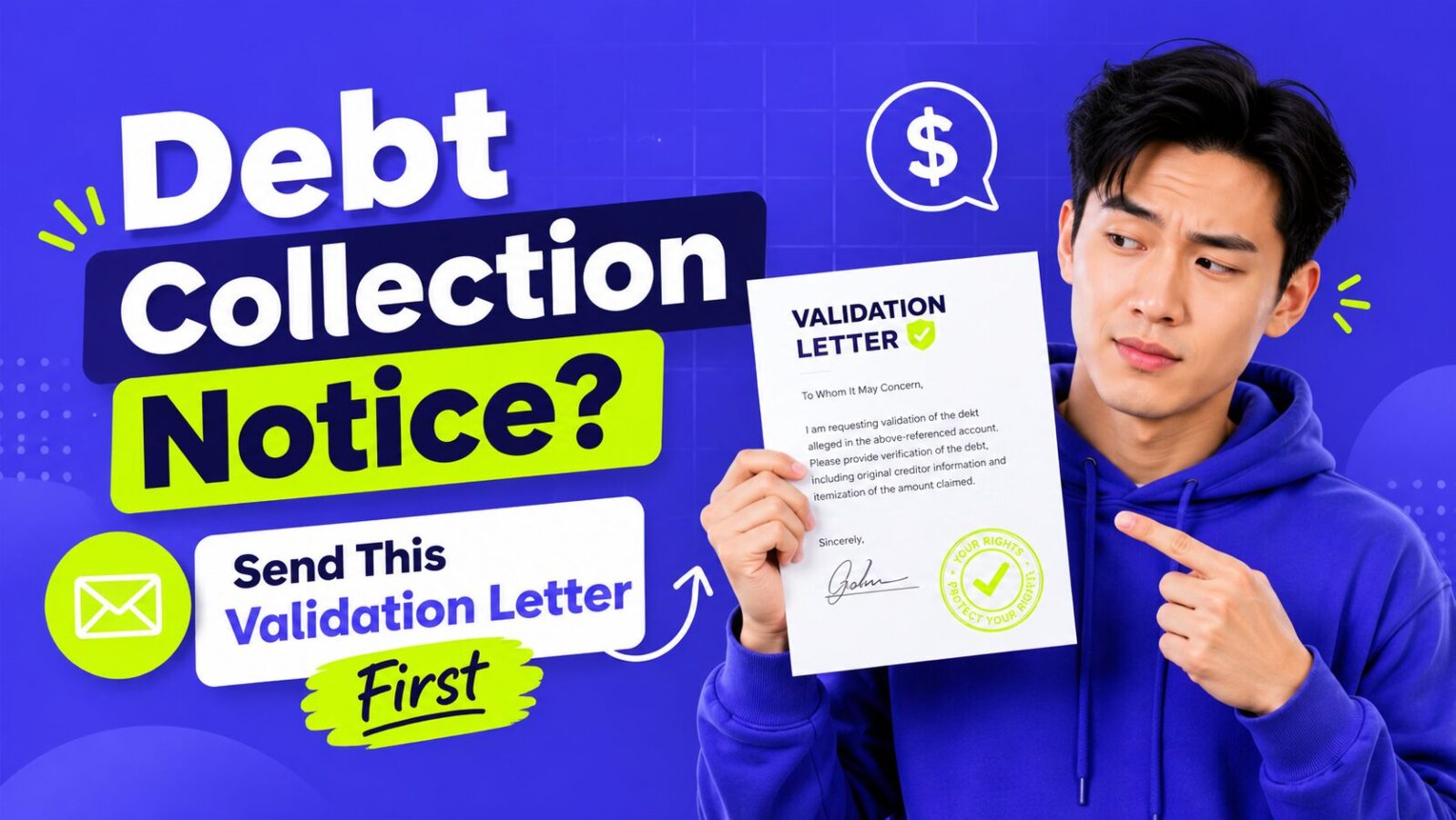
A debt validation letter formally asks a debt collector to prove the debt is yours, the amount is correct, and they have the legal right to collect it. Under the Fair Debt Collection Practices Act (FDCPA), if you dispute in writing within 30 days of the collector’s first notice, they generally must pause collection until they send verification. Here is a template you can use and how to use it. This is general information, not legal advice, so consider talking to an attorney for your specific situation.
Key Takeaways
- You have 30 days from the collector’s first notice to dispute in writing and request validation.
- A timely written dispute generally pauses collection until the collector mails verification.
- Send it by certified mail with return receipt to create proof it was sent and received.
- Validation does not erase a valid debt or reset the statute of limitations. It makes the collector prove their case.
When to Send a Debt Validation Letter
Consider sending one when:
- A collector contacts you about a debt you do not recognize.
- The amount seems wrong.
- You want to confirm the collector has authority to collect before paying or agreeing to anything.
- The debt may be past the statute of limitations in your state.
Send it within 30 days of the collector’s first communication. After 30 days you lose the automatic right to trigger the validation pause under the FDCPA, though you can still request validation, just without the same protections.
The Debt Validation Letter Template
Fill in the bracketed details, send by certified mail with return receipt, and keep a copy.
[Your Name]
[Your Address]
[City, State, ZIP]
[Date]
[Collection Agency Name]
[Collection Agency Address]
Re: Account Number [if provided] / Reference Number [if provided]
To Whom It May Concern:
I am writing in response to your [letter/call/text] dated [date of first contact] regarding an alleged debt. This letter is my formal request for validation of this debt pursuant to Section 809(b) of the Fair Debt Collection Practices Act (15 U.S.C. 1692g).
Please provide the following:
- Verification of the debt, including the amount and confirmation from the original creditor that I owe it.
- The name and address of the original creditor.
- A copy of any signed agreement or documentation creating this debt.
- Evidence that your agency is authorized to collect this debt in [your state].
- Documentation showing the chain of ownership if this debt was purchased.
Until you provide this verification, please cease all collection activities, including calls, letters, texts, and credit reporting on this alleged debt, as required by 15 U.S.C. 1692g(b).
Please do not contact me by telephone. All further communication must be in writing to the address above.
This letter is not a refusal to pay. It is a formal exercise of my rights under the FDCPA.
Sincerely,
[Your Signature]
[Your Printed Name]
What Happens After You Send It
The collector validates the debt
They send documentation showing the debt is yours, the amount, and their authority to collect. Review it carefully: check that the amount matches your records, the original creditor is one you recognize, and the chain of ownership is documented if the debt was sold. If it all checks out, you can decide whether to pay in full, negotiate, or set up a plan.
The collector cannot validate
If they cannot provide adequate documentation, they generally cannot continue collecting on that debt. Many purchased debts change hands several times with incomplete paperwork. If they keep collecting without validating, that can be an FDCPA violation.
The collector ignores your letter
If they keep contacting you without responding to your request, document every contact. That can be an FDCPA violation. You can file complaints with the CFPB at consumerfinance.gov/complaint and your state attorney general.
Use Certified Mail
Always send debt correspondence by USPS certified mail with return receipt. This creates a record that the letter was sent and received, which regular mail and email do not. You get a tracking number, and the signed green card comes back to you. Keep both with your copy of the letter.
What This Letter Does Not Do
A validation letter does not make a debt disappear, does not restart the statute of limitations, and does not prevent a collector from eventually suing you if the debt is valid and still within the limitations period. What it does is require the collector to prove their case before pressuring you further, and it gives you the information to decide your next step from knowledge rather than fear. If you are being sued or the situation is complex, consider speaking with a consumer-law attorney, many offer free consultations.
FAQ
How long do I have to send a debt validation letter?
Within 30 days of the collector’s first notice to get the automatic validation pause under the FDCPA. You can still request validation later, but without the same protection.
Does a validation letter stop collection?
A timely written dispute generally requires the collector to pause collection until they mail you verification. It does not erase the debt.
What if the collector cannot validate the debt?
They generally cannot keep collecting on it. If they continue without validating, that can be an FDCPA violation you can report to the CFPB and your state attorney general.
Should I send it by regular mail or email?
Neither. Use certified mail with return receipt so you have proof it was sent and received if the situation escalates.
Bottom Line
A debt validation letter is a simple, powerful way to make a collector prove a debt before you pay or agree to anything. Send it in writing within 30 days by certified mail, review whatever they send back carefully, and remember it does not erase a valid debt. To see what is on your record, check your reports with our guide on getting your free credit report, learn how collections affect your score, and for a broader plan see our guide on managing debt.
This article is for educational and informational purposes only and is not legal or financial advice. The FDCPA and your rights can vary by situation and state, and laws change. For a lawsuit or a complex case, consult a licensed consumer-law attorney, and verify current rights at consumerfinance.gov.