By
By 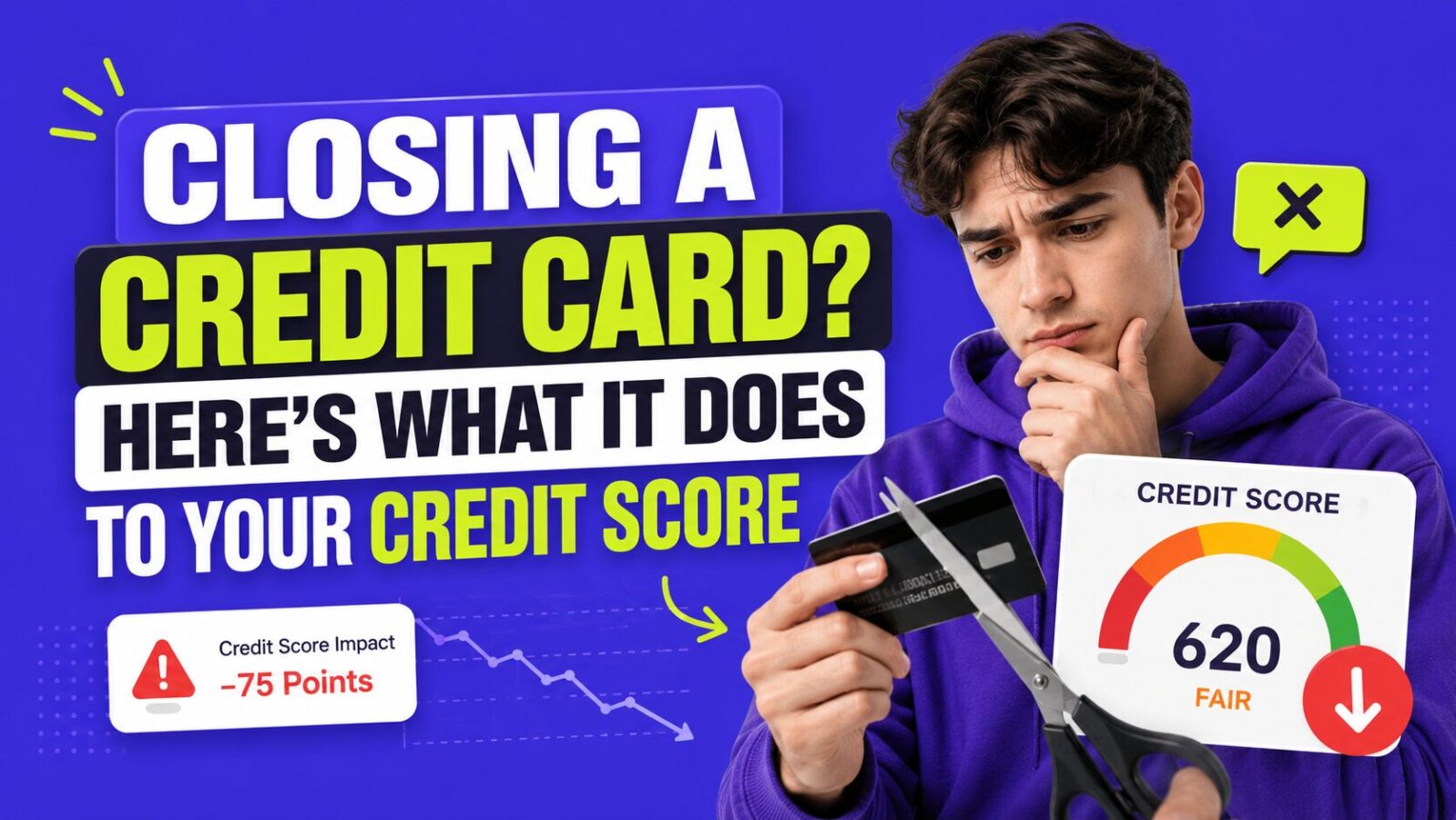
Closing a credit card almost always lowers your credit score, sometimes by a meaningful amount. The instinct to close cards you do not use is understandable but usually works against you from a credit standpoint. Here is exactly what happens to your score when you close a card, and the situations where closing really is the right call.
Key Takeaways
- Closing a card usually lowers your score by raising utilization and, over time, shrinking your average account age.
- The exact impact varies by your profile, so there is no single number it will cost you.
- Sometimes closing is still right: a high annual fee with no value, spending you cannot control, or bad new terms.
- For no-fee cards you do not use, keeping them open and active is almost always better than closing.
Two Ways Closing a Card Hurts Your Score
Utilization goes up
Closing a card removes its credit limit from your total available credit, so if you carry balances elsewhere, your utilization ratio jumps immediately. For example, say you have three cards with $15,000 in combined limits and $3,000 in balances, for 20% utilization. If you close a card with a $5,000 limit and no balance, you now have $10,000 in limits and the same $3,000 in balances, pushing utilization to 30%. Your score can drop within one billing cycle from that change alone, even though you did not spend an extra dollar.
Average account age can fall
Closed accounts in good standing stay on your report for up to 10 years and keep counting toward your average account age while they remain. But once one ages off, that history is gone for good. Closing a newer, low-limit card has little effect, while closing a 10-year-old card with a high limit can hurt more, both on utilization and eventually on age.
When Closing a Card Is Worth It
- A high annual fee with no offsetting value. If a card charges $95 to $550 a year and you are not using the rewards or perks to justify it, canceling saves real money. The score hit is temporary; paying a fee for a card you never use is permanent waste.
- You cannot control spending on it. A card that drives impulse purchases or debt you cannot pay off costs more than any score benefit. Discipline is worth more than a few points.
- The terms changed for the worse. A rate increase, new fees, or gutted rewards that make a card actively bad for you can justify closing regardless of the credit impact.
What to Do Before Closing
- Pay down other balances first so your overall utilization stays low after the available credit drops.
- Request a limit increase on another card to offset the lost available credit.
- Close newer cards rather than older ones to protect your average account age.
- Time it well before a major loan application so your score has time to recover first.
The Better Alternative: Keep It Open but Put It Away
For no-fee cards you do not use, the easiest move is to keep them open and make one small purchase a year to keep the account active. Many issuers close accounts after 12 to 24 months of no activity, so a single small charge once a year prevents automatic closure without making you actively use the card. This preserves your available credit and account age and costs nothing if you pay the small balance right away. It is almost always better than closing a no-fee card. If you are choosing which cards to keep, see our roundup of the best no-annual-fee cards.
If you are not sure how a change affected your score, see our guide on why credit scores drop, and you can always check your reports through our guide on getting your free credit report.
FAQ
Will closing a credit card hurt my credit score?
Usually yes, mainly by raising your utilization and, over time, reducing your average account age. How much it costs depends on your overall profile.
How long does a closed account stay on my report?
A closed account in good standing can stay for up to 10 years and keep counting toward your account age while it remains.
Should I close a card with an annual fee I do not use?
Often yes, if the rewards and perks do not justify the fee. The score impact is temporary, while the fee is an ongoing cost. You can also ask the issuer to downgrade it to a no-fee version instead.
How do I avoid an issuer closing my unused card?
Make one small purchase a year and pay it off. Many issuers close accounts after 12 to 24 months of inactivity, and a small annual charge prevents that.
Bottom Line
Closing a card usually lowers your score, so do it only when there is a real reason, like an unjustified annual fee or spending you cannot control. For no-fee cards, keeping them open and lightly active preserves your credit and costs nothing. When you do close one, pay down other balances and time it away from any big loan application to soften the impact.
This article is for educational and informational purposes only and is not financial advice. Credit scoring is individual, and the effect of closing a card varies by your unique profile. Review your reports at annualcreditreport.com for your specific situation.