By
By 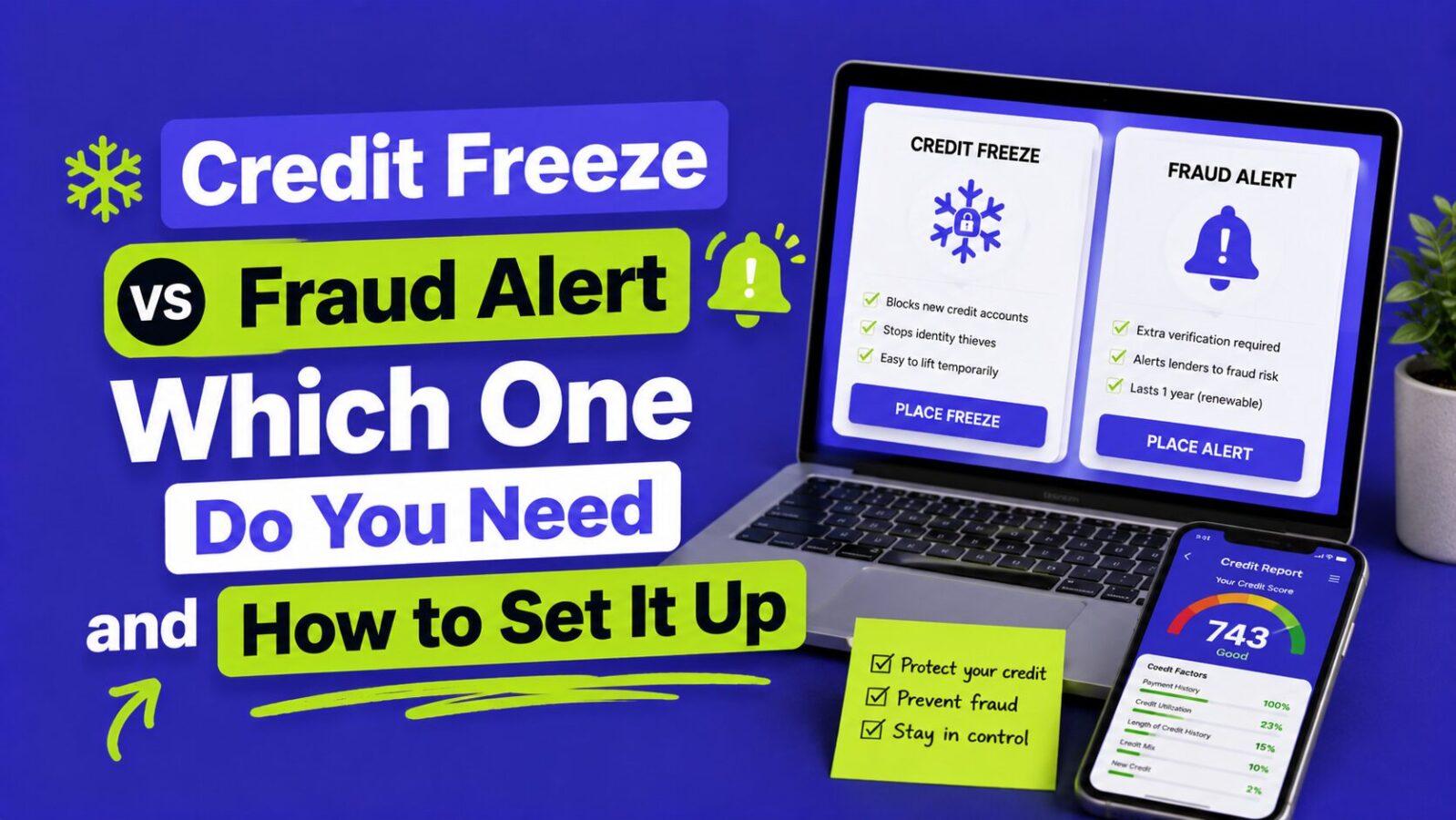
A credit freeze is the stronger of the two: it blocks lenders from pulling your report, which prevents anyone from opening new credit in your name. A fraud alert is lighter, just asking lenders to verify your identity first, but it does not stop approvals. Both are free at all three bureaus. For most people, a freeze is the better default, with a fraud alert layered on after a confirmed breach or identity theft. Here is exactly how each works and which one fits your situation.
Key Takeaways
- A credit freeze blocks new-account fraud by stopping lenders from pulling your report.
- A fraud alert only requests extra verification, so it is weaker but adds less friction.
- Both are free at Equifax, Experian, and TransUnion, and you place a freeze separately at each.
- A freeze does not monitor existing accounts, so pair it with free monitoring.
What Is a Credit Freeze?
A credit freeze (or security freeze) stops the bureaus from sharing your report with new lenders. Since lenders must pull your credit to approve a new account, a freeze effectively prevents anyone, including you, from opening new credit. It blocks identity theft at the application stage.
What it blocks: new credit cards, mortgages, auto loans, apartment rental hard pulls, and any other hard inquiry needing a new credit pull.
What it does not block: soft inquiries, your existing accounts, employers checking your credit (a different process), and collectors managing existing accounts.
Cost: free at all three bureaus since 2018.
How to set it up: place a freeze separately at each bureau, since you must contact all three:
- Equifax: equifax.com or 1-800-685-1111
- Experian: experian.com/freeze or 1-888-397-3742
- TransUnion: transunion.com/credit-freeze or 1-888-909-8872
When you need to apply for credit yourself, temporarily lift the freeze at the bureau the lender uses. You can lift it for a date range or a specific lender, it takes minutes online, and you refreeze after.
What Is a Fraud Alert?
A fraud alert adds a notice to your file asking lenders to take extra steps to verify your identity before approving new credit. It does not block access to your report, so lenders can still pull it and still approve credit, but they are supposed to contact you first.
There are three types:
- Initial fraud alert: lasts one year. Place it with one bureau and they notify the other two automatically.
- Extended fraud alert: lasts seven years, for confirmed identity-theft victims. Requires a police report or an FTC identity-theft report.
- Active-duty alert: for deployed military members, lasts one year.
Cost: free at all three bureaus. A fraud alert is weaker than a freeze because it only requests verification rather than preventing approvals.
Credit Freeze vs Fraud Alert: Which Should You Use?
| Situation | Recommendation |
|---|---|
| Proactive protection, no known breach | Credit freeze, maximum protection at no cost |
| Known breach involving your SSN | Credit freeze immediately, plus a fraud alert |
| Planning to apply for credit soon | Fraud alert, less friction with some protection |
| Confirmed identity theft | Extended fraud alert (7 years) plus a freeze |
| Protecting an elderly parent | Credit freeze, since they rarely apply for new credit |
Should You Also Freeze ChexSystems and Innovis?
Equifax, Experian, and TransUnion are the three major bureaus, but for fuller protection you can also freeze two smaller agencies: ChexSystems (used by banks when you open a checking account, at chexsystems.com) and Innovis (a fourth credit bureau some lenders use, at innovis.com). Both offer free freezes.
Do You Still Need Monitoring After a Freeze?
Yes. A freeze does not watch your existing accounts for fraud, only new applications. Pair it with free monitoring through Credit Karma or Experian to catch unauthorized activity on accounts you already have. A freeze prevents new fraud; monitoring catches existing-account fraud. See our guide on the best free credit monitoring.
FAQ
Is a credit freeze better than a fraud alert?
For most people, yes. A freeze actively blocks new credit from being opened, while a fraud alert only asks lenders to verify your identity and does not prevent approvals. The strongest setup is a freeze plus an alert.
Does a credit freeze hurt my credit score?
No. A freeze has zero effect on your score. It simply restricts who can pull your report and does not change the data in your file.
Is it free to freeze and unfreeze my credit?
Yes. Placing, lifting, and removing a freeze is free at all three bureaus under federal law, and lifting it temporarily takes only minutes online.
How do I unfreeze my credit to apply for a loan?
Temporarily lift the freeze at the bureau your lender uses, either for a set date range or for that specific lender, then refreeze afterward. It is fast and free.
Bottom Line
A credit freeze is the stronger tool because it blocks new-account fraud outright, while a fraud alert only requests extra verification, and both are free. Freeze all three bureaus for proactive protection, add a fraud alert after a confirmed breach or theft, and pair the freeze with free monitoring to cover existing accounts. To go deeper, see our guides on the best free credit monitoring, getting your free credit report, and disputing credit report errors.
This article is for educational and informational purposes only and is not financial or legal advice. Procedures can change, so confirm current steps with each bureau. Place and manage freezes for free at equifax.com, experian.com, and transunion.com.