By
By 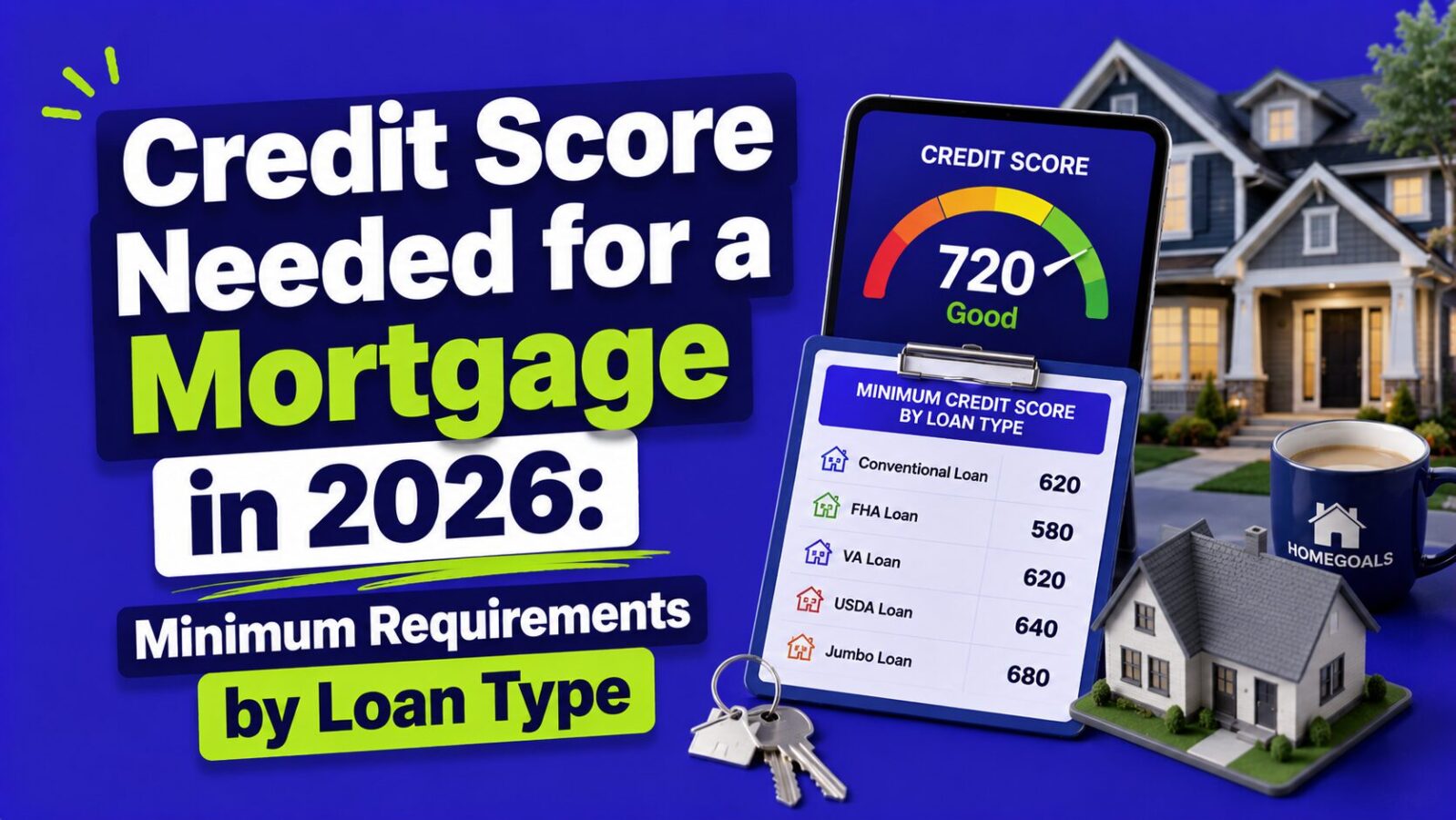
The credit score you need for a mortgage depends on the loan type. Minimums range from 500 (FHA with 10% down) to 620 (conventional), but meeting the minimum and getting a good rate are very different things. The best mortgage rates generally start around 740 to 760. Here are the real requirements by loan type for 2026 and what your score actually costs you.
Key Takeaways
- Minimums vary by loan: 500 to 580 for FHA, 620 for conventional, no set minimum for VA.
- Best rates start around 740 to 760, so meeting the minimum is not the same as getting a good rate.
- The score gap is expensive: a low score can add hundreds per month on the same loan.
- New scoring models are rolling out in 2026, but many lenders still use Classic FICO.
What Is the Minimum Credit Score by Loan Type?
| Loan type | Minimum score | Best rates start at | Down payment |
|---|---|---|---|
| Conventional (Fannie/Freddie) | 620 | 740-760 | 3-20% |
| FHA loan | 580 (3.5% down) or 500 (10% down) | 680+ | 3.5-10% |
| VA loan (veterans) | No official minimum (lenders set 580-620) | 680+ | 0% |
| USDA loan (rural) | 640 typically | 680+ | 0% |
| Jumbo loan (above $832,750) | 700-720 minimum | 740+ | 10-20% |
The jumbo threshold rises each year. For 2026, the baseline conforming loan limit is $832,750 in most areas, so loans above that are jumbo. See our guide on what credit score you need for each product.
How Much Does Your Score Affect Your Mortgage Rate?
On a $350,000 30-year mortgage at mid-2026 rates (averaging around 6.5%), here is roughly how much more you pay by credit tier. Rates are illustrative and the spread between tiers matters most:
| Credit score | Approximate rate | Monthly P&I | Extra vs 760+ |
|---|---|---|---|
| 760+ | ~6.40% | ~$2,189 | Baseline |
| 720-759 | ~6.65% | ~$2,247 | +~$58/month |
| 700-719 | ~6.90% | ~$2,305 | +~$116/month |
| 680-699 | ~7.275% | ~$2,394 | +~$205/month |
| 660-679 | ~7.65% | ~$2,483 | +~$294/month |
| 640-659 | ~8.275% | ~$2,635 | +~$446/month |
| 620-639 | ~8.90% | ~$2,792 | +~$603/month |
The gap between a 620 and a 760 on this loan is roughly $600 a month, about $7,200 a year, and well over $200,000 across 30 years. If you are below 720, raising your score before applying is worth real effort and patience. See our guide on how to improve your credit score fast.
What Is Changing With Mortgage Credit Scoring in 2026?
In April 2026, the FHFA and HUD approved two newer models, VantageScore 4.0 and FICO 10T, alongside Classic FICO for loans backed by Fannie Mae and Freddie Mac. This is a staged rollout, not a full switch: VantageScore 4.0 is available at approved lenders on a limited basis, FICO 10T historical data is expected in summer 2026 with broader adoption continuing into 2027, and many lenders still use Classic FICO during the transition.
Why it can help you: FICO 10T uses trended data (your balance trajectory over about 24 months, not just a snapshot), so a borrower whose balances have been falling may score better. VantageScore 4.0 can factor in rental payment history and other alternative data, which helps younger borrowers with thin files. See our guide on FICO vs VantageScore.
Should You Wait to Buy Until Your Score Improves?
The real question is whether the monthly savings from a higher score outweighs the cost of waiting (more rent, possible price appreciation you miss):
- At 680, reachable to 720 in 6 to 12 months: the savings over 30 years almost always beats a few months of rent, so waiting usually makes sense.
- At 720 chasing 760: the gain is real but smaller, so whether to wait depends on your rent and local market.
- At 620 needing 2 to 3 years to hit 720: an FHA loan now may beat waiting if home prices are climbing faster than the rate savings justify.
FAQ
What credit score do I need to buy a house in 2026?
Conventional loans require 620, FHA allows 580 with 3.5% down (or 500 with 10% down), and VA loans have no official minimum. The best rates, though, generally start around 740 to 760.
Can I get a mortgage with a 580 credit score?
Yes, typically through an FHA loan with 3.5% down. Expect a higher rate than a prime borrower, so improving your score before applying can save a lot over the life of the loan.
How much does credit score affect a mortgage payment?
A lot. On a $350,000 loan, the gap between a 620 and a 760 can be around $600 a month, which adds up to well over $200,000 across a 30-year term.
Which credit score do mortgage lenders use?
Most have used Classic FICO (versions 2, 4, and 5). As of April 2026, VantageScore 4.0 and FICO 10T are also approved for Fannie and Freddie loans, but adoption is rolling out gradually through 2026 and 2027.
Bottom Line
Mortgage minimums run from 500 to 620 depending on the loan, but the best rates start around 740 to 760, and the gap between a low and high score can cost over $200,000 across 30 years. Know your loan type’s minimum, aim well above it, and weigh the savings of a higher score against the cost of waiting. To go deeper, see our guides on what is a good credit score, how to improve your score fast, and FICO vs VantageScore.
This article is for educational and informational purposes only and is not financial advice. Mortgage rates and requirements vary by lender, loan type, and your full profile, and rates shown are illustrative. Confirm current rates and rules with a licensed lender.