By
By 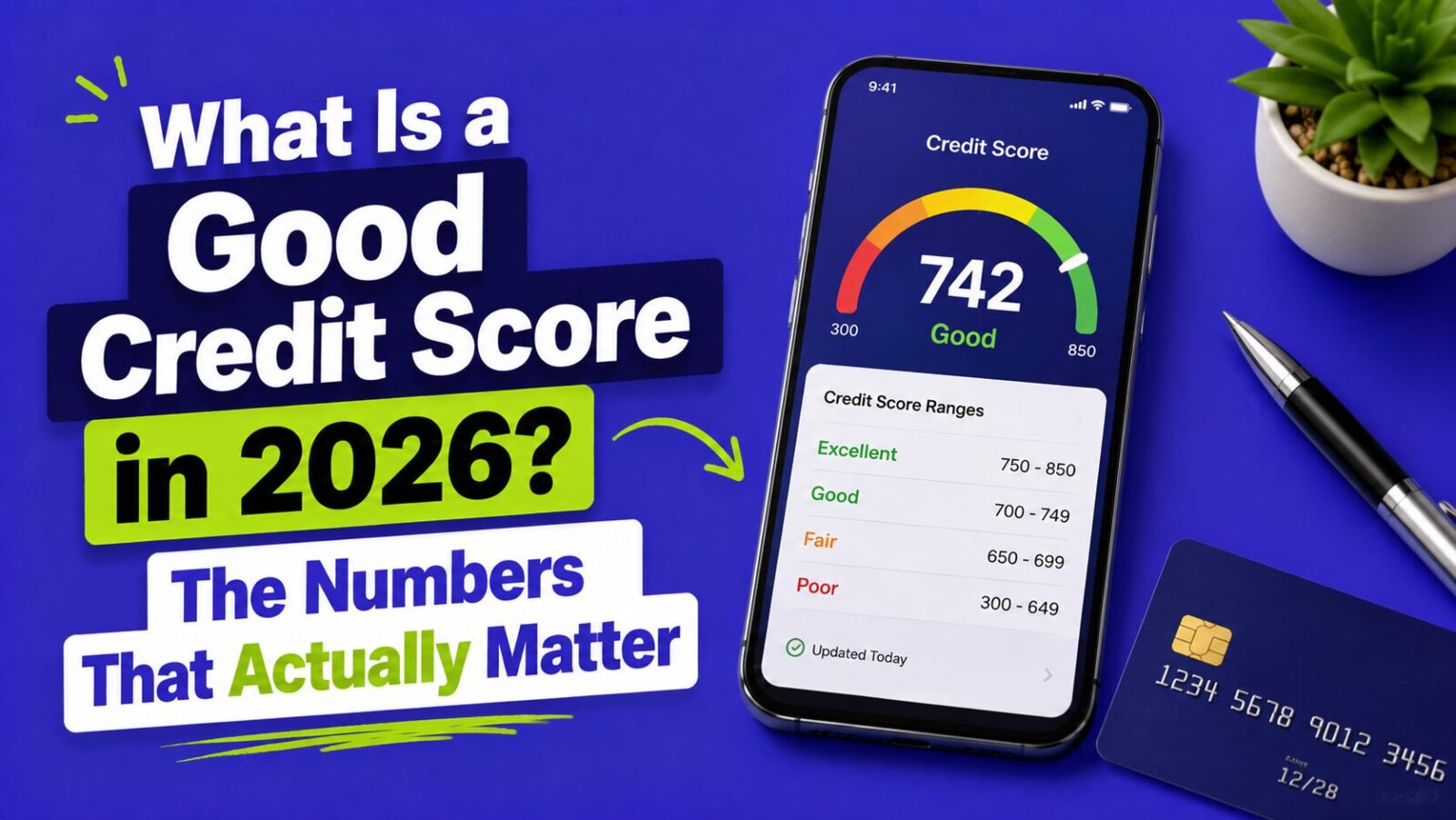
A good credit score is generally 670 or higher, but the threshold that truly matters depends on what you are doing. For most lenders, 670+ counts as good and 740+ as very good, while 720 is the practical target that unlocks competitive rates across mortgages, auto loans, and premium cards. A 680 will get you approved for most credit cards but can cost far more on a mortgage than a 760. Here are the specific thresholds that matter for each major product in 2026.
Key Takeaways
- 670 is the “good” line where most mainstream products open up.
- 720 is the most practical target, unlocking competitive rates almost everywhere.
- Mortgages are the most score-sensitive, so the gap between tiers costs the most there.
- The U.S. average sits around 715, having dipped slightly in the past year.
What Credit Score Do You Need for a Mortgage?
Mortgage lenders are the most score-sensitive because the stakes are highest, and the monthly payment gap between a low and high score on a large loan can be substantial.
| Score | Mortgage outcome (2026) |
|---|---|
| 760+ | Best available rates, maximum pricing advantage. |
| 740-759 | Near-best rates, minimal premium over the top tier. |
| 720-739 | Good rates, a small premium begins. |
| 700-719 | Acceptable rates, a noticeable premium versus 760+. |
| 680-699 | Higher rates, meaningfully more per month than 760+. |
| 620-679 | Marginal conventional approval; FHA is often the better option. |
| 580-619 | FHA possible with 3.5% down; conventional is difficult. |
| Below 580 | FHA with 10% down; very limited options. |
What Credit Score Do You Need for a Car Loan?
Auto rates are tiered by score, and the difference between excellent and fair credit on a typical loan can mean thousands more in total interest.
| Score range | Typical new car APR (2026) |
|---|---|
| 720+ | Roughly 5.5% to 7.5% |
| 660-719 | Roughly 7.5% to 10% |
| 600-659 | Roughly 10% to 14% |
| Below 600 | Roughly 14% to 22%+ |
What Credit Score Do You Need for a Credit Card?
- Premium rewards cards (Chase Sapphire, Amex Gold, Venture X): typically 700+, with most approvals at 720+.
- Good cashback cards (Citi Double Cash, Wells Fargo Active Cash): usually 670+.
- Starter and student cards: roughly 580-670, some with no credit history.
- Secured cards: available at any score with a deposit.
What Credit Score Do You Need for a Personal Loan or Apartment?
For personal loans, the best rates generally go to 720+, good rates to roughly 680-719, fair rates to 620-679, and subprime pricing below that. For apartment rentals, most landlords want about 620-650 minimum, while competitive urban markets often expect 680-700+. Below 620, expect to need a co-signer or extra deposit upfront.
What Are the Two Most Important Thresholds?
If you target one number, make it 720. Above it, you qualify for competitive rates on mortgages, auto loans, and premium cards. The jump from 720 to 760 is real but smaller in dollar terms than the jump from 680 to 720.
The second key line is 670. Below it, you pay meaningfully higher rates and get rejected for some products. Above it, you have access to most mainstream financial products, even if not at the best pricing. See our guide on how to improve your credit score fast.
What Is the Average Credit Score in America?
The average FICO score sits around 715 in 2026, after dipping slightly in the past year, the first decline in over a decade, driven by rising card balances and the return of student-loan delinquency reporting. If your score is above about 715, you are above average; below 670, you are in roughly the bottom third of borrowers by score.
How Long Does It Take to Reach Each Tier?
| Starting point | Target | Realistic timeline (varies by profile) |
|---|---|---|
| No credit history | 670 | Often 6 to 12 months with a secured card and on-time payments |
| 620 (fair) | 720 | Often 12 to 24 months with consistent payments and lower utilization |
| 680 (good) | 760 | Often 12 to 18 months of continued positive history |
| After bankruptcy | 670 | Often 2 to 4 years of rebuilding |
These are general estimates; your actual pace depends on your full profile. See our guide on how to build credit from scratch.
FAQ
What is a good credit score in 2026?
Generally 670 or higher is considered good, 740+ is very good, and 800+ is exceptional. The most practical target is 720, which unlocks competitive rates on most major products.
Is 720 a good credit score?
Yes. At 720 you qualify for competitive rates on mortgages, auto loans, and premium rewards cards. Going higher helps, but the dollar gains shrink above 720.
What is the average credit score in the US?
About 715 in 2026, after a small recent decline. A score above roughly 715 is above average, while below 670 falls into about the bottom third of borrowers.
What credit score do I need to buy a house?
Conventional loans usually want 620+, FHA loans allow 580 with 3.5% down, and the best mortgage rates start around 740 to 760. The higher your score, the lower your monthly payment.
Bottom Line
A good credit score is 670+, but 720 is the number that actually unlocks competitive rates across mortgages, auto loans, and premium cards. Know the threshold for your specific goal, aim for 720 if you can, and remember that mortgages reward a high score the most. To go deeper, see our guides on what a credit score is, how to improve your score fast, and how to build credit from scratch.
This article is for educational and informational purposes only and is not financial advice. Approval thresholds and rates vary by lender, product, and your full profile. Review your reports for free at annualcreditreport.com.