 By
By 
As of July 9, 2026, the 30-year fixed mortgage rate averages 6.49%, per the Freddie Mac Primary Mortgage Market Survey, roughly where it has been for the past six weeks. Rates are not crashing. The Fed held steady at its June 2026 meeting, inflation is still running above target, and the consensus forecast for the 30-year fixed is a modest drift toward 6.0-6.25% by year-end, not the sub-5% many buyers are waiting for. Here is what is actually driving rates, when (if ever) buying makes sense at these levels, and how to get the lowest rate available to you right now.
KEY TAKEAWAYS
- The 30-year fixed rate is approximately 6.4-6.6% as of July 9, 2026 (Freddie Mac PMMS). Rates change daily, verify before any decision.
- Sub-5% rates in 2026 are unlikely. The Fed held steady in June 2026; forecasters put year-end rates at 6.0-6.25% at best.
- Shopping 3+ lenders can save 0.5% or more on your rate, on a $350,000 loan, that’s about $110/month or nearly $40,000 over 30 years.
- A 1% improvement in your credit score tier (e.g., 680 → 740) can move your rate by 0.25-0.75%, more than most rate drops you’d wait months for.
- “Marry the house, date the rate” is reasonable if the payment fits your budget at today’s rate. Refinancing from 6.5% to 5.5% saves ~$260/month on a $400k loan with a 12-18 month break-even on closing costs.
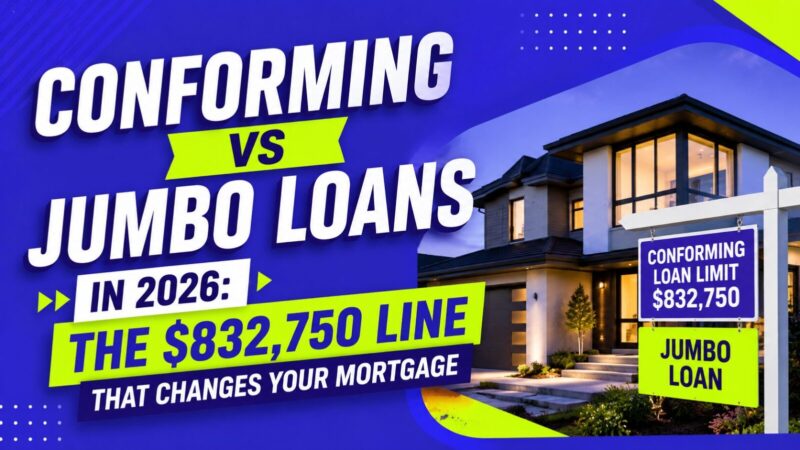
- The 2026 conforming loan limit is $832,750 (FHFA). Loans above this limit are jumbo loans with stricter requirements.
Part of our Complete First-Time Buyer’s Guide for 2026.
What Are Mortgage Rates Right Now in 2026?
The Freddie Mac Primary Mortgage Market Survey is the most widely cited weekly rate benchmark in the U.S. As of the week ending June 26, 2026, the 30-year fixed average was approximately 6.4-6.6%. The 15-year fixed runs about 0.5-0.75% lower, typically in the 5.75-6.0% range. Adjustable-rate mortgages (ARMs) are currently priced close to or slightly below the 30-year fixed, which is unusual, normally ARMs start lower, reflecting the market’s view that rates will drift down over the next few years.
These are national averages. Your actual rate will depend on your credit score, loan-to-value ratio, loan type, property state, and which lender you choose. Shopping multiple lenders on the same day (within a 14-45 day window, which counts as a single hard inquiry under FICO scoring) is the single most reliable way to find the best rate available to you.
For the latest rate, check the Freddie Mac PMMS directly, it updates every Thursday.
What Is Driving Mortgage Rates in 2026?
Mortgage rates are not set by the Federal Reserve directly. The 30-year fixed rate tracks the 10-year U.S. Treasury yield, plus a spread that reflects lender profit margins and risk. The spread has been unusually wide since 2022 (typically 1.5-1.7%, currently closer to 2.5-3%), which is part of why rates haven’t fallen more even as the Fed paused its hiking cycle.
The three forces keeping rates elevated in mid-2026:
- Inflation above target. The May 2026 CPI came in above the Fed’s 2% target, limiting the Fed’s room to cut rates. The Fed held its benchmark rate at its June 17-18, 2026 meeting and signaled continued caution.
- Fed policy uncertainty. Under the current Fed leadership, rate cuts have been delayed. Market futures as of early July 2026 are pricing in one possible cut in late 2026, down from expectations of three cuts entering the year.
- Mortgage spread compression still lagging. The abnormally wide spread between the 10-year Treasury and the 30-year mortgage rate has not fully normalized. As MBS (mortgage-backed securities) demand picks up, this spread should narrow, pushing mortgage rates lower even without Fed cuts.
Will Mortgage Rates Drop in 2026?
Possibly, but modestly. The consensus among major forecasters (Fannie Mae, Freddie Mac, MBA) as of mid-2026 is that the 30-year fixed will end the year somewhere in the 6.0-6.5% range. A dramatic drop to 5% or below is not in any major forecast for 2026.
What would drive rates lower: a significant inflation decline, a deteriorating job market that forces the Fed to cut, or a narrowing of the mortgage-treasury spread. What would push rates higher: another inflation spike, fiscal concerns around Treasury supply, or an unexpected tightening by the Fed.
The honest answer: nobody reliably forecasts mortgage rates. The people who have been “waiting for rates to fall” since 2022 have watched prices rise while rates stayed elevated. That said, the argument for waiting is not zero, a 0.5% rate decline on a $400,000 loan saves about $130/month and adds roughly $25,000 in purchasing power. Whether that is worth an additional year of renting depends on your market and rent situation.
Should You Buy Now or Wait for Rates to Drop?
This is the right question, and the answer is: it depends on whether the payment works for you today.
The framework: if the total housing cost (mortgage + taxes + insurance + PMI) is under 28% of your gross monthly income and you plan to stay at least 5 years, buying now and refinancing later is a defensible strategy. Refinancing from 6.5% to 5.5% on a $400,000 loan saves about $260/month; closing costs typically run 2-3% of the loan amount, so the break-even is usually around 2.5-4 years. If rates drop to 5.5%, you will refinance within 2-3 years of buying and likely come out ahead compared to renting while waiting.
Waiting makes more sense when: the payment at today’s rate would push you above 30-35% of income, your market is particularly overpriced relative to rents, or you expect to move within 5 years (short holding periods rarely recover closing costs).
What does not make sense: waiting indefinitely for sub-5% rates that have no basis in current forecasts, while paying rent and watching home prices in your target area continue to rise.
Should You Lock Your Rate or Float?
A rate lock is a lender’s commitment to hold your rate for a specified period, typically 30-60 days, while your loan closes. If rates rise during that period, you are protected. If rates fall, most standard locks do not let you benefit (unless you pay for a “float-down” option, which costs extra).
The general rule: lock when you are under contract and the payment is acceptable at today’s rate. Floating (not locking) is a bet that rates drop before closing, a bet that has burned many buyers over the past three years. The incremental gain from a 0.1-0.2% rate decline rarely justifies the risk of a 0.25-0.5% rise if rates move against you.
Practical checklist for locking: get your rate in writing, confirm the lock expiration date, ask what happens if closing is delayed, and understand whether a float-down option is available and what it costs.
How Do ARMs Compare to Fixed Rates Right Now?
Adjustable-rate mortgages (ARMs) like the 5/1 ARM (fixed for 5 years, then adjusts annually) or the 7/1 ARM (fixed for 7 years) are currently priced at roughly 5.75-6.25%, close to the 30-year fixed, with less of the historical discount than normal. ARMs are worth considering if you are confident you will sell or refinance before the fixed period ends. They are risky for a forever home or if there’s any chance you might stay longer than planned.
In the current environment, the ARM discount is narrow enough that the added risk often does not justify the savings. See our full breakdown in our guide to ARM vs fixed-rate mortgages in 2026.
How Can You Get the Lowest Mortgage Rate Available to You?
The national average rate is not what you will be offered. Your rate is personalized based on several factors you can influence:
Credit score. This is the single biggest lever you control. At a 760+ score, you qualify for the best tier on conventional loans. At 680-720, you are paying a meaningful premium, often 0.25-0.75% higher. Improving your score from 680 to 760 before applying can save more than waiting for market rates to fall. See our guide on the credit score needed for a mortgage and the new VantageScore 4.0 and FICO 10T models now used by Fannie Mae and Freddie Mac.
Down payment / loan-to-value (LTV). More down payment = lower LTV = lower rate. Below 80% LTV (20% down) eliminates PMI and usually qualifies for better pricing.
Loan type and size. Conforming loans (up to $832,750 in 2026 per the FHFA) typically get better rates than jumbo loans. FHA rates are sometimes competitive with conventional for lower credit scores. VA loans offer the lowest rates for eligible veterans but come with a funding fee. See our guide to conforming vs jumbo loans.
Shop multiple lenders. Rates on the same loan can vary by 0.5%+ between lenders. Getting quotes from at least 3 lenders, including a bank, a credit union, and an online lender, within a 14-45 day window counts as a single hard inquiry. On a $350,000 loan, a 0.5% rate difference is about $110/month, or nearly $40,000 over 30 years.
Consider mortgage points. You can pay “points” upfront (1 point = 1% of the loan amount) to buy your rate down permanently. Whether this makes sense depends on your break-even horizon. See our guide on mortgage points and rate buydowns for the math.
How Does Your Loan Type Affect Your Rate?
| Loan type | Typical rate (June 2026) | Key trade-off |
|---|---|---|
| 30-yr fixed conventional | ~6.4-6.6% | Predictable payment; highest rate |
| 15-yr fixed conventional | ~5.75-6.0% | Lower rate, higher monthly payment, less total interest |
| 5/1 or 7/1 ARM | ~5.75-6.25% | Lower initial rate; adjusts after fixed period |
| FHA (30-yr) | ~6.25-6.5% | Slightly lower rate; mortgage insurance for life of loan if <10% down |
| VA (30-yr) | ~5.75-6.0% | Best rates; 0% down; for eligible veterans/service members only |
Rates are approximate and change daily. These are meant for comparison only, get personalized quotes before making any decisions. See our full comparison of FHA vs conventional loans in 2026 and our guide to VA and USDA zero-down loans.
What About Refinancing in 2026?
If you bought in 2022 or 2023 at rates above 7%, refinancing at today’s 6.5% saves a modest amount, likely not enough to justify closing costs unless your original rate was 7.5%+. The real refinance opportunity will come if rates drop to the 5.5-6.0% range, which forecasters project as possible in late 2026 or 2027.
For a full break-even analysis and when refinancing actually makes financial sense, see our guide to whether you should refinance in 2026.
Mortgage Payment Calculator
Frequently Asked Questions
What is the 30-year mortgage rate right now in 2026?
As of July 9, 2026, the 30-year fixed rate averages 6.49% (Freddie Mac Primary Mortgage Market Survey). Rates change weekly. Check the Freddie Mac PMMS for the latest figure and get personalized quotes from at least 3 lenders before locking.
Will mortgage rates go down in 2026?
Possibly modestly. Major forecasters (Fannie Mae, Freddie Mac, MBA) project the 30-year fixed ending 2026 around 6.0-6.5%. A drop to 5% or below in 2026 is not in any mainstream forecast. The Fed’s June 2026 meeting resulted in no cut, with continued caution signaled.
Should I buy a house now or wait for rates to drop?
Buy if the full housing cost, mortgage, taxes, insurance, PMI, stays under 28% of your gross monthly income and you plan to stay at least 5 years. Waiting indefinitely for sub-5% rates carries the risk of rising home prices offsetting any rate savings. You can always refinance if rates fall.
What credit score do I need to get a good mortgage rate?
A score of 760+ qualifies for the best conventional rates. At 680-720, you typically pay 0.25-0.75% more. On a $350,000 loan, that’s $55-165/month extra. Improving your score before applying can save more than waiting for market rates to fall. See our guide on credit score requirements for a mortgage.
How do I lock in a mortgage rate?
Once under contract, ask your lender to issue a rate lock in writing. Standard locks are 30-60 days. Get the rate, lock period, expiration date, and float-down terms in writing. Lock when the payment works at today’s rate, floating is a gamble that has historically not paid off for most buyers.
What is the conforming loan limit for 2026?
The baseline conforming loan limit for a single-unit property is $832,750 in 2026, up from $806,500 in 2025, per the FHFA. Loans above this limit in your area are jumbo loans, which have stricter credit and down-payment requirements. See our conforming vs jumbo loan guide.
Bottom Line
Mortgage rates in 2026 are hovering around 6.5%, elevated, but not catastrophic for buyers who shop carefully, improve their credit, and size their purchase to the 28% rule. Waiting for sub-5% rates is not a sound strategy for most buyers. Buy when the payment works, shop at least 3 lenders, and know you can refinance if rates fall meaningfully.
Last updated: July 11, 2026. Rates sourced from the Freddie Mac Primary Mortgage Market Survey (week ending June 26, 2026) and change daily. Loan limits per FHFA 2026 announcement. This article is for educational purposes only and does not constitute financial or mortgage advice. Consult a licensed mortgage professional for guidance specific to your situation.