By
By 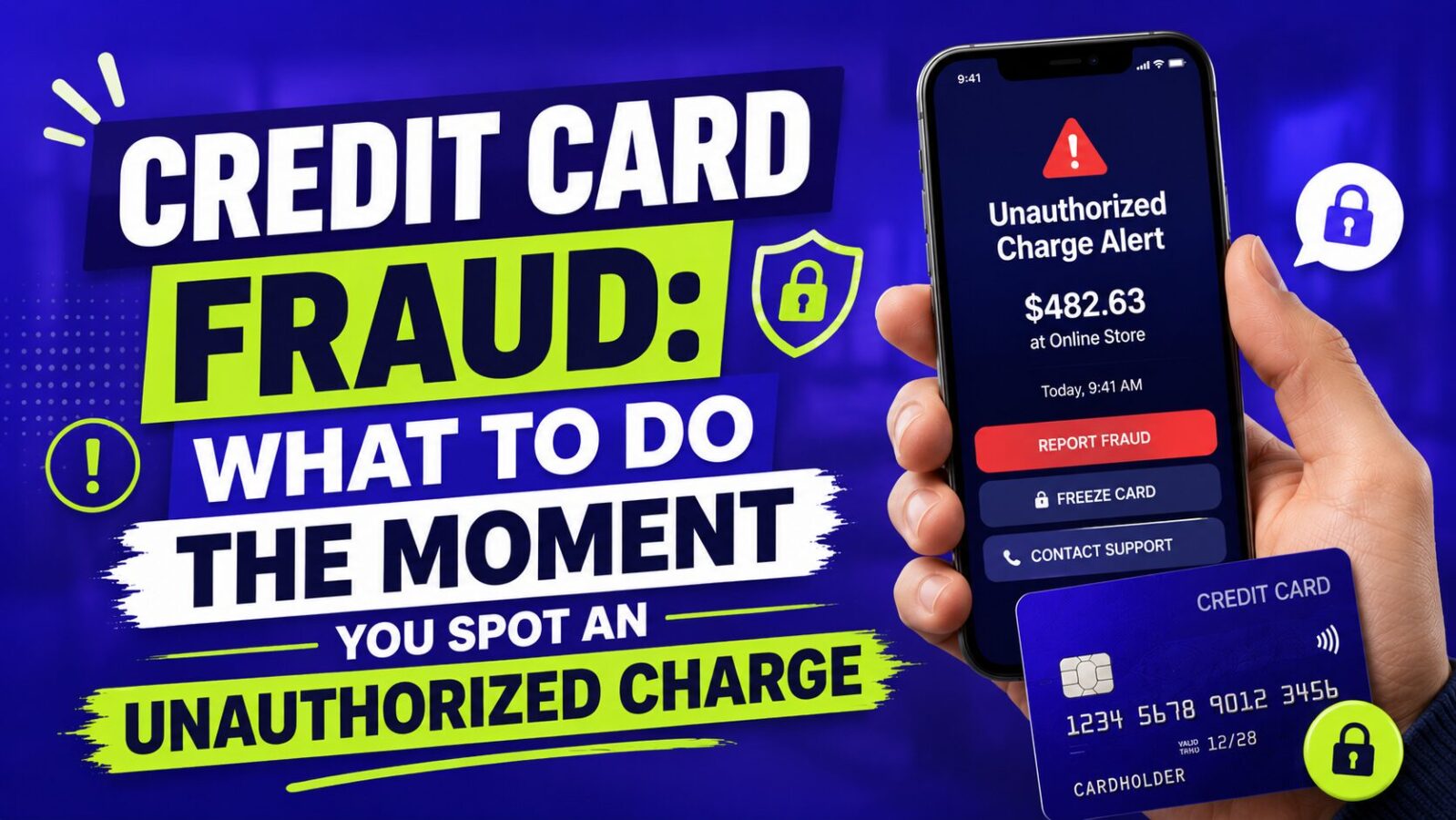
The moment you spot an unauthorized charge, do not pay it, then report it to your card issuer immediately and ask for a new card number. Credit card fraud is one of the most recoverable money problems there is: federal law caps your liability at $50, and most major issuers’ zero-liability policies bring that to $0. The key is acting fast and in the right order. Here is exactly what to do.
Key Takeaways
- Don’t pay the disputed charge, since paying it can imply you authorized it.
- Report it immediately and request a new card number and a written case number.
- Your liability is capped at $50 by law, and usually $0 with zero-liability policies.
- Check for more fraud and broader identity theft, and consider a freeze if you see signs.
Should You Pay the Disputed Charge?
No. If a fraudulent charge appears on a statement you have not yet paid, do not pay that specific amount, because paying it can imply you authorized it and complicate the dispute. Pay the rest of your legitimate balance, but clearly flag the disputed amount in your filing. If the charge is on a statement you already paid, you will get a credit once the dispute is resolved in your favor.
How Do You Report Credit Card Fraud?
Call the number on the back of your card or use the issuer’s app; most major issuers have 24/7 fraud reporting. When you report:
- Identify the specific charge (merchant, date, amount).
- State clearly that you did not authorize the transaction.
- Ask them to cancel the current card number and issue a new one.
- Ask for written confirmation of your dispute and a case number.
- Ask about the zero-liability policy and when to expect a temporary credit.
Most issuers provisionally credit the disputed amount within 1 to 3 business days while they investigate. Under the Fair Credit Billing Act, they must resolve the dispute within two billing cycles (no more than 90 days).
How Do You Check for Other Unauthorized Charges?
One charge is often not the only one. After a card number is compromised, fraudsters frequently test it with a small charge ($1 to $5) before larger purchases, so review your last 60 to 90 days of transactions for anything unfamiliar, no matter how small. Check your other credit and debit accounts too, since one stolen number can mean other credentials were exposed in the same incident.
Should You Change Your Passwords?
If the fraud happened because your account was accessed, not just your card number skimmed, change your password for the issuer’s website and app right away and turn on two-factor authentication. If you reused that password anywhere else, change it on every site where you used the same credentials.
How Do You Check for Broader Identity Theft?
Credit card fraud is sometimes the first visible sign of wider identity theft. Pull your free report at annualcreditreport.com and look for accounts you did not open, hard inquiries from lenders you never applied to, and address changes you did not request. If you see any of these, place a fraud alert (free, one year) or a credit freeze (free, indefinite) at all three bureaus. A freeze is more protective because it blocks any new credit from being opened until you lift it. See our guide on credit freeze vs fraud alert.
What Are Your Legal Rights?
Under the Fair Credit Billing Act, your liability for unauthorized credit card charges is capped at $50 if you report within 60 days of the statement on which the charge appeared, and most issuers’ zero-liability policies reduce that to $0. Visa, Mastercard, American Express, and Discover all offer zero liability on unauthorized charges reported promptly, so you owe nothing on fraud you did not authorize and report in time.
Debit cards are weaker. Under the Electronic Fund Transfer Act, reporting within 2 business days caps liability at $50, within 60 days at $500, and after 60 days you may be liable for the full amount. That is a core reason credit cards beat debit for everyday spending. See our guide on credit card vs debit card fraud protection.
What Should You Expect After Filing a Dispute?
| Timeframe | What happens |
|---|---|
| Day 1-3 | Provisional credit issued, new card mailed. |
| Day 3-14 | Issuer investigates with the merchant. |
| Day 14-30 | Most disputes resolved, provisional credit made permanent. |
| Up to 90 days | Maximum allowed for complex disputes under the FCBA. |
What If Your Dispute Is Denied?
Disputes are occasionally denied when the issuer decides the charge was authorized (for example, a forgotten subscription). If you genuinely did not authorize it:
- Request the specific reason for denial in writing.
- Provide additional evidence, such as receipts or logs showing you were not at the merchant.
- Escalate to the issuer’s customer relations or executive office if the front-line team keeps denying.
- File a complaint with the CFPB at consumerfinance.gov/complaint, which issuers tend to take seriously.
How Do You Prevent Credit Card Fraud Going Forward?
- Turn on real-time transaction alerts so you see every charge as it posts.
- Use virtual card numbers for online purchases at merchants you do not fully trust.
- Use Apple Pay or Google Pay in person, which transmit a device account number, not your real card.
- Never share your card number on a call you did not initiate.
- Check statements at least every two weeks, since the 60-day reporting window runs from the statement date, not when you notice.
See our guide on virtual credit card numbers for stronger online protection.
FAQ
What is the first thing to do when you see a fraudulent charge?
Do not pay the disputed amount, then report it to your issuer immediately by phone or app, identify the charge, and ask for a new card number and a written case number.
How much am I liable for credit card fraud?
By law, no more than $50 if you report within 60 days, and most issuers’ zero-liability policies bring it to $0. You owe nothing on charges you did not authorize and report promptly.
How long does a credit card fraud dispute take?
You usually get provisional credit in 1 to 3 days, and most disputes resolve within 14 to 30 days. Complex cases can take up to 90 days, the maximum the FCBA allows.
What if my fraud dispute gets denied?
Ask for the denial reason in writing, submit more evidence, escalate within the issuer, and file a CFPB complaint at consumerfinance.gov/complaint if needed. Issuers often resolve escalated disputes favorably.
Bottom Line
Don’t pay the charge, report it to your issuer right away, and get a new card number; federal law caps your liability at $50 and zero-liability policies usually make it $0. Then scan for other fraud, check your credit report for broader identity theft, and add alerts or virtual cards to prevent the next one. To go deeper, see our guides on credit card vs debit card fraud protection, virtual credit card numbers, and credit freeze vs fraud alert.
This article is for educational and informational purposes only and does not constitute legal advice. Liability rules and issuer policies vary, so confirm your protections with your card issuer.