Who Is the Chase Sapphire Preferred For?
Best for: Travel rewards beginners who spend $300+/month on dining and travel and want access to premium airline and hotel transfer partners without paying a premium annual fee
Skip if: You spend under $2,000/year on dining and travel (fee not justified), want airport lounge access (need the Sapphire Reserve), or have already opened 5+ credit cards in the past 24 months (Chase 5/24 rule)
The Chase Sapphire Preferred has been the gold standard for mid-tier travel credit cards since 2009. For $95/year (effectively $45 after the $50 annual hotel credit), it earns 3x on dining, 2x to 5x on travel, and unlocks Chase’s Ultimate Rewards transfer partners including World of Hyatt, United Airlines, and 12 others. The 60,000-point sign-up bonus alone is worth $750 at minimum through Chase Travel, or $1,000 to $1,500+ in hotel nights when transferred to Hyatt. For anyone building a travel rewards strategy, the Sapphire Preferred is the right card to get first.
Key Takeaways
- Effective annual fee is $45, not $95. The card includes a $50 annual hotel credit for bookings through Chase Travel. Use it once per year on any hotel stay and your net cost drops to $45. Combined with the sign-up bonus in year one, the card is free for the first 8+ years if you use the credit consistently.
- Primary rental car insurance is the most underrated perk. The Sapphire Preferred provides primary CDW (collision damage waiver) coverage on rental cars: it pays before your personal auto insurance, with no deductible impact on your own policy. Rental counters charge $15 to $30/day for this. Two one-week rentals at $20/day saves $280/year, more than triple the net fee.
- 60,000-point bonus is worth $750 at minimum, far more when transferred. Redeem through Chase Travel at 1.25 cents per point for $750. Transfer to World of Hyatt and 60,000 points books 4 to 6 nights at a Category 1 to 4 Hyatt worth $800 to $1,500+. Transfer to United Airlines and 60,000 miles covers roundtrip domestic economy or one-way international business on partner flights.
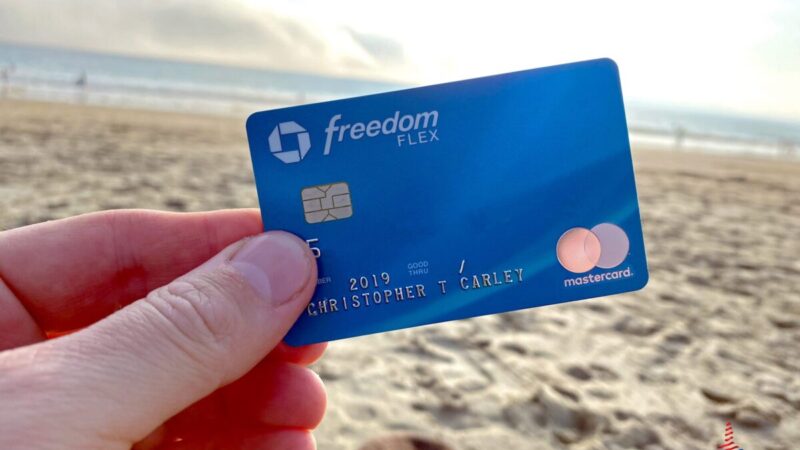
- The Chase Trifecta multiplies the card’s value significantly. Add a Chase Freedom Flex (5x rotating categories, $0 fee) and Chase Freedom Unlimited (1.5x on everything, $0 fee) and all three cards’ points pool into your Sapphire Preferred account, inheriting transfer partner access. Together, the trifecta covers every major spending category at 3x to 5x, all earning transferable Ultimate Rewards points.
- Get this card first due to Chase’s 5/24 rule. Chase typically declines applicants who have opened 5+ credit cards in the past 24 months from any issuer. The Sapphire Preferred is the anchor of the most valuable points ecosystem available. Apply before accumulating cards from Amex, Capital One, or others.
Key Numbers at a Glance
Transfer Partners: Where the Real Value Lies
The Sapphire Preferred’s 14 transfer partners are why serious travel rewards enthusiasts choose Chase. Points transfer 1:1 to all partners with no fees. The most valuable programs for most cardholders: World of Hyatt (best hotel program for value per point; 60,000 points books nights that retail for $300 to $400+ each), United Airlines MileagePlus (strong for domestic and international partner flights), Air Canada Aeroplan (often the best way to book Star Alliance flights), and British Airways Avios (excellent for short-haul flights). Other partners include Southwest Rapid Rewards, Singapore KrisFlyer, Air France/KLM Flying Blue, Marriott Bonvoy, IHG One Rewards, and several others. Unlike American Express Membership Rewards (which has more partners overall), Chase Ultimate Rewards has fewer partners but most people consider Hyatt and United alone worth more than most entire competing ecosystems.
Travel Protections Worth Knowing
The Sapphire Preferred’s travel protections are genuinely valuable, not fine-print noise. Primary rental car insurance covers collision and theft on rentals paid with the card, with no deductible on your personal auto policy. Trip cancellation and interruption insurance reimburses up to $10,000 per person ($20,000 per trip) for covered reasons (illness, severe weather, etc.). Trip delay reimbursement covers meals and lodging up to $500 per ticket when a trip is delayed 12+ hours or requires an overnight stay. Baggage delay insurance covers essential purchases when bags are delayed 6+ hours (up to $100/day, 5 days). Travel accident insurance provides up to $500,000 in accidental death or dismemberment coverage on common carriers. These protections require paying for the trip with the Sapphire Preferred; they do not apply to trips charged to other cards.
Sapphire Preferred vs Sapphire Reserve vs Capital One Venture X
Frequently Asked Questions
Is the Chase Sapphire Preferred worth the $95 annual fee?
Yes, for most people who spend $300+ per month on dining and travel. At 3x dining and 2x travel, a $300/month dining and $200/month travel household earns roughly 10,800 points/month (roughly $135 in portal value, or $162 to $270+ in transfer partner value). The $50 hotel credit drops the net fee to $45. The primary rental car insurance alone is worth $280/year for two typical car rental trips. Even before counting the sign-up bonus, the Sapphire Preferred pays for itself multiple times over for moderate travel and dining spenders. For someone who spends less than $100/month on dining and rarely travels, the fee is harder to justify.
What is the Chase 5/24 rule and why does it matter?
Chase declines most applications from people who have opened 5 or more new credit card accounts (from any issuer) in the past 24 months. This is called the 5/24 rule and is not officially published by Chase but is consistently reported. It applies to most Chase credit cards including both Sapphire cards and Freedom cards. Business credit cards from most issuers do not count toward 5/24 (they do not appear on personal credit reports), but Chase business cards and most consumer cards from all issuers do. If you are planning a rewards card strategy, always apply for Chase cards first, before opening accounts at Amex, Capital One, or Citi.
Can I transfer Chase Ultimate Rewards points to other people?
Yes, with restrictions. You can transfer Ultimate Rewards points to household members who share an address and are listed on your Chase account. You can also pool points between your own Chase cards (all points transfer to your Sapphire account). You cannot transfer points to random individuals. When transferring to airline or hotel programs, the loyalty account must belong to you or your household member. Some transfer programs (United, Hyatt) allow you to transfer the resulting miles or points to others, often for a fee per transfer.
What is the difference between the Sapphire Preferred and Sapphire Reserve?
The Reserve costs $550/year (net approximately $250 after a $300 travel credit) versus the Preferred at $95 (net $45). The Reserve adds: airport lounge access (Priority Pass Select + Capital One Lounges), 3x on all travel instead of 2x, 10x on hotels/car rentals through the portal, and 1.5 cents per point portal value instead of 1.25 cents. The Reserve makes financial sense for frequent travelers who visit airport lounges regularly (a day pass costs $50; the Reserve’s Priority Pass makes break-even straightforward) and spend heavily on travel categories. For most travelers: the Preferred at $45 net delivers 85% of the value at about 18% of the net cost.
Should I get the Sapphire Preferred or a no-annual-fee card instead?
The Sapphire Preferred makes sense if you spend at least $3,500/year on dining and travel combined (roughly $300/month). At that level, the 3x and 2x earn rates generate $131+ in portal value annually, which exceeds the $45 net fee. Below that threshold, the Chase Freedom Unlimited (1.5x on everything, $0 fee) is the better daily card. The ideal strategy: start with a no-fee Freedom card, then upgrade to the Sapphire Preferred once your travel and dining spending justifies the fee. Points earned on Freedom cards can be transferred to a Sapphire account and then to transfer partners, making the combination more powerful than either card alone.
Our Verdict: 4.5 / 5
The Best Starter Travel Card Available
The Chase Sapphire Preferred earns its reputation. At $45 net per year, it provides access to the most valuable transferable points ecosystem available (Hyatt, United, Aeroplan), genuinely useful travel protections including primary rental car coverage, and a 60,000-point sign-up bonus that can easily be worth $1,000+ in hotel nights. No competing card at this price unlocks that combination.
The right card for: dining and travel spenders who want to build a serious points strategy and are opening their first Chase card. Apply before hitting 5/24.
Finance Pulse covers personal finance topics to help you make smarter money decisions. This article is for informational purposes only and is not financial advice. Credit card terms change frequently; verify current rates and offers on the issuer’s website before applying. We may earn a commission if you apply through our links.