By
By 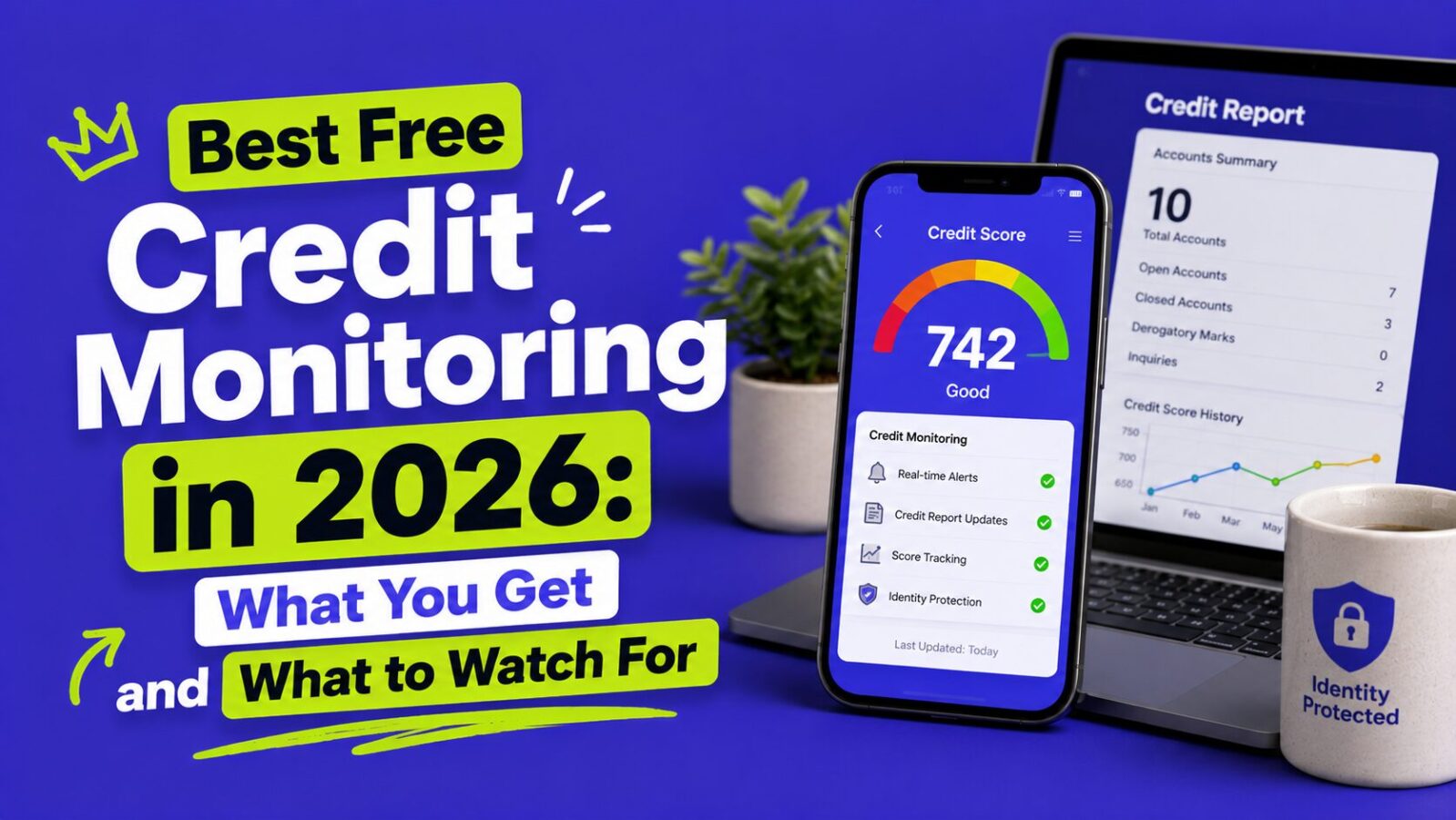
The best free credit monitoring in 2026 is Credit Karma for overall coverage (TransUnion and Equifax, updated weekly), paired with a free Experian account for FICO score visibility, plus weekly reports from annualcreditreport.com. Most people do not need to pay for monitoring at all: free alerts plus a free credit freeze give you nearly the same identity-theft protection as a $10 to $30 a month paid service. Here is what each free option covers, what it misses, and where the real protection comes from.
Key Takeaways
- Credit Karma is the best free all-around option, monitoring two bureaus with weekly VantageScore updates.
- You may already have monitoring through your bank or credit card (Chase, Discover, Capital One, and others).
- Free monitoring catches credit fraud, not bank-account takeover or tax-ID theft.
- A free credit freeze does more than any monitoring, because it prevents new-account fraud instead of just alerting you after.
What Are the Best Free Credit Monitoring Options?
Credit Karma: Best Free Overall
Free monitoring of your TransUnion and Equifax reports, with alerts for new accounts, inquiries, and derogatory marks, plus a VantageScore 3.0 updated weekly and dark-web monitoring for your email. The catch: Credit Karma makes money by recommending financial products based on your credit profile, so your data fuels targeted offers. If that bothers you, the options below are less data-heavy.
Experian Free Account: Best for FICO Score
Free monitoring of your Experian report with a FICO Score 8 updated monthly, plus alerts for new accounts and inquiries. The free tier only covers Experian, not TransUnion or Equifax, so it pairs well with Credit Karma if you want a FICO score alongside VantageScore monitoring.
Your Bank or Credit Card: Often Overlooked
Many banks and card issuers include free monitoring as a cardholder perk: Chase Credit Journey (TransUnion VantageScore), Discover Credit Scorecard (Experian FICO, available even without a Discover card), Capital One CreditWise (TransUnion VantageScore), and Bank of America (FICO Score). Check what you already have before signing up for anything new.
annualcreditreport.com: The Official Source
Free reports from all three bureaus, available weekly. No score, no alerts, just your full report for manual review. It is best used alongside one of the automated services above. See our guide on getting your free credit report.
What Does Free Credit Monitoring Catch?
- New hard inquiries that could signal a fraudulent application.
- New accounts opened in your name.
- Status changes on existing accounts (charge-offs, collections).
- Address and personal-information changes.
- Public records like bankruptcies and judgments.
What Does Free Monitoring Miss?
- Bank-account takeover. Monitoring covers credit, not your checking or debit account, so fraudulent access to your bank is not detected.
- Non-credit identity theft. Tax fraud (someone filing taxes with your SSN) is not credit-related and will not show up.
- All three bureaus at once. Most free services watch one or two bureaus, so fraud that hits only the unmonitored bureau can slip through.
- Full dark-web scanning. Free tiers often include only a limited version of what paid services offer.
Is Paid Credit Monitoring Worth It?
Paid services like LifeLock, Experian IdentityWorks, and Equifax Complete Premier run about $10 to $30 a month for all-three-bureau monitoring, identity-theft insurance, and restoration help. For most people, free monitoring from Credit Karma plus a credit freeze delivers comparable protection at no cost.
Paid monitoring is worth considering if you have already been a victim of identity theft and want maximum vigilance, if you are helping an older relative who may not notice unauthorized activity, or if you specifically want the identity-theft insurance that paid plans bundle in.
The Most Important Move: A Credit Freeze
Monitoring tells you after fraud has happened. A credit freeze prevents it by blocking new accounts from being opened in your name, and it is free to place and lift at all three bureaus. The combination of a free freeze (stops new-account fraud) plus free monitoring (catches activity on existing accounts) gives you comprehensive protection at zero cost. See our guide on credit freeze vs fraud alert.
FAQ
What is the best free credit monitoring service?
Credit Karma is the best free all-around option, monitoring TransUnion and Equifax with weekly score updates. Pair it with a free Experian account for FICO visibility and annualcreditreport.com for full reports.
Is free credit monitoring as good as paid?
For most people, yes. Free monitoring plus a free credit freeze provides protection similar to a $10 to $30 a month plan. Paid services mainly add all-three-bureau coverage and identity-theft insurance.
Does credit monitoring hurt my credit score?
No. Checking your own credit through a monitoring service is a soft inquiry and never affects your score, no matter how often you look.
What is better, monitoring or a credit freeze?
A freeze does more, because it prevents new-account fraud rather than just alerting you after it happens. The strongest setup is a freeze plus free monitoring, since each covers what the other misses.
Bottom Line
Free credit monitoring from Credit Karma, a free Experian account, and your existing bank perks cover most people, and a free credit freeze does more to stop fraud than any monitoring alert. Skip the paid plan unless you have already been a victim or want the bundled insurance. To go deeper, see our guides on credit freeze vs fraud alert, getting your free credit report, and how your credit score is calculated.
This article is for educational and informational purposes only and is not financial advice. Service features and pricing change, so confirm current details with each provider. Place and manage credit freezes for free at equifax.com, experian.com, and transunion.com.