By
By 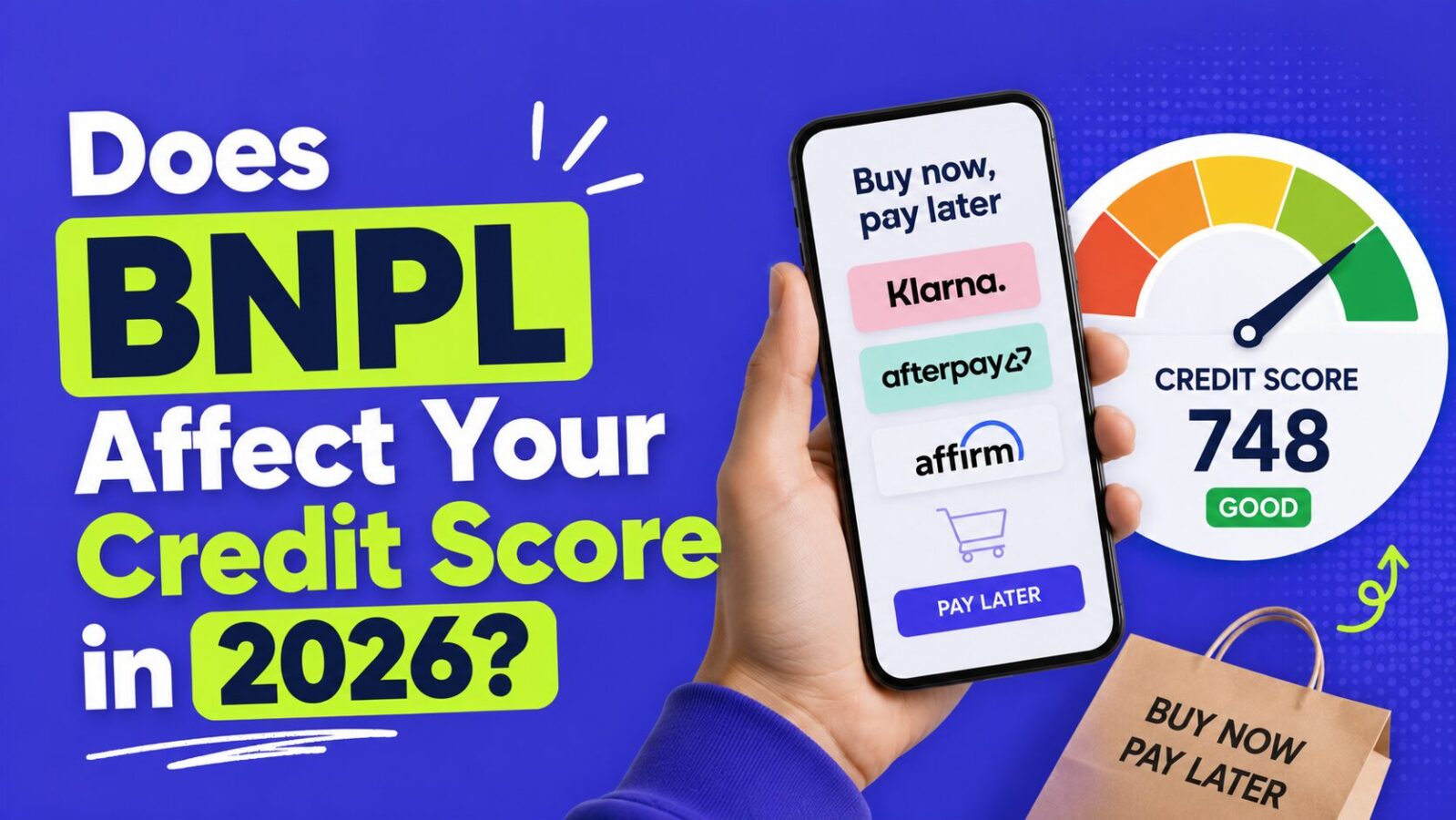
Yes, buy now, pay later can now affect your credit score. As of late 2025, FICO launched two new scoring models, FICO Score 10 BNPL and FICO Score 10 T BNPL, that factor in your BNPL loans for the first time. If you pay on time, the effect is usually small and slightly positive. If you pay late, it can knock points off, the same as any other missed payment.
KEY TAKEAWAYS
- FICO Score 10 BNPL and FICO Score 10 T BNPL are the first mainstream scores to include buy now, pay later data, rolled out starting fall 2025.
- In FICO’s research, about 85% of consumers saw a swing of 10 points or less once BNPL data was added, and most people saw no change or a slight increase.
- These BNPL-aware scores run alongside your existing FICO Score, at no extra cost. Lenders choose which version to pull, so you may not see it used everywhere yet.
- Older-style BNPL loans (four payments over six weeks, like a typical Klarna or Afterpay order) were historically left off credit reports entirely. That is changing lender by lender, not all at once.
- On-time BNPL payments can help thin credit files. Missed payments get sent to collections just like a credit card, and that can hurt your score plenty.
What Changed With BNPL and Credit Scores?
For years, most “pay in 4” loans from services like Klarna, Afterpay, and Affirm did not show up on your credit report at all, because the loans were short-term and the bureaus had no standard way to handle a large volume of tiny, fast-moving accounts. That meant BNPL use was invisible to lenders, for better or worse.
That started to change once FICO built a scoring model specifically designed for BNPL data. FICO’s research team studied how people actually use these loans and found a quirk: many people open several BNPL loans in a short window (think a holiday shopping spree), which could look like a red flag to an older scoring model even when every payment gets made on time. The new models group those loans together mathematically so a burst of BNPL activity does not automatically tank your score.
Will BNPL Help or Hurt Your Score?
It depends entirely on whether you pay on time. Paying a BNPL loan off as agreed is a small positive signal, the same logic as any other on-time installment loan. Miss a payment, and it behaves like a missed payment on a credit card or personal loan: it can be reported to the bureaus, sent to collections, and stay on your report for up to seven years.
FICO’s own testing found that for most people, adding BNPL data changes their score by 10 points or less in either direction. That is a modest shift, not a dramatic one, but it matters more if your file is thin (few other accounts) since BNPL data has more relative weight when there is less other history to draw on.
| BNPL behavior | Likely score effect |
|---|---|
| Pay every installment on time | Neutral to slightly positive |
| Open several BNPL loans at once, all paid on time | Minimal impact under the new models (grouped together) |
| Miss one payment, catch up quickly | Small negative, similar to a late credit card payment |
| Default or send to collections | Significant negative, can stay on report up to 7 years |
Does Every Lender See BNPL Data?
Not yet. Lenders have to choose to pull the new FICO Score 10 BNPL or FICO Score 10 T BNPL version, and adoption is rolling out gradually rather than overnight. Many mortgage and auto lenders still use older FICO versions that were not built with BNPL in mind. So your BNPL activity might already be quietly showing up on one version of your file and invisible on another, depending on which score a specific lender pulls.
This is also why checking free credit monitoring regularly is useful. It will not always show you the exact score a mortgage lender sees, but it flags new accounts, including BNPL loans your provider now reports, so nothing surprises you.
How Should You Use BNPL if You Want to Protect Your Score?
- Only use BNPL for purchases you could pay for outright. Treat “pay in 4” as a cash-flow tool, not free money. If a missed payment would matter to your budget, it can matter to your credit report too.
- Track due dates across providers. Splitting purchases across Klarna, Afterpay, and Affirm at the same time makes it easy to lose track of who gets paid when. A missed payment on any one of them can now show up on your credit report.
- Do not confuse BNPL with a credit card. A credit card builds a long, steady payment history that helps your score over time. BNPL loans close out after a few payments, so they add less to your length of credit history even when everything goes right.
- Watch out for BNPL debt stacking. If you are juggling multiple BNPL balances just to make ends meet, that is a sign to step back. Our guide to the BNPL debt trap covers the warning signs and how to get out.
Your credit score is built from five weighted factors, and BNPL data slots into that same framework rather than replacing it. Payment history still matters most, whether that payment is a mortgage, a credit card, or a four-installment BNPL order.
FAQ
Does Klarna or Afterpay report to credit bureaus?
It depends on the provider and the loan type. Reporting practices are expanding as FICO and VantageScore build BNPL-aware models, but not every “pay in 4” loan is reported yet. Longer-term BNPL loans (like Affirm’s multi-month financing) are more likely to already appear on your report as a standard installment loan.
Can BNPL hurt my credit score if I always pay on time?
Generally no. On-time payments are a positive signal under the new BNPL-aware scoring models, and FICO’s research found most consumers saw little to no negative change from responsible BNPL use.
What happens if I miss a BNPL payment?
Depending on the provider, you may face late fees, and if the account goes to collections, it can be reported to the credit bureaus and hurt your score, similar to a missed credit card payment.
Is FICO Score 10 BNPL the only score that includes BNPL data?
FICO’s BNPL-specific models are the first from a major scoring provider, and VantageScore has also been researching how to treat BNPL data. Expect more scoring models to add it over time.
Bottom Line
BNPL loans can now show up on your credit score, but paying on time keeps the effect small, while missed payments carry the same risk as any other late payment. Use BNPL sparingly, track every due date, and let your credit card, not your BNPL app, do the heavy lifting for building long-term credit history.
A quick note: this guide is here to help you understand how BNPL and credit scoring interact, not to act as personal financial advice. Scoring models and lender adoption are changing quickly, so it is worth checking your own credit report at annualcreditreport.com before assuming how any single BNPL loan is being treated.