By
By 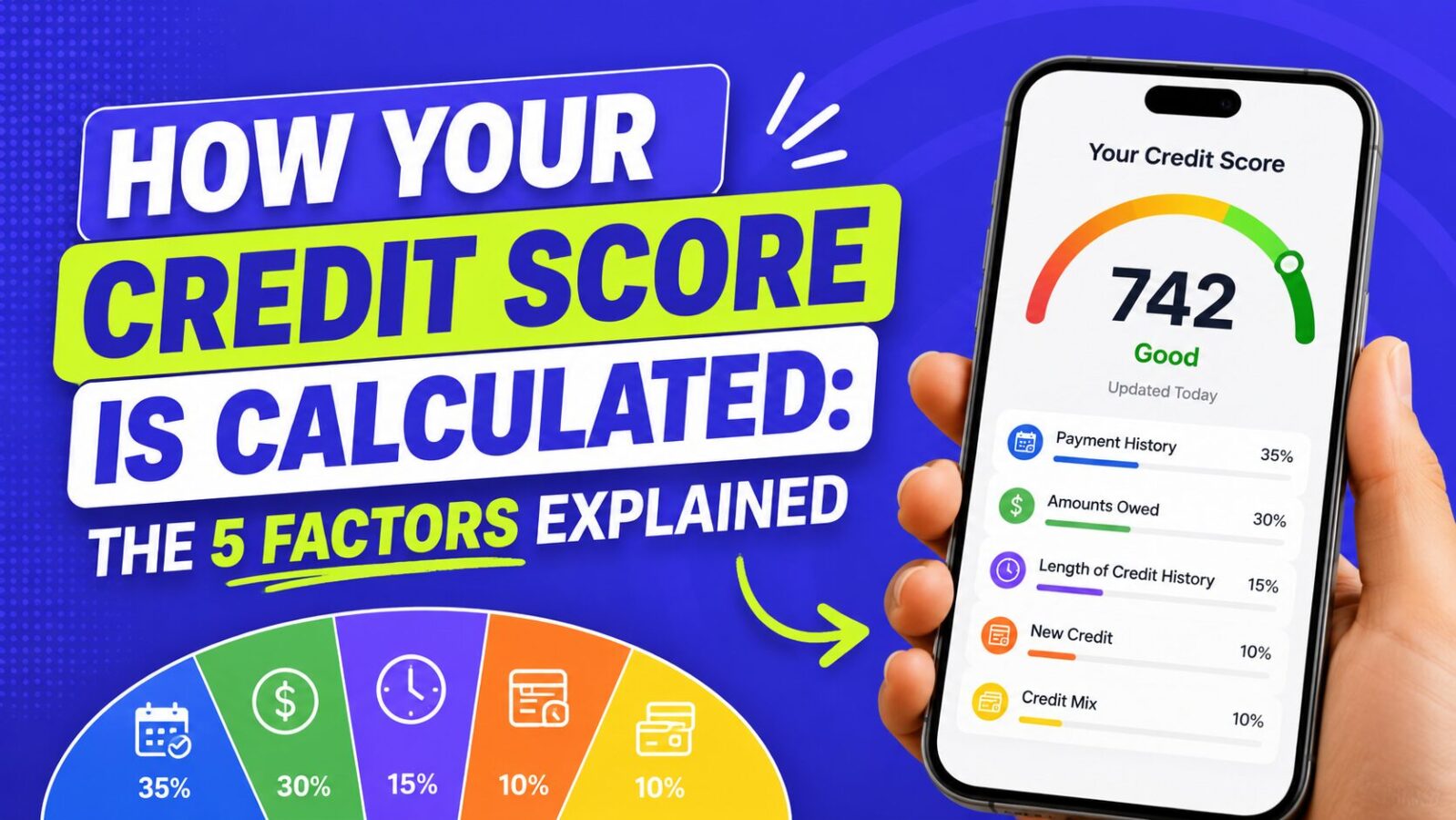
Your FICO credit score is calculated from five factors in your credit report: payment history (35%), amounts owed or utilization (30%), length of credit history (15%), credit mix (10%), and new credit (10%). Knowing these weights tells you exactly where to focus to move your score fastest. Here is how each factor works and what actually matters within it. Keep in mind the point impact of any change varies by your individual profile.
Key Takeaways
- Payment history (35%) and utilization (30%) drive most of your score, so focus there first.
- A payment is only reported late at 30 days past due, so pay before then to avoid credit damage.
- Keep utilization low, ideally under 30% overall and per card, since it is snapshot-based.
- Do not close old cards or take on debt just for credit mix; let those factors develop over time.
Factor 1: Payment History (35%)
This is the most important factor, and it answers one question: do you pay your bills on time? Every on-time payment helps and every late payment hurts. A few details matter. A payment is only reported late once it is 30 days past due, so paying a few weeks late costs a late fee but is not reported to the bureaus. Severity counts, so a 90-day late hurts much more than a 30-day late. And recency counts, so a recent late payment hurts more than an old one. A single late payment on an otherwise clean file can cause a large drop, often cited in the range of 60 to 110 points for a high score, though the exact amount depends on your profile. The single best move is to set up autopay for at least the minimum on every account so you never miss one by accident.
Factor 2: Amounts Owed / Utilization (30%)
This measures how much of your available credit you are using, calculated as your total balances divided by your total credit limits on revolving accounts. Lower is better:
- Under 10%: excellent.
- 10% to 29%: good, with minor impact.
- 30% to 49%: your score starts to suffer.
- 50% and up: significant to severe negative impact.
Two things to know: utilization is measured both overall and per card, so a single maxed-out card can hurt even if your overall use is low, and it is a snapshot of your balance on the statement closing date, not an average. Paying down balances before the statement closes reports a lower number, even if you pay in full each month.
Factor 3: Length of Credit History (15%)
This looks at the age of your oldest account, your newest account, and the average age of all accounts, where older is better. This is why you should not close old credit cards you no longer use: an old, no-fee card with no balance quietly helps by keeping your average age high, and closing it can lower your score. If you are new to credit, this factor works against you and the only fix is time, though its drag fades as you build other positive factors.
Factor 4: Credit Mix (10%)
Your score is slightly better if you manage different types of credit, such as revolving accounts (credit cards) and installment loans (a mortgage, car, or student loan). But this is only 10%, so do not take on debt just to diversify. If you have only credit cards, do not get a car loan to improve your mix, since the small benefit does not justify the cost. Let it develop naturally.
Factor 5: New Credit (10%)
Each new application triggers a hard inquiry that usually lowers your score by a small amount, often just a few points, and many inquiries in a short time signal risk. There is an important exception: rate-shopping for a mortgage, car loan, or student loan within a focused window (often 14 to 45 days, depending on the model) counts as a single inquiry, so you can compare lenders without stacking penalties. A hard inquiry’s effect fades within about 6 to 12 months and it falls off your report after two years.
How Do You Move Each Factor?
| Factor | Best action | Time to see impact |
|---|---|---|
| Payment history (35%) | Set autopay, never miss a payment | Immediate prevention; longer to rebuild after a late |
| Utilization (30%) | Pay down balances before statement close | 1 to 2 billing cycles |
| Account age (15%) | Keep old accounts open | Years, no shortcut |
| Credit mix (10%) | Let it develop naturally | Years |
| New credit (10%) | Limit and space out applications | 6 to 12 months per inquiry |
The fastest improvements usually come from paying down credit card balances and catching up on any missed payments, which can show results within a billing cycle or two.
FAQ
What is the most important factor in my credit score?
Payment history, at 35%, followed by credit utilization at 30%. Together they drive most of your score, so on-time payments and low balances matter most.
What credit utilization should I aim for?
Under 30% overall and on each card, and under 10% is even better. It is measured on your statement closing date, so pay down before then.
Does checking my own credit lower my score?
No. Checking your own credit is a soft inquiry and has no effect. Only hard inquiries from applications do, and only by a small amount.
Should I close a credit card I do not use?
Usually not, especially a no-fee card, since it helps your average account age and available credit. Closing it can lower your score.
Bottom Line
Your credit score comes down to five factors, but payment history (35%) and utilization (30%) drive most of it, so paying on time and keeping balances low matter most. Keep old accounts open, let credit mix develop naturally, and limit new applications. To go deeper, see our guides on why credit scores drop, closing a credit card, and getting your free credit report.
This article is for educational and informational purposes only and is not financial advice. Credit scoring is individual, and the effect of any action varies by your unique profile. Review your reports at annualcreditreport.com.