 By
By 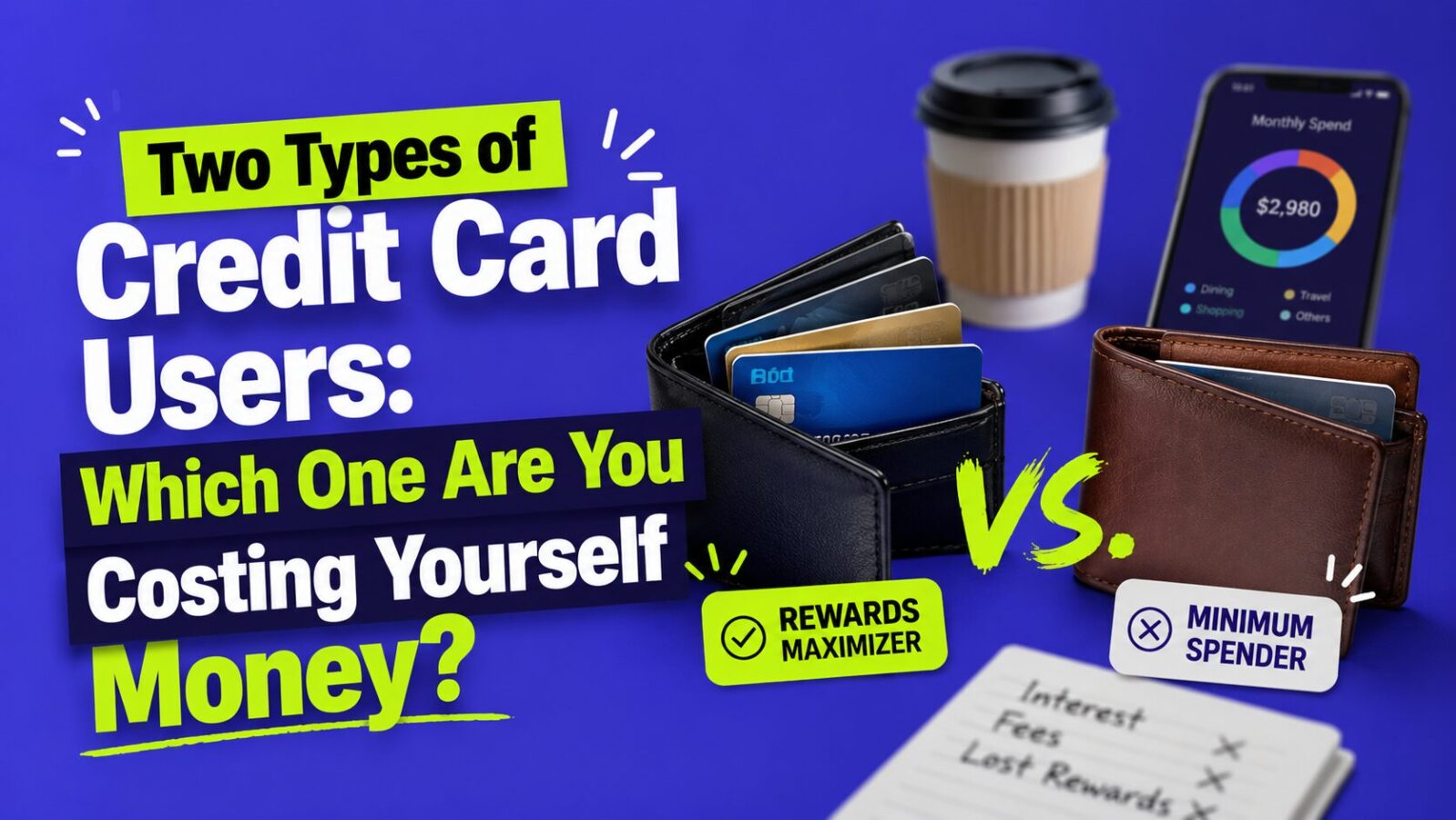
Whether you carry a credit card balance or pay it in full can change how much an interest-rate increase affects you.
A March 2026 analysis from the Federal Reserve Bank of Boston examined account-level data covering nearly 80% of active U.S. credit card accounts from 2016 through 2025. It found that when an account’s APR increased by 1 percentage point, spending on that credit card fell about 15% among accounts carrying balances. Spending among accounts paid in full did not change significantly.
Those two groups are commonly called revolvers and transactors.
The finding does not mean a rate increase cuts a revolver’s total household spending by 15%. The researchers measured spending on the affected credit card, and they could not observe whether consumers shifted purchases to debit cards, cash, or other credit.
Still, the contrast is useful: carrying a balance makes credit card interest rates directly relevant to your monthly cash flow.
Key takeaways
- Revolvers carry balances from month to month and pay interest.
- Transactors generally pay their balances in full and avoid purchase interest when their card’s grace-period conditions are met.
- A 1 percentage point APR increase reduced credit card spending by about 15% the following month among revolving accounts in the Boston Fed study.
- Credit card spending by transactor accounts did not decline significantly after the same APR increase.
- The study measures spending on the credit card, not necessarily total household consumption.
- If you carry a balance, paying down principal usually matters more than trying to predict the next Federal Reserve rate move.
What is a revolver vs. a transactor?
A revolver carries some credit card debt from one billing cycle into the next.
Because the balance is not paid in full, interest can accrue according to the card agreement and applicable APR.
A transactor generally pays the balance in full each billing cycle.
The Boston Fed describes transactors as customers who use cards for purposes such as convenience, rewards, or record keeping but do not pay interest, while revolvers carry debt and pay interest on it.
These are better understood as patterns of account use, not permanent personality types.
You could pay your card in full for years and then carry a balance after an emergency. Someone currently carrying debt can eventually pay it off and return to paying in full.
What did the Boston Fed study actually find?
Economists Falk Bräuning and Joanna Stavins studied how changes in credit card interest rates affect card spending.
Their data contain monthly information on spending, balances, interest rates, credit scores, and contract terms for nearly 80% of active U.S. credit card accounts over the 2016 to 2025 period.
Across accounts overall, a 1 percentage point increase in APR reduced spending on the card by 8.7% in the following month, equivalent to about $74 for the average account in their sample.
But that average hides a large difference.
Revolving accounts reacted much more
Among accounts carrying balances, a 1 percentage point APR increase was associated with about a 15% reduction in credit card spending the next month.
For clarity, a 1 percentage point increase means something like:
20% APR → 21% APR
It does not mean the APR increased by only 1% of its previous value.
Transactor spending barely reacted
For transactor accounts, the researchers did not find a statistically significant decline in credit card spending after the interest-rate increase.
That result makes economic sense.
If you are not paying interest on purchases, an increase in the purchase APR does not immediately make those purchases more expensive.
But there are important exceptions, which we will get to below.
The 15% result does not mean total spending fell 15%
This is one of the most important limitations of the study.
The researchers observe what happens on the credit card account.
They do not observe every other way the consumer could pay.
Someone might react to a higher card APR by:
- Spending less overall
- Using a debit card instead
- Paying with cash
- Moving purchases to another credit card
- Using another form of borrowing
The authors explicitly caution that because they cannot measure this substitution, the effect on total consumer spending could be smaller than the measured effect on credit card spending.
So the study supports:
“Revolvers reduced spending on the affected credit card by about 15%.”
It does not justify:
“A rate hike makes revolvers cut their entire household budget by 15%.”
There is another important limitation
The Boston Fed’s identification strategy relies on credit card accounts around their contractual maximum APR, which is commonly around 29.99%.
The authors note that these accounts tend to have higher rates and lower credit scores, so the estimated effect is what economists call a local effect.
In other words, you should not assume every cardholder with every APR will react by exactly the same percentage.
The study’s aggregate analysis did produce results consistent with the account-level findings, which gives the authors more confidence in the broader pattern. But the 15% figure should still be understood in the context of the sample and methodology.
Why do higher rates affect revolvers more?
For someone carrying a balance, credit is already costing money.
When the APR rises, that cost increases.
Most credit cards have variable rates tied indirectly to the federal funds rate through the prime rate. When the Federal Reserve changes its policy rate, the prime rate generally follows, and variable credit card APRs can adjust relatively quickly.
A revolver therefore faces a direct trade-off:
Spend more using expensive credit, or reduce spending and borrowing.
A transactor usually does not face the same immediate borrowing cost on ordinary purchases because there is no revolving balance accruing purchase interest.
That difference helps explain why the study finds such different responses.
Does APR matter if you always pay in full?
Much less for ordinary purchases, but it is not literally irrelevant.
Most credit cards offer a grace period on purchases. If your card has one and you remain eligible for it, paying the required balance in full by the due date can allow you to avoid purchase interest.
That means someone consistently paying in full may reasonably care more about:
- Annual fee
- Rewards
- Consumer protections
- Foreign transaction fees
- Other card features
than whether the purchase APR is 20% or 25%.
But there are exceptions.
Not every transaction receives a grace period
Grace periods usually apply to purchases, not necessarily cash advances or balance transfers. Those transactions may begin accruing interest immediately depending on the card agreement.
You can lose the grace period
If you stop paying in full, you may lose your grace period and begin accruing interest on new purchases.
Depending on the agreement, regaining it can require paying in full again for the required billing period or periods.
So I would not say:
“APR does not matter to transactors.”
A better version is:
“Purchase APR has little direct cost while you consistently qualify for a grace period and pay the required purchase balance in full by the due date.”
What does carrying a balance actually cost?
The cost depends on your APR, daily balance, payment amount, and whether you continue making new purchases.
Many issuers calculate interest daily using an average daily balance.
For a rough illustration, a $5,000 balance at a 22% annual rate represents about:
$5,000 × 22% ÷ 12 ≈ $92
of interest for one month if the balance remained around $5,000.
Actual interest may differ because credit card interest is commonly calculated daily and the balance changes as purchases and payments post.
The bigger problem is what happens when you make only minimum payments.
CFPB rules require credit card statements to show an estimate of how long the current balance could take to repay if you make no additional purchases and pay only the minimum. The CFPB warns that minimum-only repayment can take years and lead to substantially more interest.
Rather than relying on a generic example with an assumed minimum-payment formula, use the repayment disclosure printed on your actual statement.
Credit Card Payoff Calculator
What did the study find about credit scores?
The researchers also divided accounts according to whether their credit score was above or below the sample median.
For lower-credit-score accounts, a 1 percentage point APR increase reduced card spending by about 18%.
For higher-credit-score accounts, spending did not change significantly, but outstanding balances fell about 7%.
The authors interpret this difference as consistent with financial constraints.
Lower-credit-score borrowers may have less savings and less access to alternative credit, leaving them with fewer options when borrowing becomes more expensive. Higher-credit-score borrowers may have more financial resources available to pay down expensive balances while maintaining spending.
That is an interpretation supported by the study.
It would be going too far to say:
“A high credit score proves you know how to use credit cards correctly.”
Credit scores and transactor behavior are related to many financial characteristics. This study does not establish that one particular card habit causes a high score or explains the entire difference between the groups.
Why do credit cards matter for the broader economy?
Credit cards are not a niche payment method.
The Boston Fed reports that U.S. consumers made about $5.83 trillion in credit card purchases in 2022, representing roughly 20% of consumer spending.
That scale makes credit cards one channel through which monetary policy can affect households.
The researchers’ aggregate analysis found that the largest effect on credit card spending occurred roughly two months after a Federal Reserve rate change, consistent with the time needed for rates to adjust and consumers to respond.
For an individual household, however, the more useful lesson is simpler:
The more you depend on revolving credit, the more exposed you are to changes in borrowing costs.
How do you move from revolving debt to paying in full?
There is no one-click fix if you already owe more than you can pay today.
The right approach depends on which situation you are in.
If you already can afford the full statement balance
Set autopay to the full statement balance if you are comfortable keeping enough cash in checking to cover it.
That removes the risk of accidentally paying only the minimum because you forgot the due date.
Still monitor the account. Autopay does not protect you from overspending or an unexpectedly large bill.
If you cannot pay the current balance in full
Do not blindly turn on full-balance autopay if doing so could overdraft your checking account.
Make at least the required payment on time, then build a payoff plan based on:
- Current balance
- APR
- Minimum payment
- Amount you can realistically add each month
Paying more than the minimum generally reduces both the repayment period and total interest cost.
Our guide on paying off credit card debt fast walks through different repayment approaches.
Avoid adding debt while paying it down when possible
If you continue adding purchases faster than you repay the existing balance, becoming a transactor gets much harder.
That does not mean every person carrying credit card debt can simply stop using the card. Cash-flow constraints are real.
But the direction is clear:
You need the balance to fall faster than new debt is being added.
Should you use a 0% balance transfer?
A 0% balance transfer can help some borrowers, but it is not automatically the best next move.
The CFPB notes that a promotional balance-transfer rate usually lasts for a limited period and may still charge a balance-transfer fee, even when the promotional interest rate is 0%.
There is another trap.
If you carry a promotional transferred balance, new purchases on that same card may begin accruing interest unless the terms also give those purchases a promotional rate or you satisfy the conditions required to maintain a grace period.
Before transferring a balance, compare:
transfer fee + promotional period + post-promotion APR + monthly payment required to finish before the offer expires
A 0% offer is useful only if the repayment plan works.
Does becoming a transactor mean you should keep using credit cards?
Not necessarily.
Paying in full prevents purchase interest under the appropriate grace-period conditions, but that does not make a credit card the best payment method for everyone.
If using credit makes it easier for you to overspend, switching some purchases to debit or cash may be more useful than maximizing card rewards.
The financial advantage comes from not paying unnecessary interest, not from carrying a particular piece of plastic.
For someone who can use a credit card without spending more and can consistently pay in full, rewards and other benefits may add value.
For someone repeatedly carrying expensive debt, the rewards are secondary.
Frequently asked questions
What is a revolver on a credit card?
A revolver carries a credit card balance from one billing cycle into the next and generally pays interest on that debt.
The Boston Fed found that revolving accounts were much more sensitive to changes in credit card APRs than accounts paid in full.
What is a transactor?
A transactor generally pays the card balance in full each billing cycle rather than carrying interest-bearing debt.
In the Boston Fed study, spending on transactor accounts did not decline significantly when the account APR increased.
Did a 1% rate increase really reduce spending by 15%?
More precisely, a 1 percentage point increase in the credit card APR reduced spending on revolving credit card accounts by about 15% in the following month in the study.
The researchers did not establish that total household spending fell 15%.
Does credit card APR matter if I pay in full?
It matters much less for ordinary purchases if your card has a grace period, you remain eligible for it, and you pay the required balance in full by the due date.
Cash advances, balance transfers, lost grace periods, and other transactions can follow different rules.
Do I need to pay my current balance or statement balance to avoid interest?
Check your specific card agreement.
For cards offering the typical purchase grace period, paying the balance required by the card’s grace-period terms in full by the due date allows qualifying purchases to avoid interest. The CFPB commonly describes this as paying the outstanding or statement balance in full by the due date.
Should I use a balance transfer to pay off credit card debt?
It can make sense if the interest savings exceed the transfer fee and you can repay the debt during the promotional period.
But 0% balance transfers may still charge fees, and using the same card for new purchases can have unexpected interest consequences.
The bottom line
The Boston Fed’s 2026 research shows a meaningful divide between credit card accounts that carry debt and accounts that are paid in full.
When an account’s APR rose by 1 percentage point, spending on revolving accounts fell about 15% the following month. Transactor spending showed no statistically significant response.
That does not mean Federal Reserve policy has no effect on people who pay their cards in full. Interest rates can affect savings, mortgages, auto loans, employment, asset prices, and the broader economy through many other channels.
And the study does not show that paying a card in full automatically makes someone financially secure.
Its narrower lesson is still valuable:
If you carry credit card debt, changes in borrowing costs reach your budget much more directly.
If you already pay your statement balance in full and preserve your purchase grace period, keep doing it.
If you carry a balance, do not treat “becoming a transactor” as a one-month challenge. Focus first on stopping the balance from growing, making every required payment on time, and directing affordable extra cash toward principal.
The goal is not to make the Federal Reserve irrelevant to your financial life.
It is to reduce how much expensive revolving debt gets to decide what you can afford.