By
By 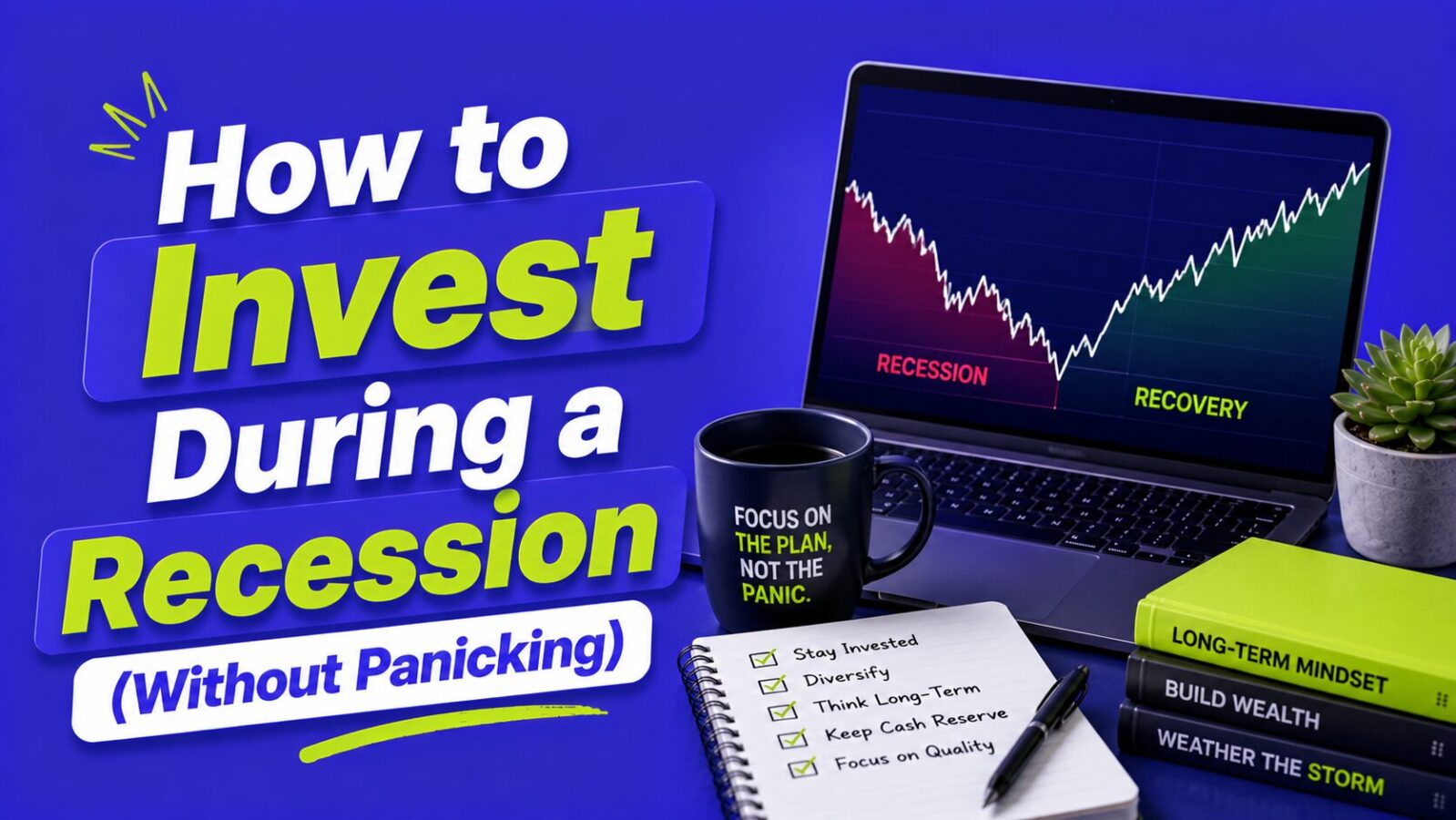
Recessions are scary but historically the best time to invest. Here is what to do (and what not to do) with your money when the market drops 20, 30, or even 40%.
The stock market is down 25%. Headlines scream recession. Your 401(k) balance dropped by $30,000 in two months. Your coworker cashed out and went to bonds. Your parents are telling you the market will never recover.
Every fiber of your being wants to sell everything and hide in cash.
Do not.
History is unambiguous: investors who stay invested (or increase their investments) during recessions build significantly more wealth than those who sell. The S&P 500 has recovered from every single bear market in its history. The 2008 financial crisis? Recovered by 2013. The 2020 COVID crash? Recovered in 5 months. The dot-com bust? Recovered by 2007.
Recessions are when wealth transfers from the panicked to the patient. Here is how to be on the right side of that transfer.
- The S&P 500 has recovered from every recession in history and gone on to new highs. Staying invested is almost always the right call.
- Missing just the 10 best trading days over 20 years cuts your returns by more than half. Those days happen during and right after crashes.
- Keep contributing on schedule. Dollar-cost averaging during a downturn buys more shares at lower prices, amplifying returns on the recovery.
- Before worrying about investments, make sure your emergency fund covers 3 to 6 months of expenses. Forced selling at the bottom is the worst outcome.
- Do not change your asset allocation based on headlines. Your time horizon and risk tolerance do not change because the market dropped.
What Happens to Investments During a Recession
A recession is defined by the National Bureau of Economic Research (NBER) as a significant decline in economic activity spread across the economy lasting more than a few months. The stock market often declines before and during recessions — but it always recovers.
Since 1950, the US has experienced roughly 11 recessions. The average stock market decline during these periods was roughly 30%. The average recovery time was 2 to 4 years. Every single time, the market not only recovered but exceeded its pre-recession high.
According to data from NYU Stern, the average annual return of the S&P 500 is roughly 10% including dividends. Recessions are baked into that average. The 10% includes the crashes.
Here is the full picture of every major recession since 1969:
US Recession History: Drop and Recovery
Every US recession since 1969 — market drop and recovery time.
Market drop figures are approximate peak-to-trough during each recession period. Recovery = return to prior market peak. Sources: NBER, S&P Dow Jones Indices, NYU Stern.
Every recession in the table above ended. Every single one. The market recovered and went on to new highs. The investors who stayed invested captured the full recovery. The ones who sold locked in their losses and had to decide when to get back in — a decision most got wrong.
The Biggest Mistake: Selling During a Downturn
According to J.P. Morgan Asset Management research, missing just the 10 best trading days over a 20-year period reduces your returns by more than half. And the best days almost always occur right after the worst days — during the recovery bounce that follows the panic selling.
The problem: you cannot sell to avoid the worst days and buy back in for the best days. They happen almost simultaneously. Enter your investment amount to see exactly what this costs:
Cost of Missing the Market’s Best Days
Based on S&P 500 data (2003 to 2023). What does trying to time the market actually cost you?
This is why the phrase “time in the market beats timing the market” is not just a cliche. It is mathematically verifiable. You cannot sell to avoid the crashes and buy back in for the recoveries. The decisions happen too close together, and the emotional state that drives selling (panic) is the same state that delays buying back in.
What to Do During a Recession
Keep Investing on Schedule
If you have automatic contributions to your 401(k), Roth IRA, or taxable brokerage account, do not stop them. Do not reduce them. If anything, increase them.
Dollar-cost averaging works especially well in downturns. When prices are low, your fixed contribution buys more shares. When prices recover, those extra shares are worth significantly more. A person who invested $500 per month in the S&P 500 from January 2007 through December 2012 — the entire Great Recession period — had a meaningful gain despite the market losing 50%+ at the bottom. The shares bought at the low amplified the recovery.
Protect Your Emergency Fund
Before worrying about investments, make sure your emergency fund is solid. Recessions bring layoffs. Having 3 to 6 months of expenses in a high-yield savings account means you will never have to sell investments at a loss to cover bills.
If your emergency fund is not fully funded, prioritize that before increasing investment contributions. The worst financial outcome during a recession is forced selling at the bottom because you have no cash cushion.
Rebalance Your Portfolio
A 30% market drop changes your asset allocation. If your 3-fund portfolio was 80% stocks and 20% bonds, it might now be 70/30 because stocks fell and bonds held steady. Rebalancing means selling some bonds and buying stocks to restore your 80/20 target. This systematically forces you to buy stocks when they are cheap — the disciplined approach that maximizes long-term returns.
In retirement accounts (401k, IRA), rebalancing has no tax consequences. In taxable accounts, direct new contributions to the underweight asset class instead of selling.
Look for Tax-Loss Harvesting Opportunities
If you invest in a taxable brokerage account, a recession creates tax-loss harvesting opportunities. Sell investments that are at a loss and immediately buy a similar (but not identical) investment to maintain your market exposure. The realized loss offsets capital gains and up to $3,000 in ordinary income per year.
Example: sell VTI (Vanguard Total Stock Market) at a loss and buy ITOT (iShares Total Stock Market). You maintain the same market exposure while locking in a tax benefit. The IRS wash sale rule prohibits buying the substantially identical security within 30 days, so use a different fund tracking a similar index. Robo-advisors like Betterment and Wealthfront do this automatically.
Consider Roth Conversions
A recession is one of the best times to do Roth conversions. When your Traditional IRA balance is down 30%, you can convert shares to a Roth IRA at a lower dollar amount, paying less tax on the conversion. When the market recovers, the growth happens inside the Roth IRA, tax-free.
Example: your Traditional IRA holds $100,000 in index funds. The market drops 30%, bringing the value to $70,000. You convert the full amount and pay tax on $70,000 instead of $100,000 — saving roughly $6,600 in tax at a 22% marginal rate. When the market recovers and the Roth grows back to $100,000+, that growth is tax-free forever.
Avoid These Temptations
Do not move to all cash. You have to time two decisions correctly: when to sell and when to buy back. Most people get one or both wrong, as the missed-days calculator above shows.
Do not move to all bonds. A portfolio too conservative in your 20s and 30s costs you decades of growth. Your asset allocation should be based on your time horizon and risk tolerance, not on market headlines.
Do not stop your employer match. Your employer’s 401(k) match is an immediate 50 to 100% return on your contribution. Even if the market is down 40%, that instant return dwarfs any short-term loss.
Do not check your portfolio daily. Set a schedule: monthly or quarterly. Daily checking during a recession is financial self-harm. Every look triggers an emotional response that can lead to poor decisions.
Do not listen to market predictions. According to SPIVA scorecards, over 90% of actively managed funds underperform their benchmark index over 15 years. If professional fund managers cannot time the market consistently, no one can.
What If You Have Cash to Invest During a Recession?
If you have a lump sum available (inheritance, bonus, savings beyond your emergency fund), a recession is a historically great time to invest it. But the temptation is to wait for “the bottom.”
The problem: nobody knows when the bottom is until after it has passed. Research from Vanguard shows that lump-sum investing beats dollar-cost averaging roughly two-thirds of the time, because markets go up more often than they go down. Even investing a lump sum right before a crash, over a 10+ year horizon, historically produces positive returns.
If the psychology of investing a lump sum during a downturn is too stressful, split it into equal portions and invest monthly over 3 to 6 months. This is not optimal mathematically but it is optimal emotionally — and an imperfect plan you stick with beats a perfect plan you abandon.
Recession-Proof Your Finances Before the Downturn
The best time to prepare for a recession is before it starts:
Build a 6-month emergency fund. Cash in a high-yield savings account is your recession insurance. It prevents forced selling at the worst moment.
Pay down high-interest debt. Credit card debt at 24% APR is financially devastating during a recession when income might be reduced or interrupted. Eliminate it during good times.
Diversify your income. A side skill, freelance capability, or in-demand certification reduces single-income dependency. Building this cushion during bull markets makes recessions far less frightening.
Maintain your asset allocation. A 3-fund portfolio or target-date fund with an age-appropriate bond allocation provides built-in downside protection. You do not need to do anything special — the allocation you set in good times does the work in bad times.
Avoid lifestyle inflation. A lower baseline spending level means a recession requires less income to maintain your lifestyle and a smaller emergency fund to cover any gap.
Frequently Asked Questions
Should I sell my stocks before a recession?
No. Nobody can consistently predict when recessions start or end — not professional investors, not economists, not anyone. Selling locks in your losses and creates the impossible timing problem of deciding when to buy back in. The missed-days calculator above shows exactly what trying to time the market costs. Stay invested and keep contributing.
Is a recession a good time to start investing?
Yes. Buying during a recession means buying at lower prices. Historically, investors who started investing during downturns earned higher long-term returns than those who started during market peaks, because they purchased their initial shares at a discount. The worst thing you can do during a recession is nothing.
What should I invest in during a recession?
The same things you invest in during a bull market: diversified, low-cost index funds. Do not try to pick recession-proof stocks, rotate into defensive sectors, or time commodity plays. A 3-fund portfolio gives you the diversification you need in any market environment. Complexity during a recession creates more opportunities for costly mistakes.
How long do recessions last?
The average US recession since 1945 has lasted roughly 10 months, according to the NBER. The shortest was 2 months (COVID, 2020). The longest was 18 months (Great Recession, 2007 to 2009). Even the longest recessions are brief compared to the decades of growth that follow. The recession timeline above shows the full history.
My 401(k) is down 30%. Should I change my investments?
No. A 30% decline is painful but temporary — the recession timeline shows that every crash has recovered. If you are under 50 and invested in age-appropriate funds (target-date or equity-heavy allocation), stay the course. Changing your allocation during a downturn means locking in losses and potentially missing the recovery. The worst investment decisions are made on the day portfolios hit their lowest point.
What about bonds during a recession?
Bonds typically hold steady or rise during stock market crashes due to flight-to-safety demand. Your existing bond allocation provides a cushion — this is exactly why a diversified portfolio includes bonds. They do not generate high returns, but they reduce the severity of drawdowns and give you assets to rebalance into stocks when prices are low. This is the rebalancing bonus: selling bonds at their peak to buy stocks at their trough.
How is a recession different from a bear market?
A bear market is defined as a stock market decline of 20% or more from a recent high. A recession is an economic contraction — GDP declines, unemployment rises, business activity falls. They often overlap but are not the same thing. The stock market typically leads the economy: it falls before a recession starts and recovers before the recession officially ends. This is why waiting for the economy to “look better” before investing means missing the first phase of the market recovery.
What if I lose my job during a recession?
If you lose income, temporarily reduce or pause investment contributions if needed. Protecting your cash flow comes first. Do not sell existing investments unless absolutely necessary — selling at a loss to cover expenses is the worst-case outcome. This is exactly why a 6-month emergency fund is non-negotiable before you optimize your investment strategy. Once your income is stable again, resume contributions and try to catch up on any missed contributions.
The Bottom Line
Recessions are temporary. The emotional response they trigger can cause permanent financial damage if you sell at the wrong time. The investors who build the most wealth are not the ones with the best market timing. They are the ones who kept investing through every downturn without flinching.
Your strategy during a recession is the same as your strategy during a bull market: invest consistently in diversified, low-cost index funds. Keep your emergency fund intact. Do not change your allocation based on headlines. The only difference is that during a recession, every dollar you invest buys more shares and produces higher future returns.
The market will recover. It always has. Your job is to still be invested when it does.
Keep investing through every market cycle
Related reading:
- Want to see which crashes the S&P 500 survived? Read our S&P 500 guide for the full crash and recovery tracker.
- Need a simple portfolio to hold through any recession? Read our 3-fund portfolio guide.
- Emergency fund not fully funded yet? Read our emergency fund guide to build your recession insurance first.