By
By 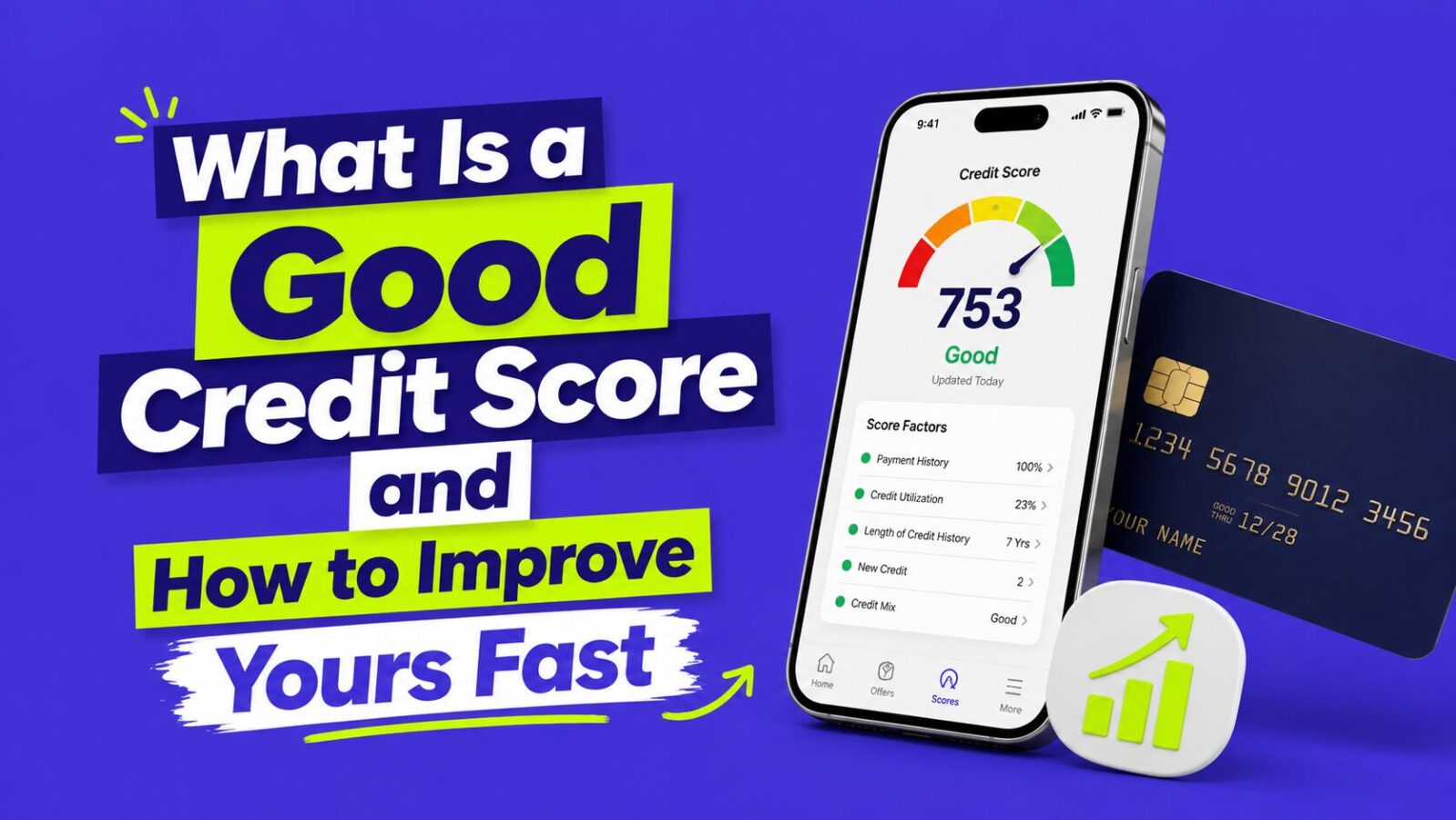
Your credit score affects your interest rates, apartment applications, and even job offers. Here is what each score range means, what actually moves the number, and how to raise yours in 30 to 90 days.
Your credit score is a three-digit number that determines how much you pay to borrow money. A 740 score gets you a mortgage at 6.5%. A 620 score gets you the same mortgage at 8.2%. On a $300,000 home loan, that difference costs you over $130,000 in extra interest over 30 years.
It also affects apartment applications (landlords check credit), car insurance rates (lower score means higher premiums in most states), and even some job applications (certain employers run credit checks for financial roles).
Understanding your score, what moves it, and how to raise it is not optional personal finance knowledge — it is foundational. If you are building credit from scratch, this guide picks up where that one left off.
- The practical target for most people is 740+ — at that level you unlock the best mortgage rates, best credit card offers, and best auto loan rates. Going from 740 to 800 feels good but rarely saves additional money.
- Payment history (35%) and credit utilization (30%) together control 65% of your FICO score. Mastering those two factors is the entire game.
- Utilization has no memory — unlike a late payment that stays 7 years, dropping your balance changes your score at the very next reporting cycle. Paying down a maxed-out card is the fastest single score boost available.
- Checking your own credit score is a “soft inquiry” with zero score impact. Check it as often as you want through Credit Karma (free) or your card’s app.
- Roughly 25% of Americans have errors on their credit reports (per FTC data). A false late payment removed through a dispute can add 50+ points immediately.
The credit score ranges
| Score range | Rating | What it means in practice | % of Americans |
|---|---|---|---|
| 800 to 850 | Exceptional | Best rates on everything. Automatic approval for premium cards. Landlords love you. | ~21% |
| 740 to 799 | Very Good | Nearly identical rates to the 800+ group. The practical target for most people. | ~25% |
| 670 to 739 | Good | Qualifies for most products at reasonable (not always best) rates. | ~21% |
| 580 to 669 | Fair | Approved for many products but at higher rates. Some premium cards will decline. | ~17% |
| 300 to 579 | Poor | Limited options. High rates. May need secured cards or a co-signer. | ~16% |
The practical goal: 740+. Once you hit 740, you unlock the best mortgage rates, best credit card offers, and best auto loan rates. Focus your energy on getting to 740 first — going from 740 to 800 feels good but rarely translates to meaningfully cheaper money.
What makes up your credit score
| Factor | Weight | What it measures |
|---|---|---|
| Payment history | 35% | Do you pay on time, every time? One 30-day late payment can drop your score 50 to 100 points and stays 7 years. |
| Credit utilization | 30% | What % of your available credit are you using? Under 10% is ideal. Under 30% is acceptable. |
| Length of credit history | 15% | Average age of all accounts and age of your oldest account. Older is better. |
| Credit mix | 10% | Having both revolving (cards) and installment (loans) accounts. Do not take out loans just for this. |
| New credit inquiries | 10% | Hard inquiries from applications. Each drops score 3 to 10 points temporarily. Space applications 3 to 6 months apart. |
Payment history (35%) — the most important factor
One late payment (30+ days past due) can drop your score 50 to 100 points and stays on your report for 7 years. A single missed payment on a credit card, student loan, auto loan, or mortgage is the fastest way to destroy a good score.
What to do: Set up autopay for at least the minimum payment on every account. Then pay the full balance manually. Autopay is your safety net, not your strategy — it ensures you never trigger a late mark even if you forget.
Credit utilization (30%) — the fastest lever you can pull
Utilization is the percentage of your available credit that you are using. Lower is better. People with the highest FICO scores typically use 1 to 5% of their available credit.
Utilization is calculated both per-card and across all cards. Maxing out one card while having $0 on another still hurts — the individual card utilization matters alongside the overall figure.
Key insight: Utilization has no memory. Unlike late payments that haunt you for 7 years, utilization only reflects your current balance. Drop it to 5% and your score responds immediately at the next reporting cycle — typically within 30 days.
Timing tip: Pay your credit card balance before the statement closes, not just by the due date. Your statement balance is what gets reported to bureaus. If you spend $2,000/month on a card with a $5,000 limit, paying it to $250 before the statement date reports 5% utilization instead of 40%.
See how much a paydown could boost your score
Utilization Impact Calculator
Enter your current credit card situation to see how paying down your balance could affect your score. Score impact estimates are based on published FICO research and are approximate.
What is my fastest move? — Personalized action plan
What Is My Fastest Move?
Two questions for a prioritized action plan tailored to your situation.
Step 1: What is your current score range?
How to check your credit score for free
Credit Karma: Free VantageScore updated weekly. Shows full credit report from TransUnion and Equifax. Most popular free option.
Your credit card issuer: Most major issuers (Chase, Capital One, Amex, Citi, Discover, Bank of America) provide free FICO score through their app. This is the score that matches what lenders see.
AnnualCreditReport.com: The only federally authorized source for actual credit reports (not just scores) from all three bureaus. Free weekly. Review at least once a year for errors.
Experian: Free FICO Score 8 through their website.
Important: Checking your own credit score is a “soft inquiry” — zero score impact. Check it as often as you want.
How to raise your score fast (30 to 90 days)
Pay down credit card balances (30 days). If your utilization is 40%, paying it to 5% can raise your score 20 to 50 points at the next reporting cycle. Pay before the statement closing date, not the due date. If you cannot pay everything off, focus on the card with the highest utilization first.
Ask for a credit limit increase (30 days). If you have a $3,000 limit and a $900 balance, your utilization is 30%. Getting the limit raised to $6,000 drops utilization to 15% with the same balance. Call your issuer or request an increase through the app. Ask if they use a soft or hard pull first.
Become an authorized user (30 to 60 days). A family member with excellent credit and a long account history adds you to their card. That card’s full history appears on your report. You do not need to use the card — just being listed is enough.
Dispute errors on your credit report (30 to 45 days). Pull your reports at AnnualCreditReport.com. Roughly 25% of Americans have errors (per FTC data). A false late payment removed through dispute can add 50+ points. Dispute online with each bureau — they have 30 days to investigate.
Use Experian Boost (immediate). Free tool that adds on-time utility, phone, and streaming payments to your Experian file. Can boost your Experian FICO score 10 to 20 points instantly. Only affects Experian, not the other two bureaus.
What NOT to do when trying to improve your score
Do not close old credit cards. Closing a card reduces your available credit (raising utilization) and eventually removes its age from your history. Keep old cards open, even if you rarely use them.
Do not pay for “credit repair” services. Companies charging $50 to $100 per month to “fix” your credit are doing things you can do yourself for free. Many are outright scams. The only legitimate fixes are disputing actual errors — which you can do directly with each bureau at no cost.
Do not open multiple cards at once. Each application is a hard inquiry. Five inquiries in a month will temporarily tank your score and signal risk to future lenders.
Do not carry a balance “to build credit.” This myth has cost people billions in unnecessary interest. Carrying a balance does not help your score. Pay your full balance every month.
Do not ignore collection accounts. A debt sent to collections stays on your report for 7 years, even after you pay it. However, newer FICO models (FICO 9, FICO 10) give less weight to paid collections. If you have collections, negotiate a “pay for delete” agreement when possible.
Credit score by age: where do you stand?
| Generation | Age range | Average FICO score | Context |
|---|---|---|---|
| Gen Z | 18 to 27 | ~680 | Early credit journey, shorter history |
| Millennials | 28 to 43 | ~690 | Scores climbing as history builds |
| Gen X | 44 to 59 | ~710 | Longer histories boosting scores |
| Baby Boomers | 60 to 78 | ~745 | Decades of history, typically lower utilization |
If your score is below the average for your age group, the action planner above will help you catch up. If you are above average, keep doing what you are doing.
FICO Score vs VantageScore: what is the difference?
FICO Score is used by 90% of lenders for lending decisions. This is the score that matters for mortgages, auto loans, and credit cards. Multiple versions exist (FICO 8, FICO 9, FICO 10) — most card issuers use FICO 8 or FICO 9.
VantageScore was created by the three credit bureaus as a FICO competitor. Used by some lenders and many free monitoring services including Credit Karma. VantageScore can differ from your FICO score by 20 to 40 points in either direction.
For the most accurate picture of what a lender sees, check your FICO score through your credit card issuer’s app rather than relying on Credit Karma’s VantageScore.
Frequently Asked Questions
How long does it take to build a good credit score from nothing?
With a secured credit card and responsible use — small monthly purchases, full balance payment every month, utilization under 10% — most people achieve a 670+ (Good) score within 6 to 12 months. Reaching 740+ (Very Good) typically takes 2 to 3 years of consistent on-time payments and low utilization. Becoming an authorized user on a family member’s long-standing account can significantly accelerate this timeline — read our credit building guide for the full step-by-step approach.
Does checking my credit score lower it?
No — checking your own score is a “soft inquiry” with zero impact on your score. Check it as often as you want through Credit Karma, your card issuer’s app, or Experian. Only “hard inquiries” — initiated by lenders when you apply for credit — affect your score, and only by 3 to 10 points temporarily. Even hard inquiries recover fully within 3 to 6 months. The fear of checking your own score and “hurting it” is one of the most persistent myths in personal finance.
Will paying off my car loan or student loan raise my score?
Ironically, your score might dip slightly when you close an installment loan — you lose an active account from your credit mix, and your average account age calculation changes. The dip is small (typically 5 to 15 points) and temporary. Paying off debt is always the right financial move regardless of a short-term score fluctuation, and your score will recover and typically improve within a few months as the closed account continues to age positively on your report.
Can I get a mortgage with a 650 credit score?
Yes, but your rate will be meaningfully higher. FHA loans accept scores as low as 580 with 3.5% down payment. Conventional loans typically require 620+. The best rates start at 740+. On a $300,000 mortgage at current rates, the difference between a 650 and 740 score can cost $100,000 or more in extra interest over 30 years. If you are planning to buy a home in the next 12 to 24 months, spending that time getting your score above 740 — using the strategies in this guide — is one of the highest-return financial moves you can make.
How often is my credit score updated?
Your score changes whenever new information is reported to the credit bureaus, which typically happens monthly for each account. Different creditors report at different times during the month, so your score can shift multiple times per month. This is why paying your credit card balance before the statement closing date (not just the due date) matters — you control what balance gets reported to the bureau that month, which directly affects your utilization and score for that cycle.
Does income affect my credit score?
No. Your income, employment status, savings, investments, and net worth are not factors in your FICO score. The five factors are payment history, credit utilization, length of history, credit mix, and new inquiries — income is not among them. A person earning $30,000 with perfect payment habits and low utilization can have a higher score than someone earning $300,000 who misses payments. Lenders may consider income separately when approving specific products, but it does not affect the score calculation itself.
What is the fastest way to raise my credit score by 50 points?
The most reliable path to a 50-point improvement depends on your starting situation. If you have high utilization: pay your balances down to under 10% before the next statement closing date — this can add 30 to 80 points within 30 days. If you have errors on your report: dispute them; removing a false late payment can add 50+ points immediately. If you have thin credit history: becoming an authorized user on a family member’s long-standing account can add significant points within 30 to 60 days. The action planner above will identify which lever is most likely to work for your specific situation.
How much does one missed payment hurt your score?
A single missed payment (30+ days late) can drop your score 50 to 100 points depending on your current score and overall credit profile. The impact is worst at higher score ranges — someone at 780 can drop to 680 from one late payment, while someone already at 580 drops to 540. The mark stays on your report for 7 years, though its impact diminishes significantly after 2 years of subsequent on-time payments. This is why setting up autopay for at least the minimum payment is non-negotiable — the asymmetry between the cost of a late payment and the benefit of one more on-time payment is enormous.
The bottom line
A good credit score is 670+. A great score is 740+. Getting there requires exactly two things: pay every bill on time (35% of your score) and keep credit card balances low (30% of your score). Those two factors alone control 65% of your FICO score.
Set up autopay for minimum payments today. Pay balances before the statement closing date. Keep old cards open. Check your report for errors once a year. Use the utilization calculator and action planner above to identify your specific highest-leverage move.
If your score is below 670 right now, you can realistically reach 740+ within 12 to 24 months. Every month your score will be higher than the month before — as long as you pay on time and keep utilization low.
Start building your financial future
Next steps:
- Starting from zero? Read our credit building guide — covers the full 5-step plan including secured cards, authorized user status, and the month-by-month timeline.
- Ready to use credit cards strategically? Read our best no-annual-fee cards guide — once you hit 670+, you qualify for cards that pay 3 to 5% cash back.
- Planning a mortgage in the next year? Read our home buying guide to understand how credit score affects your mortgage rate and what lenders look for beyond the score.