By
By 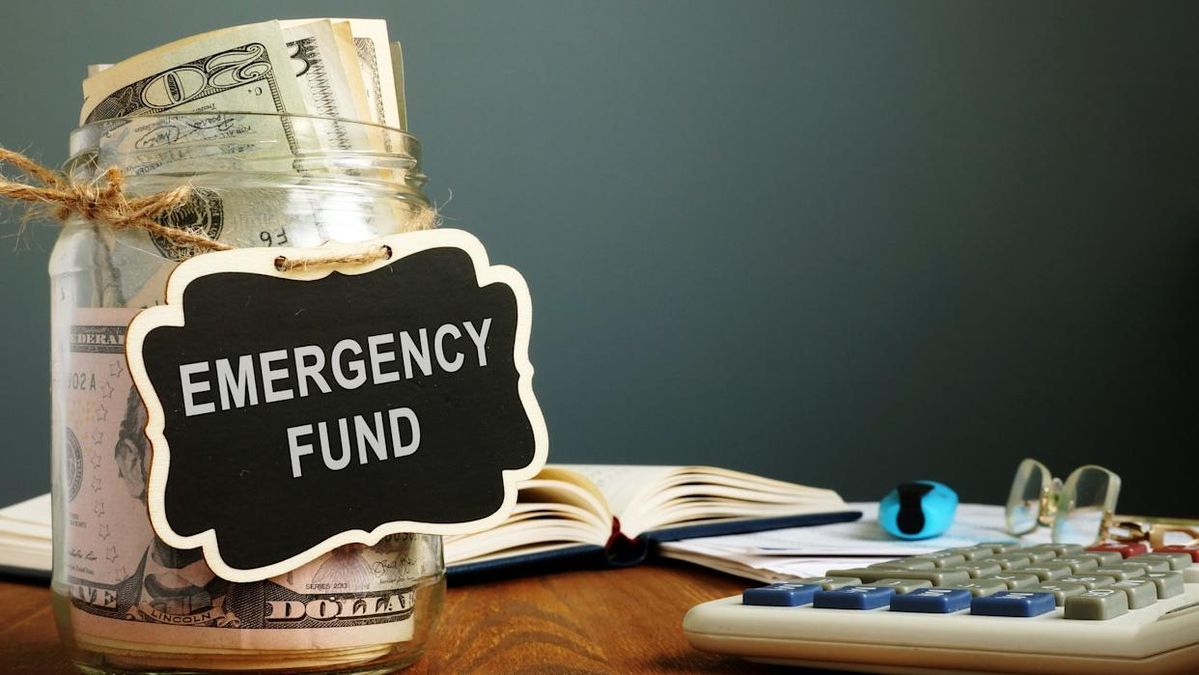
Here is a scenario that keeps financial planners up at night: you lose your job on a Tuesday, your car breaks down on Wednesday, and a medical bill shows up on Thursday. Without an emergency fund, that triple hit could mean maxed-out credit cards, payday loans, or worse.
An emergency fund is the single most important piece of your financial foundation. It is the buffer between you and financial disaster. But the classic advice of “save three to six months of expenses” raises more questions than it answers. Three months or six? Which expenses count? What if you are self-employed? What if you have a family?
This guide will help you cut through the confusion and figure out your exact emergency fund target — down to the dollar.
Use our free calculator below to see your personalized emergency fund number based on your income, expenses, and life situation.
Emergency Fund Calculator
What Is an Emergency Fund?
An emergency fund is a dedicated pool of cash set aside specifically for unexpected financial shocks. It is not your vacation fund, your down payment savings, or your investment portfolio. It is money that sits in a safe, accessible account and waits for the day you truly need it.
What Counts as an Emergency?
True financial emergencies include:
- Job loss or sudden income reduction. This is the big one. Your emergency fund is primarily designed to keep you afloat if your income disappears.
- Major medical expenses. Even with insurance, a hospital stay or surgery can come with thousands of dollars in out-of-pocket costs.
- Critical home repairs. A burst pipe, a failing furnace in January, or a roof leak that is damaging your home’s structure.
- Essential car repairs. If you need your car to get to work, a blown transmission is an emergency.
- Emergency travel. A family crisis that requires you to fly across the country on short notice.
What Does NOT Count as an Emergency?
- A sale on something you have been wanting
- A planned expense you forgot to budget for
- Holiday gifts
- A vacation “opportunity”
- Routine car maintenance (oil changes, new tires)
- Annual insurance premiums
These are predictable expenses that should be part of your regular budget or saved for in separate sinking funds. Raiding your emergency fund for non-emergencies defeats the entire purpose.
The 3-6 Month Rule Explained
The most common recommendation is to save three to six months of essential living expenses. But what does that actually mean, and which end of that range should you target?
What Are “Essential Living Expenses”?
Your emergency fund target should be based on the bare minimum you need to survive and keep a roof over your head, not your current lifestyle spending. Essential expenses typically include:
- Rent or mortgage payment
- Utilities (electric, gas, water, internet)
- Groceries (not dining out)
- Health insurance premiums
- Minimum debt payments
- Transportation costs (car payment, gas, insurance, or public transit)
- Phone bill
- Childcare (if you need it to work)
- Any medication or medical needs
Notice what is not on that list: streaming subscriptions, gym memberships, dining out, entertainment, clothing shopping, and other discretionary spending. In a true emergency, you would cut those expenses immediately.
When Three Months Is Enough
A three-month emergency fund may be sufficient if:
- You have a stable job in a high-demand field
- You are part of a dual-income household
- You have additional safety nets (family support, unemployment insurance, disability insurance)
- You have no dependents
- You have low fixed expenses relative to your income
- You could find a new job relatively quickly
When You Need Six Months or More
You should aim for the higher end — six months or beyond — if:
- You are the sole income earner for your household
- You are self-employed or a freelancer with variable income
- You work in a volatile industry prone to layoffs
- You have dependents (children, aging parents)
- You have a chronic health condition or high medical expenses
- You own a home (especially an older one)
- You live in an area with a high cost of living and limited job market
- You are approaching retirement
Some financial planners recommend up to 12 months for people who are self-employed or have highly specialized careers where finding a new job could take a long time.
Factors That Change Your Emergency Fund Number
The three-to-six-month guideline is a starting point, not a finish line. Several factors can push your target higher or lower.
Your Job Stability
This is the biggest factor. If you work in a recession-proof industry with high demand for your skills, you can lean toward the lower end. If you work in a cyclical industry, are in a commission-based role, or have been through layoffs before, build a larger cushion.
Your Health Situation
If you or a family member has ongoing medical needs, your emergency fund should account for potential gaps in insurance coverage, high deductibles, or periods without employer-sponsored health insurance. An unexpected health event on top of a job loss is a financial double hit that your emergency fund needs to cover.
Your Housing Situation
Homeowners generally need a larger emergency fund than renters. A major home repair — a new roof, HVAC replacement, or foundation issue — can cost $5,000 to $15,000 or more. If you rent, your landlord handles those costs, so your emergency fund can be smaller.
Your Debt Load
If you are carrying significant debt, especially high-interest debt, your emergency fund needs to cover your minimum payments during a period of lost income. The higher your monthly debt obligations, the more you need saved. For a deeper look at managing debt alongside savings, check out our debt payoff strategies on Finance Pulse.
Your Dependents
Every person who relies on your income increases the size of the emergency fund you need. A single person with no kids has a very different number than a family of four. Factor in childcare costs, additional food expenses, and any other costs tied to your dependents.
Your Income Variability
If your income fluctuates — whether from freelancing, commission-based work, seasonal employment, or a side business — your emergency fund should be larger to smooth out the lean months. Consider basing your target on your average monthly expenses during your highest-spending months, not your lowest.
How to Calculate Your Emergency Fund Target
Here is a step-by-step process you can follow right now, even without the calculator.
Step 1: Add Up Your Essential Monthly Expenses
Go through your bank and credit card statements from the last three months. Identify every expense that falls into the “essential” category listed above. Average those three months to get a reliable monthly figure.
For example:
| Essential Expense | Monthly Amount |
|---|---|
| Rent/Mortgage | $1,500 |
| Utilities | $250 |
| Groceries | $500 |
| Health insurance | $300 |
| Car payment | $350 |
| Gas/Transportation | $150 |
| Phone | $80 |
| Minimum debt payments | $200 |
| Medications | $50 |
| Total | $3,380 |
Step 2: Choose Your Multiplier
Based on the factors above, decide whether you need three, four, five, six, or more months of expenses saved.
- Low risk: 3 months = $3,380 x 3 = $10,140
- Moderate risk: 4-5 months = $3,380 x 4.5 = $15,210
- Higher risk: 6 months = $3,380 x 6 = $20,280
- Self-employed/high risk: 9-12 months = $3,380 x 9 = $30,420
Step 3: Adjust for Your Specific Situation
Do you have any large, irregular expenses that could pop up during an emergency? Think about:
- Your health insurance deductible (if you lost your job and had to pay COBRA or marketplace insurance)
- Your car’s age and reliability
- Any upcoming known expenses that could overlap with an emergency
Add a buffer for these if needed.
Where to Keep Your Emergency Fund
Your emergency fund needs to be two things: safe and accessible. That narrows down your options significantly.
High-Yield Savings Accounts (Best Option for Most People)
A high-yield savings account at an online bank is the sweet spot for most emergency funds. You will earn a competitive interest rate (often 4% to 5% APY in the current environment) while keeping your money FDIC-insured and accessible within one to two business days. The slight friction of having the money at a separate bank actually helps — it is close enough to access in a real emergency but far enough away that you will not dip into it for impulse purchases.
Money Market Accounts
Money market accounts work similarly to high-yield savings accounts, often with comparable interest rates and FDIC insurance. Some offer check-writing or debit card access, which can be useful in an emergency but also makes it easier to spend the money on non-emergencies.
Treasury Bills (T-Bills)
For the portion of your emergency fund you are less likely to need immediately, short-term Treasury bills can be a good option. They are backed by the full faith and credit of the U.S. government and often offer competitive yields. The trade-off is less liquidity — you may need to wait until the T-bill matures or sell it on the secondary market.
Where NOT to Keep Your Emergency Fund
- Your checking account. Too easy to spend. It will get mixed in with your daily spending and disappear.
- Under your mattress. No interest, no FDIC protection, and a fire or theft could wipe it out.
- In the stock market. Stocks can drop 30% or more in a downturn — exactly the time you are most likely to need your emergency fund. You could be forced to sell at a loss.
- In a certificate of deposit (CD). The early withdrawal penalties defeat the purpose of having accessible emergency cash.
- In cryptocurrency. Far too volatile for money you might need tomorrow.
How to Build Your Emergency Fund From Zero
If your emergency fund is currently sitting at $0, the full target might feel overwhelming. That is okay. Building an emergency fund is a marathon, not a sprint. Here is how to get there step by step.
Phase 1: The Starter Emergency Fund ($1,000)
Your first milestone is $1,000. This small cushion will cover minor emergencies — a car repair, a medical copay, a broken appliance — without putting them on a credit card. At $100 per month, you will hit this goal in 10 months. At $250 per month, you will be there in four.
Phase 2: One Month of Expenses
Once you have $1,000, aim for one full month of essential expenses. This is where your calculator results come in handy. Having one month saved gives you breathing room for a short-term disruption like a temporary job loss or reduced hours.
Phase 3: The Full Target
From one month, keep building toward your full three-to-six-month target (or whatever number the calculator gave you). This phase takes the longest, but it is also the phase where your savings habit becomes automatic. Set up a recurring transfer and let it run.
Practical Ways to Fund It Faster
- Automate a transfer from checking to savings on every payday. Treat it like a bill.
- Direct deposit splitting. Many employers let you split your direct deposit between accounts. Have a portion go straight to your emergency fund.
- Save your tax refund. The average federal tax refund is over $3,000 — that alone could jumpstart your fund.
- Sell things you do not use. Clothes, electronics, furniture, or equipment you no longer need can generate quick cash.
- Reduce one recurring expense. Cancel a subscription, negotiate a bill, or switch to a cheaper provider. Redirect the savings.
- Bank your windfalls. Birthday money, bonuses, rebates, and any unexpected income should go straight to the emergency fund until it is fully funded.
- Take on a short-term side hustle. Dedicate the earnings exclusively to your emergency fund.
For more strategies on optimizing your monthly budget to free up savings, explore our budgeting tools on Finance Pulse.
When to Use Your Emergency Fund (and When Not To)
Having clear rules about when to tap your emergency fund prevents it from slowly leaking away on non-emergencies.
The Three-Question Test
Before withdrawing from your emergency fund, ask yourself:
- Is this expense unexpected? If you knew it was coming, it should have been budgeted separately.
- Is this expense necessary? Not “nice to have” — genuinely necessary for your health, safety, or ability to earn income.
- Is this expense urgent? Can it wait a month while you adjust your budget, or does it need to be handled right now?
If the answer to all three questions is yes, use your emergency fund. That is what it is there for. If any answer is no, find another way to cover the expense.
Rebuilding After You Use It
When you do dip into your emergency fund, make rebuilding it a top priority. Pause any extra debt payments, investment contributions, or saving for other goals until your emergency fund is back to its target level. The peace of mind is worth the temporary slowdown in your other financial goals.
Emergency Fund Benchmarks: How Do You Stack Up?
It can be helpful to know where you stand relative to other Americans, though remember that your personal situation matters more than any benchmark.
The Current Landscape
- Roughly 44% of Americans say they could not cover a $1,000 emergency expense from savings
- The median savings account balance for Americans under 35 is around $5,400
- Only about 44% of Americans have enough savings to cover three months of expenses
- High-income earners are not immune — many live paycheck to paycheck at six-figure salaries
Benchmarks by Life Stage
- Early career (20s): Aim for at least one to three months of expenses. You are likely earning less and may have student loans, but you also probably have lower fixed expenses and more flexibility.
- Established career (30s-40s): Three to six months is the target. You likely have more financial obligations (mortgage, kids, car payments) but also more income to save.
- Peak earning years (40s-50s): Six months or more. Your expenses are likely at their highest, and recovering from a job loss can take longer at more senior career levels.
- Pre-retirement (50s-60s): Six to twelve months. Finding new employment can be more challenging, and you want to avoid tapping retirement accounts early.
Frequently Asked Questions
Should I build an emergency fund before paying off debt?
Yes — but start small. Most financial advisors recommend having at least $1,000 to $2,000 in an emergency fund before aggressively paying off debt. Without any cash cushion, a single unexpected expense will send you right back into more debt. Once you have that starter fund, you can focus on debt payoff while slowly building toward your full emergency fund target. Learn more about balancing debt and savings with our debt payoff calculator on Finance Pulse.
Does my emergency fund need to be in a separate account?
It does not technically need to be, but it absolutely should be. Keeping your emergency fund in the same account as your spending money makes it too easy to spend. A separate high-yield savings account, ideally at a different bank, creates just enough separation to protect the money from impulse decisions.
Should my spouse and I have separate emergency funds?
Most couples are better served by a single, larger emergency fund. Your expenses overlap significantly, and one larger pool provides more flexibility than two smaller ones. The key is agreeing on the rules for when and how to use it.
How often should I recalculate my emergency fund target?
Review your target at least once a year or whenever you have a major life change: a new job, a move, a baby, a marriage or divorce, or a significant change in expenses. As your life evolves, your emergency fund target should evolve with it.
Is $1,000 really enough as a starter emergency fund?
For many people, $1,000 will cover the most common minor emergencies: a car repair, a medical copay, or a home appliance replacement. It is not meant to be your final target — it is meant to break the cycle of putting emergencies on credit cards while you work toward a larger fund. If your monthly expenses are high, consider a $2,000 starter fund instead.
Can I invest my emergency fund to earn higher returns?
Resist this temptation. Your emergency fund’s job is to be there when you need it, not to grow your wealth. The stock market can drop significantly at exactly the moment you need the money most. Keep your emergency fund in safe, liquid accounts and use separate money for investing.
Your Emergency Fund Action Plan
Here is your step-by-step plan to build a fully funded emergency reserve:
- Calculate your target using the calculator above. Plug in your real expenses and life factors.
- Open a high-yield savings account if you do not already have one. Look for no fees and a competitive APY.
- Set up an automatic transfer from your checking account on every payday. Start with whatever you can afford, even $25 per pay period.
- Build to $1,000 first as your starter emergency fund.
- Then build to one month of essential expenses.
- Continue to your full target of three to six months (or more, based on your situation).
- Review annually and adjust your target as your life changes.
- Celebrate when you hit your goal. A fully funded emergency fund is one of the most powerful financial achievements you can reach.
The Bottom Line
An emergency fund is not exciting. It does not earn flashy returns. It will not make you rich. But it will keep you from going broke when life throws its inevitable curveballs. Knowing that you have three, six, or twelve months of expenses sitting safely in the bank changes how you sleep at night, how you handle stress, and how you make financial decisions.
Use the calculator above to find your number. Then start building toward it, one paycheck at a time. Future you will be incredibly grateful.
Ready to take control of your finances? Explore more calculators and guides at Finance Pulse to build a financial plan that works for your life.